

Working as it should
A water heater like this one sits next to the furnace, hooked up with copper and brass fittings and a pressure-relief valve in place. No rust on the tank, no water on the floor, everything doing its job where it stands.
A local installer who puts in water heaters gets your project.
Find my proGas is the better fit for most South Dakota homes, mainly because most homes here already run on gas. If your house has a gas line to the water heater now, replacing it with another gas unit keeps that in place and avoids the cost of running new gas line or upgrading electrical service for a different kind of unit. Gas water heaters also recover faster, so a bigger household isn't waiting around for a full tank to reheat. Electric works fine where gas isn't already piped in, and power here doesn't cost much, so it's not a bad option if your home was built electric. The real question isn't which fuel heats water better. It's which one your home is already set up for, since switching fuel types adds work that staying put doesn't.
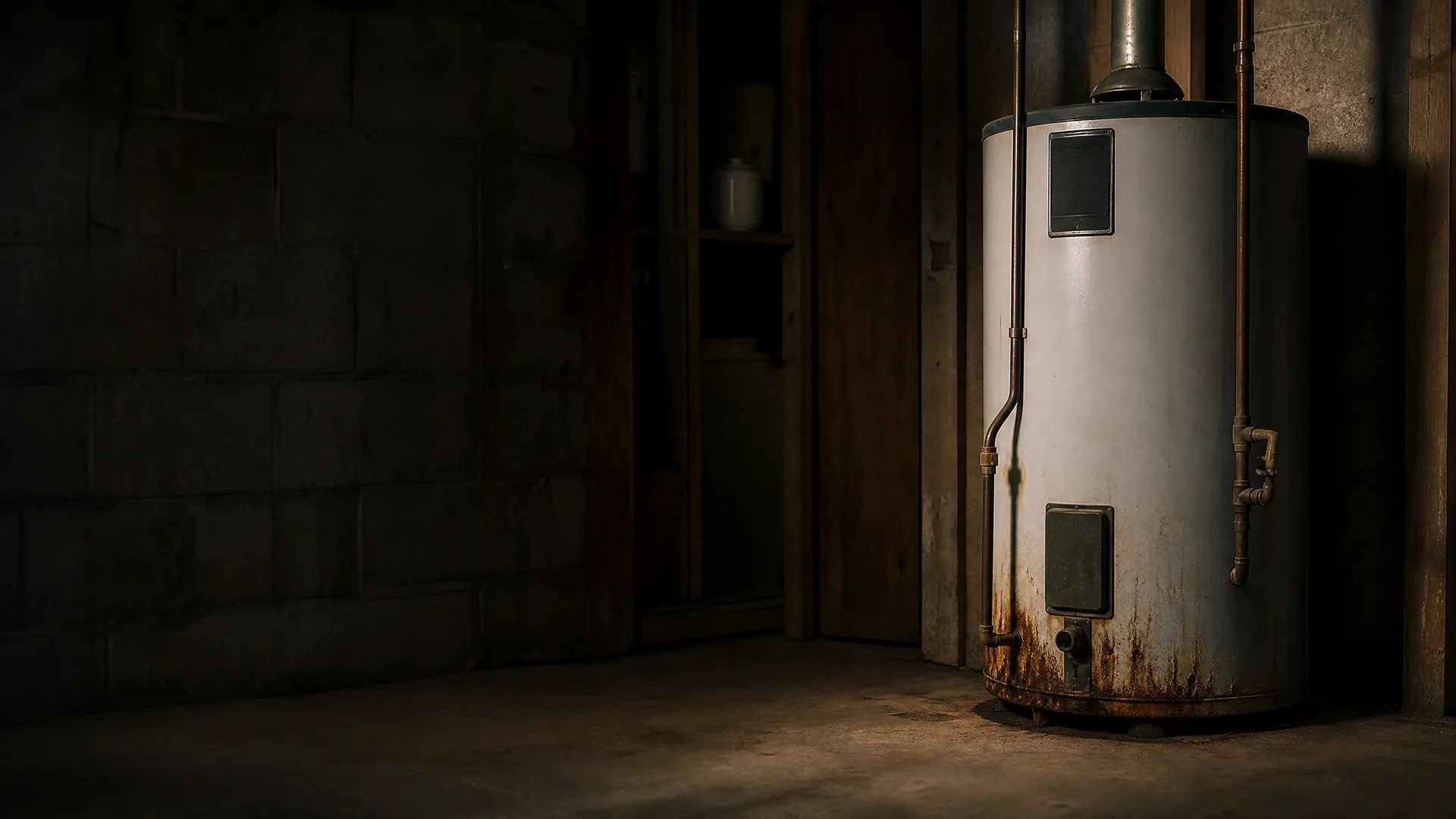
You go down to change the furnace filter and the air feels damp near the floor. The light over the tank is dim, and that's when you see it, a line of rust creeping down the side where the steel meets the base, with a small dark ring on the concrete under it. It's early evening, cold enough outside that the furnace is running, and the tank ticks as it cycles. You crouch and touch the rust and it's wet. Nothing is spraying. It is just weeping, slow enough that you could almost talk yourself out of it. But the stain on the floor wasn't there last week, and you know it.


A gas water heater and an electric one get to the same place, hot water on demand, by different routes, and knowing the route helps you understand what a contractor is actually installing. On a gas unit, the burner sits under the tank and lights off a pilot or an igniter. Once it catches, a thermocouple or flame sensor confirms there's a real flame before the gas valve stays open, and if that flame goes out, the valve shuts on its own rather than letting gas keep flowing. The byproduct of that burning has to go somewhere, so it rises through a flue running up through the middle of the tank and out through the roof or a sidewall. All of this, the thermostat, the pilot switch, the dial you turn to set the temperature, lives in one gas control valve mounted low on the side of the tank. An electric water heater skips all of that. There's no flame, no flue, and no combustion air pulled from the room, just one or two heating elements sitting down inside the tank itself, wired directly back to a breaker. That's a simpler mechanical setup, but it also means the breaker and the wiring feeding it have to be sized for the draw, same as the gas line and vent have to be sized right on a gas unit.




You already know your water heater runs on gas, and for most homes around here that's the right call to stick with. But matching the fuel is only part of it. The tank still has to be sized for your household, vented correctly for where it sits, and installed by someone who knows the local code on gas line and clearance. Get any of that wrong and you end up with a unit that runs too hot, runs out too fast, or fails inspection. Rust on the old tank, a pilot that won't hold, or a water heater pushing past its years are all reasons to move now rather than wait for a full failure with no hot water in the house. Once you send the request, finding the right contractor for your setup is off your plate. You can stop thinking about it and let someone qualified take it from here.
A gas burner puts out more heat than an electric element, so a gas tank brings a full load of cold water back up to temperature quicker. That matters most when the tank gets drained back to back, a shower right after the dishwasher runs, or a house full of people visiting over the holidays. Electric units heat with one or two elements inside the tank, and once those are caught up, they're waiting on the next cycle. If your household tends to run the tank down and need it again soon after, gas is built for that. If usage is spread out through the day, the difference matters less.
Where the water heater sits in your house decides how the flue gets run, and that's part of what a contractor checks before install. A tank in a basement near an existing flue usually vents the way the old one did. A tank moved to a different spot, or a switch from a standing pilot to a power-vent model, can mean new venting has to be put in. None of this changes whether gas is the right fuel for your home. It changes what the installation involves, and it's the kind of detail that shows up once someone looks at the space, not before.


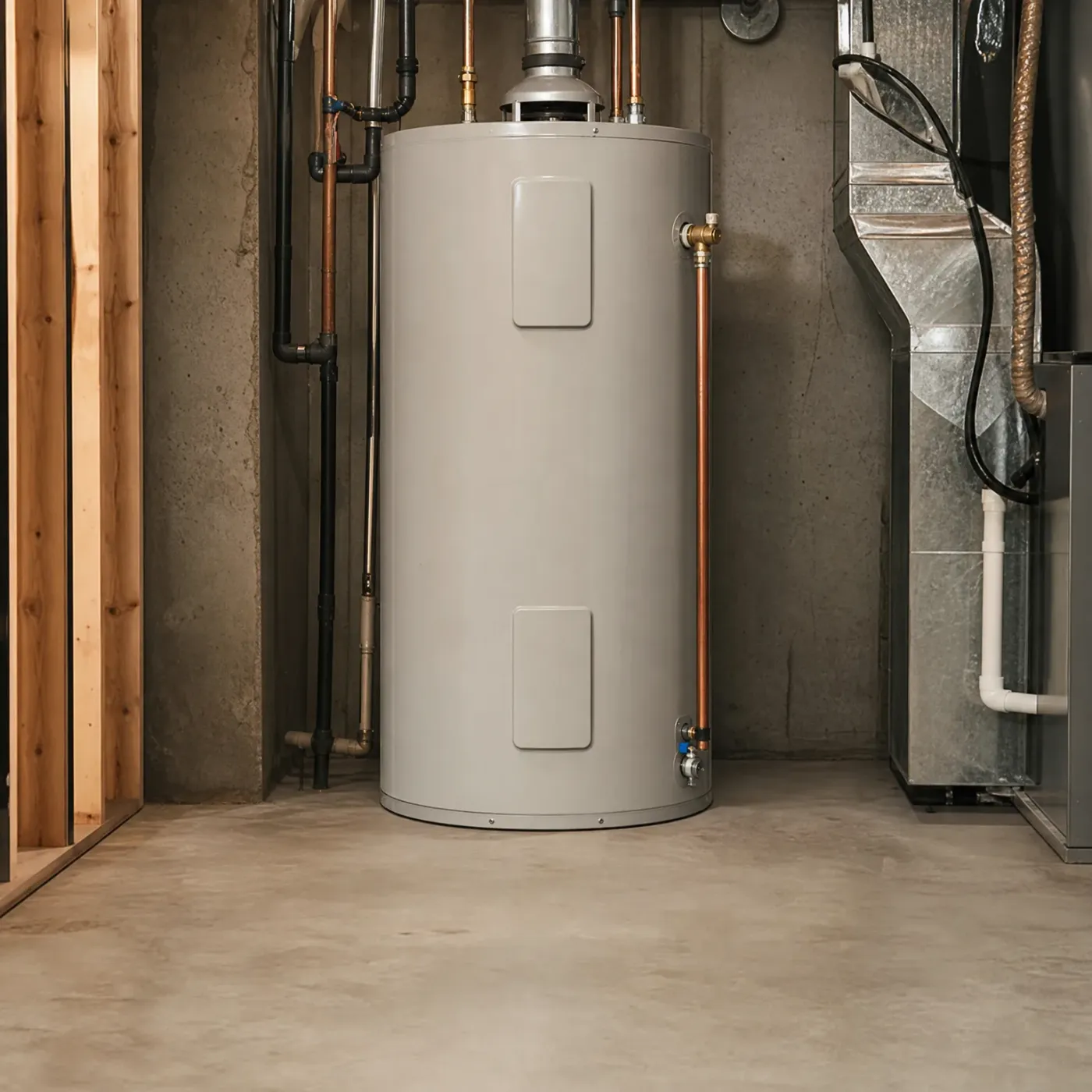
A water heater like this one sits next to the furnace, hooked up with copper and brass fittings and a pressure-relief valve in place. No rust on the tank, no water on the floor, everything doing its job where it stands.
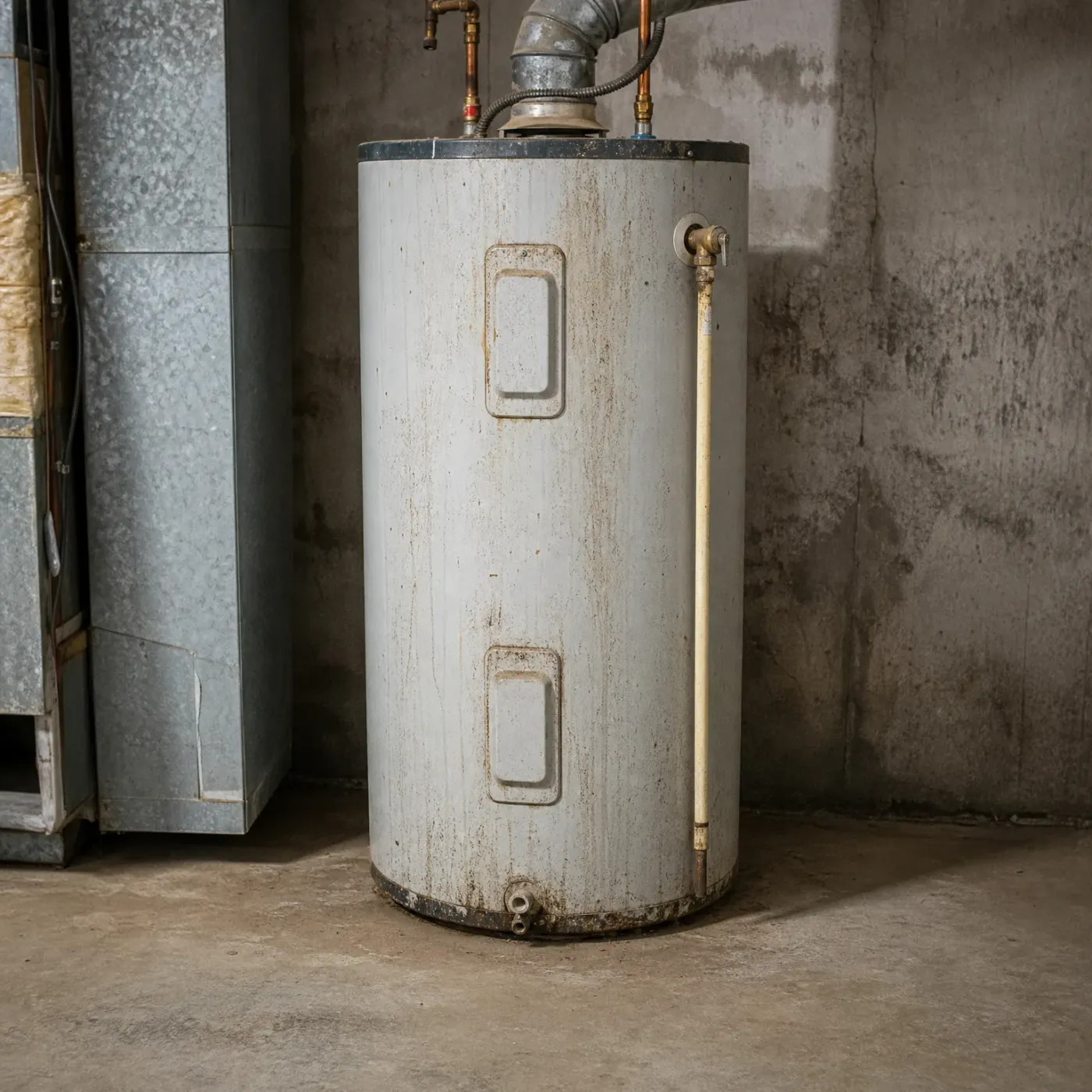
Rust has worked its way down the tank and onto the concrete below it. The relief valve and the old galvanized fittings at the top are signs of a unit that has been there a long time. Once rust shows on the outside, it's already working on the inside too.
Almost half the homes in South Dakota run on gas, which is likely why yours does too. That puts you in the majority here, and it means the gas line, meter and venting a new tank needs are probably already in place at your house.
ACS 2020-2024 5-year B25040

Gas is the right call for most houses in South Dakota, yours included if it's already running that way. The line is there, the venting is there, and a new gas tank uses both without asking for anything extra from your walls or your panel. That's the whole case, and it holds whether this is routine or it's a tank you found leaking by the furnace.
From here it's less about deciding and more about getting the right tank in the right place. Send the form and a contractor who installs these day in and day out will look at your household and your setup and reach out to you directly. You won't be the one tracking down who's available or who's qualified. That part is off your plate once you send it.

One request ends the search for a water heater installer.