
Working the way it should
A tank like this one runs without any smell at all. The water that comes out of the tap stays clear and odorless, hot or cold, no matter how long it's been sitting since the last time anyone ran it.
That smell from the tap is not something to live with until you get around to it. You searched for a reason, and finding the right contractor is the part that eats your evening: pulling up listings, calling a few, explaining the smell each time, waiting on callbacks, then comparing what each one quotes you. In Rapid City and around Pennington County, send the form here and that search is done. You are not left sorting through names or repeating yourself to one plumber after another. The information you give goes out once, and from there it is not on you to track down who answers or who's worth calling back. That part of it stops being your job the moment you hit send.
That rotten egg smell is hydrogen sulfide gas, and it comes from bacteria living inside your water heater tank, reacting with the sulfur in your water and the magnesium anode rod that protects the tank from rust. It shows up most in homes on well water, but Rapid City homes on city water get it too, especially if the heater sits unused for a few days, like after a trip. The smell usually comes from the hot tap only. If the cold tap smells too, the cause is more likely in your water supply than the tank itself. Either way, the gas itself is not dangerous at low levels, but it means bacteria are active in your tank, and that water should get looked at before you keep using it for dishes or baths. A contractor can test which it is and flush or treat the tank accordingly.

Every tank water heater has a sacrificial anode rod, usually magnesium, bolted into the top of the tank. It corrodes on purpose so the steel tank doesn't. Bacteria that feed on sulfur use that rod as a power source, and the reaction gives off hydrogen sulfide gas. The smell is strongest right after the tank sits unused for a while, like overnight or during a trip, because the gas has time to build up inside.

Fill a glass with cold water from the tap and smell it, then fill one with hot water and smell that. If only the hot water smells, the tank is the source. If both smell, the problem is in the water supply itself, not the heater, and a plumber needs to look at the well or the line rather than the tank. This split test takes a minute and points the repair in the right direction before anyone opens up the tank.
2.37 people per household on average
Half the homes in Pennington County were built in 1982 or earlier, so if your water heater came with the house, the anode rod has had decades to wear thin.
Half the homes here were built by 1982
A household here averages 2.37 people, and more people means more hot water drawn and refilled each day, which keeps feeding fresh sulfur to the bacteria in the tank.
58.8% of homes heat with gas
58.8% of homes in Pennington County heat with gas, and a gas water heater's tank sits idle between draws, giving that rotten egg reaction more time to build up.
ACS 2020-2024
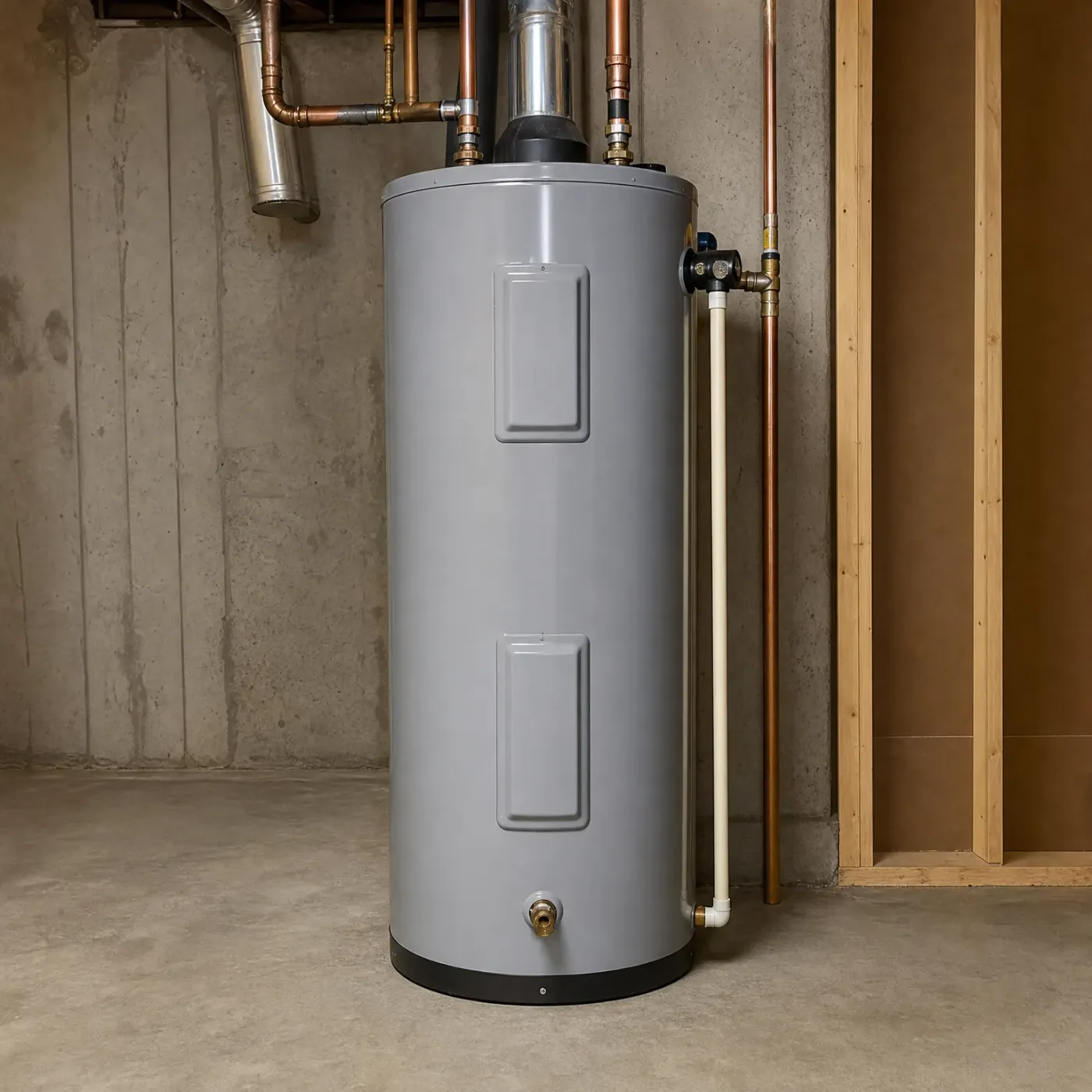
A tank like this one runs without any smell at all. The water that comes out of the tap stays clear and odorless, hot or cold, no matter how long it's been sitting since the last time anyone ran it.
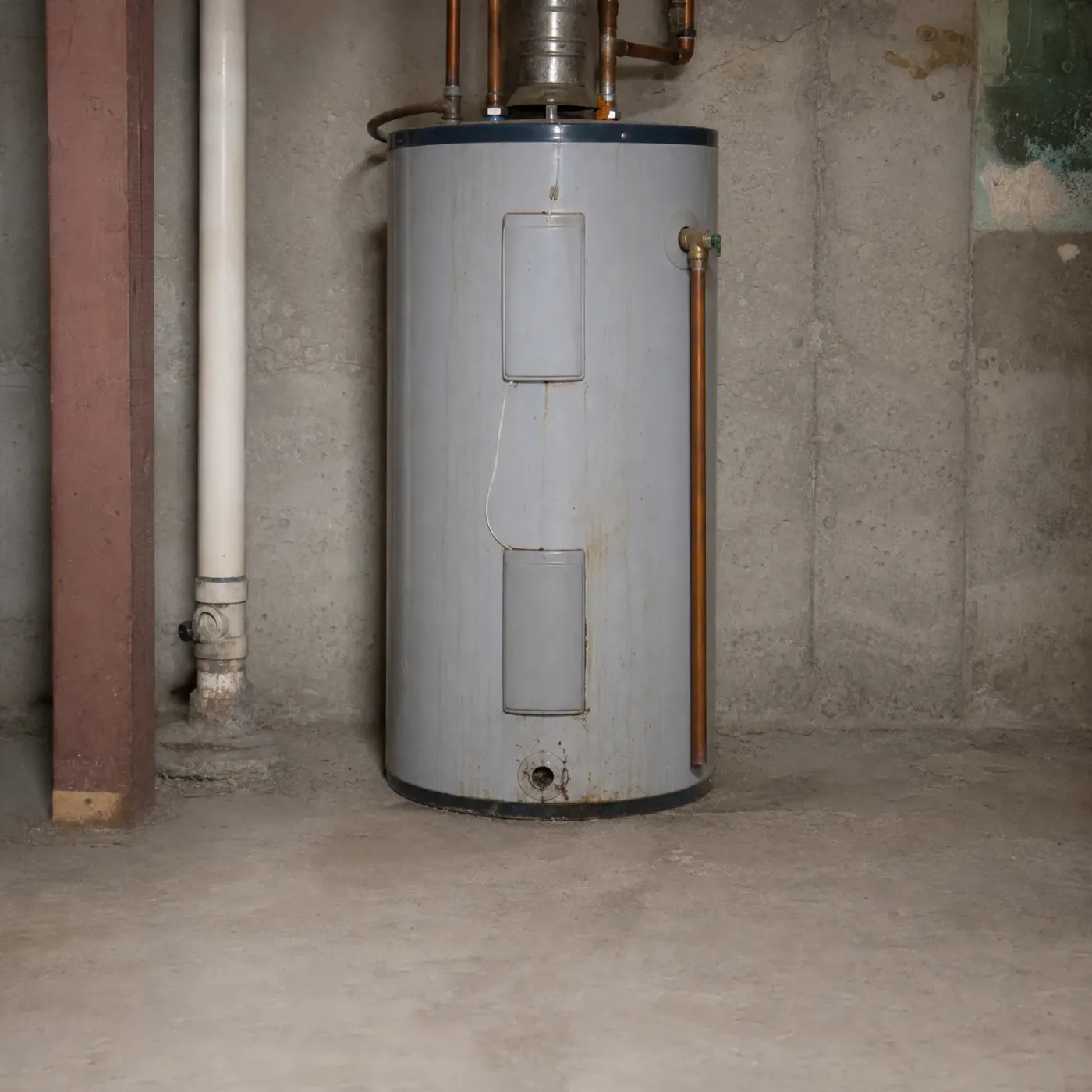
Rust near the bottom of the tank means water has already gotten where it shouldn't. If the smell showed up around the same time as rust like this, the tank itself may be failing, not just the anode rod inside it.




Run the cold water and it's fine. Run the hot and the smell hits you right at the sink or in the shower, worse if the water sat in the tank for a few hours overnight or while you were at work. Fill a glass and let it sit and the smell gets stronger, not weaker. You might notice it most in the bathroom with the door shut, where the steam holds the odor in the air. Left alone, the bacteria causing it don't go away on their own, and the anode rod feeding them keeps wearing down, which is also what eventually lets the tank itself start to rust from the inside.
A contractor shuts off the water and power to the tank.
The tank drains through the hose bib at the bottom.
The old anode rod comes out through the top fitting.
A new rod, magnesium or aluminum, threads back in.
You've read why it's happening. What's left is getting someone out to your house to fix it, and that part is still on you unless you hand it off. A water heater repair isn't a job most people want to figure out alone, between a flush, a new anode rod, or something further along in the tank. Left alone, that smell doesn't go away on its own, and every shower and load of dishes keeps running through water you don't want to use. The usual route is pulling up a list of plumbers, calling around, explaining the rotten egg smell to each one, then sitting with a stack of quotes trying to guess who actually knows tanks and anode rods and who's guessing too. Send the request instead and that whole search is no longer something you have to manage. You go back to running water from the tap without thinking about it, which is the point of having a water heater at all.
A magnesium rod reacts the most with sulfur bacteria, so some contractors replace it with an aluminum anode rod instead. Aluminum corrodes slower and gives the bacteria less to feed on, which can stop the smell for good instead of just for a while. It still protects the tank from rust the way magnesium does. The tradeoff is that aluminum rods wear down less evenly, and in rare cases local codes restrict aluminum in water heaters, so it's worth asking before assuming this is an option for your tank.
Sticking with magnesium keeps the tank protected the way it was designed to be protected from the start, since magnesium is the more active metal and sacrifices itself fastest to stop rust. If your water isn't especially high in sulfur or you're not on well water, the smell may not come back for a long stretch. The downside is that if bacteria are already established in your tank, a new magnesium rod gives them the same fuel the old one did, and you could be back to the same smell within a year or two.
At 15.09 cents per kilowatt-hour, running a water heater hot enough to kill off the bacteria causing the smell won't hit your bill hard. If a contractor recommends raising the thermostat alongside a flush or a new anode rod, the extra power to hold that temperature stays affordable.
EIA-861 2025
Leave the magnesium rod in and just keep flushing the tank every so often, hoping the smell stays down between visits, and chase it again whenever it comes back.
Swap the magnesium rod for aluminum or powered zinc once, and the bacteria lose the thing they were feeding on, so there's nothing left to flush away.


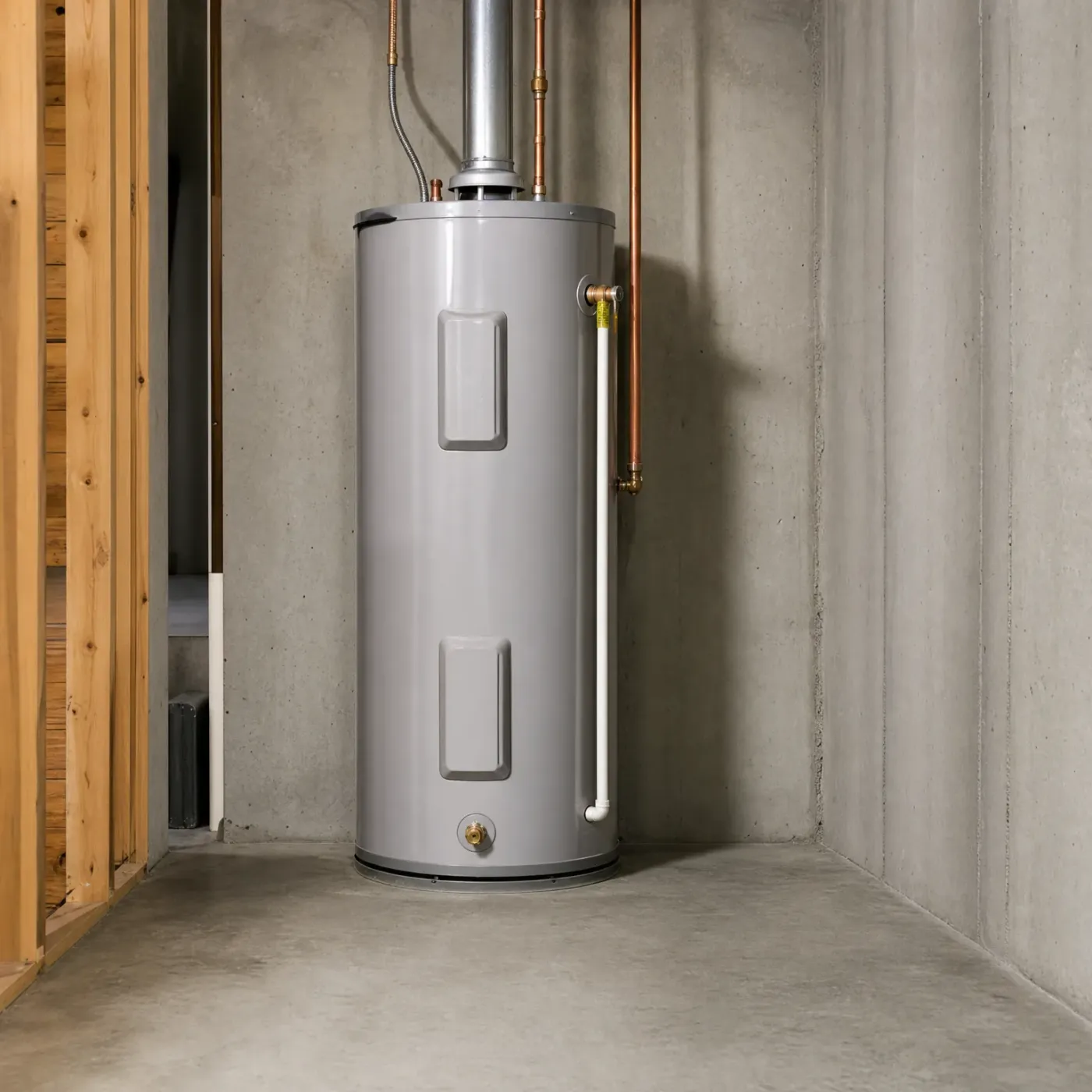
This tank shows what a healthy setup looks like. The copper lines and flue pipe run clean overhead, and the relief valve discharge pipe is dry. Water pulled from a tank like this stays clear and odorless, whether it sat overnight or came straight from the tap.
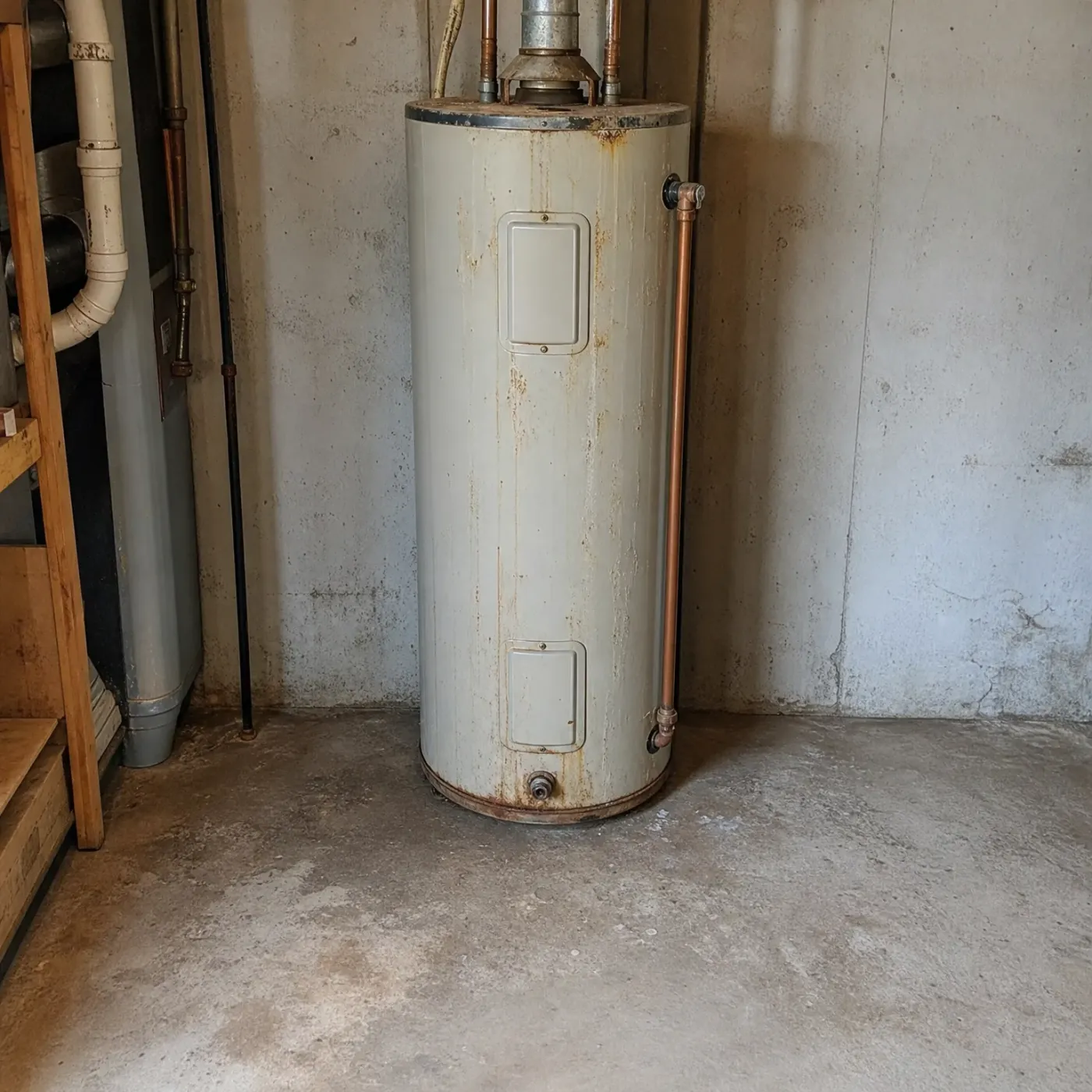
Corrosion like this on the outside of the tank often means the anode rod inside has been spent for a long time. Once it's gone, the steel tank itself is exposed, and the bacteria causing the smell have nothing left standing between them and the water you use.

The rotten egg smell comes from bacteria feeding on the anode rod inside your tank. A flush can knock it back for a while. Swapping the magnesium rod for aluminum or powered zinc takes away what the bacteria feed on in the first place. Either way, it's a job for someone who works on these tanks, not a bottle poured down the drain.
You already know what it takes to get a contractor out here: finding one who answers, telling the story of the smell over again on the phone, waiting to hear back, then doing it again with the next name on the list if the first one falls through. Send the form once and that work is done. You won't be the one tracking down who's available or sorting through quotes. Someone qualified gets word of your tank, your water, and the smell you've been living with, and takes it from there.


Hand off the water heater problem