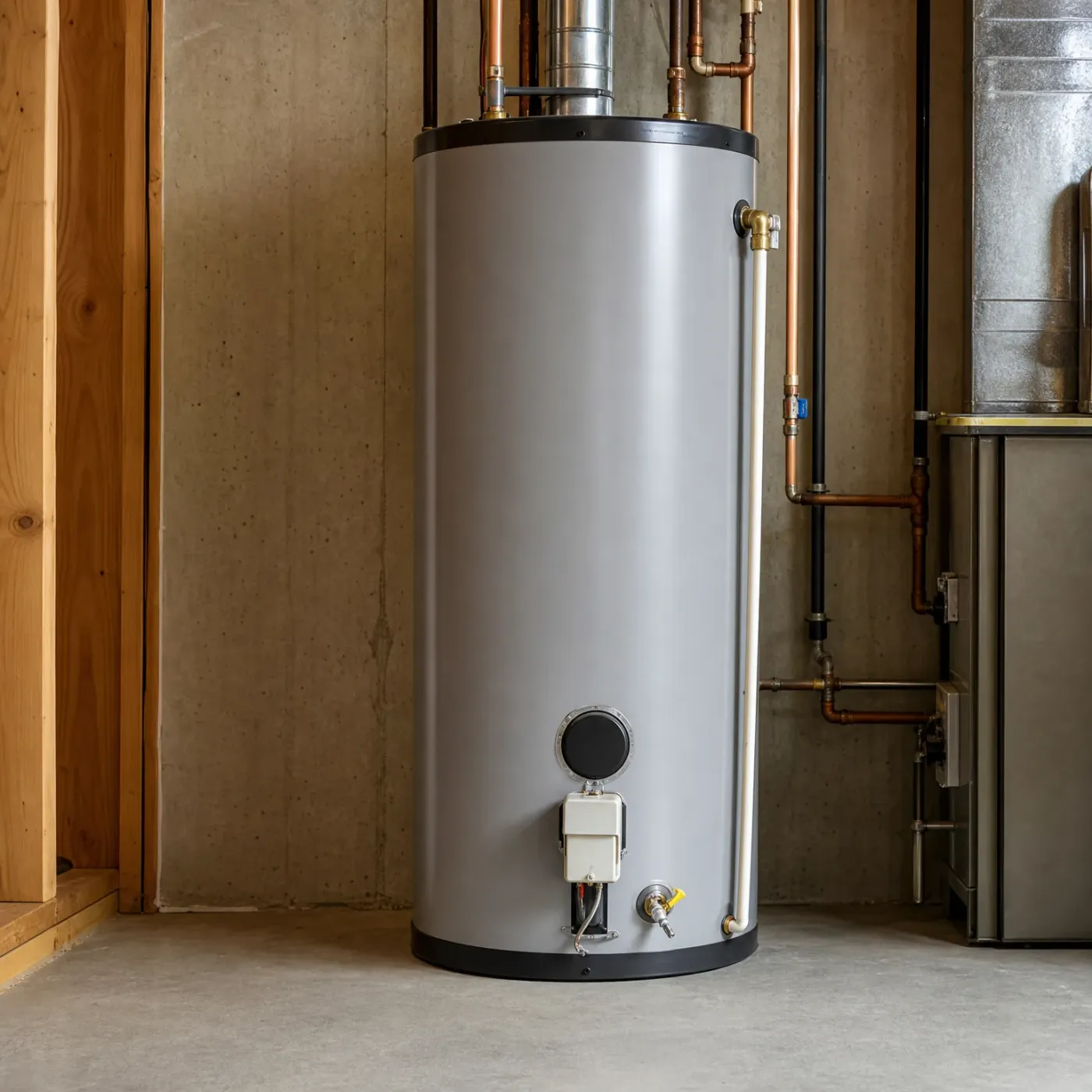
Flushed and running clean
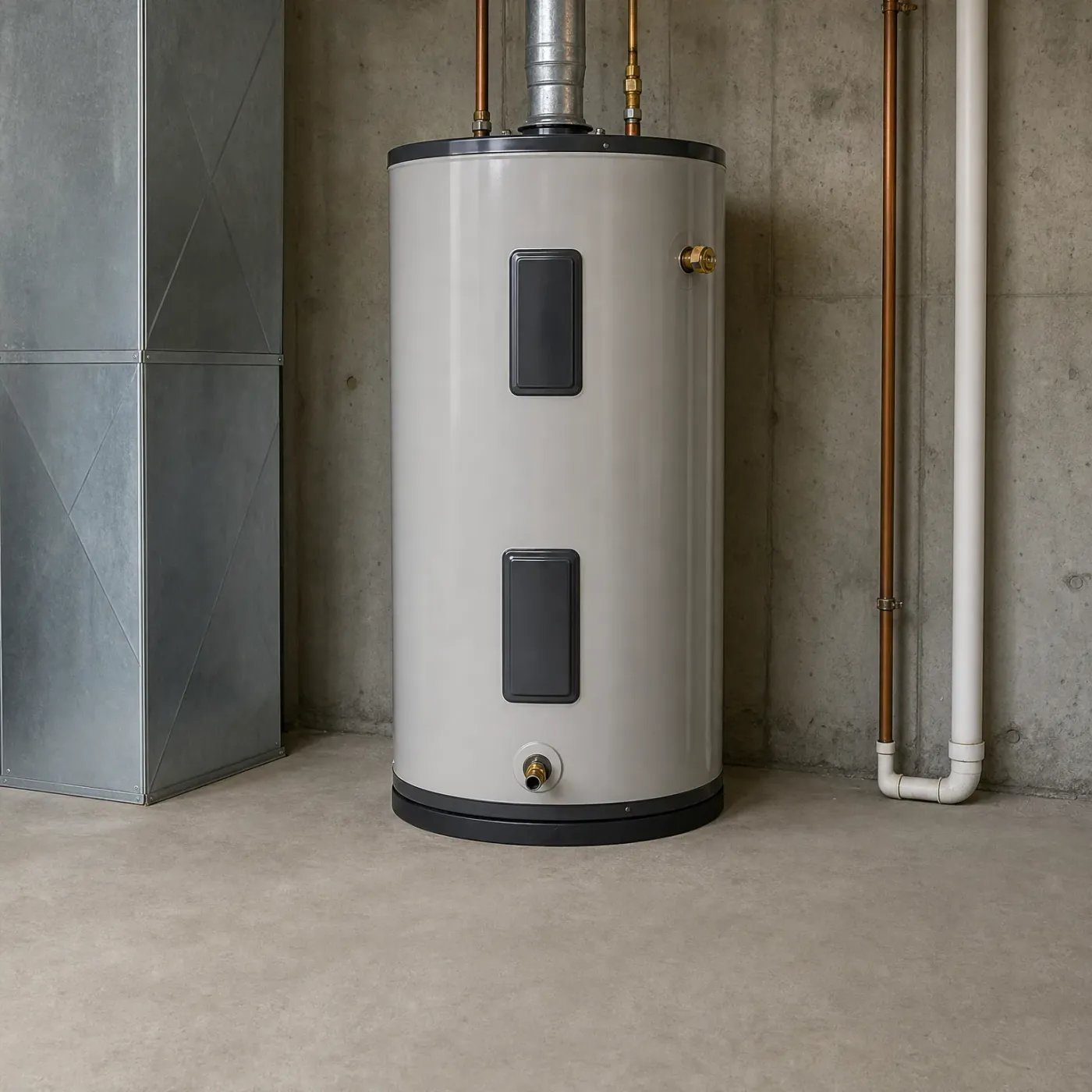
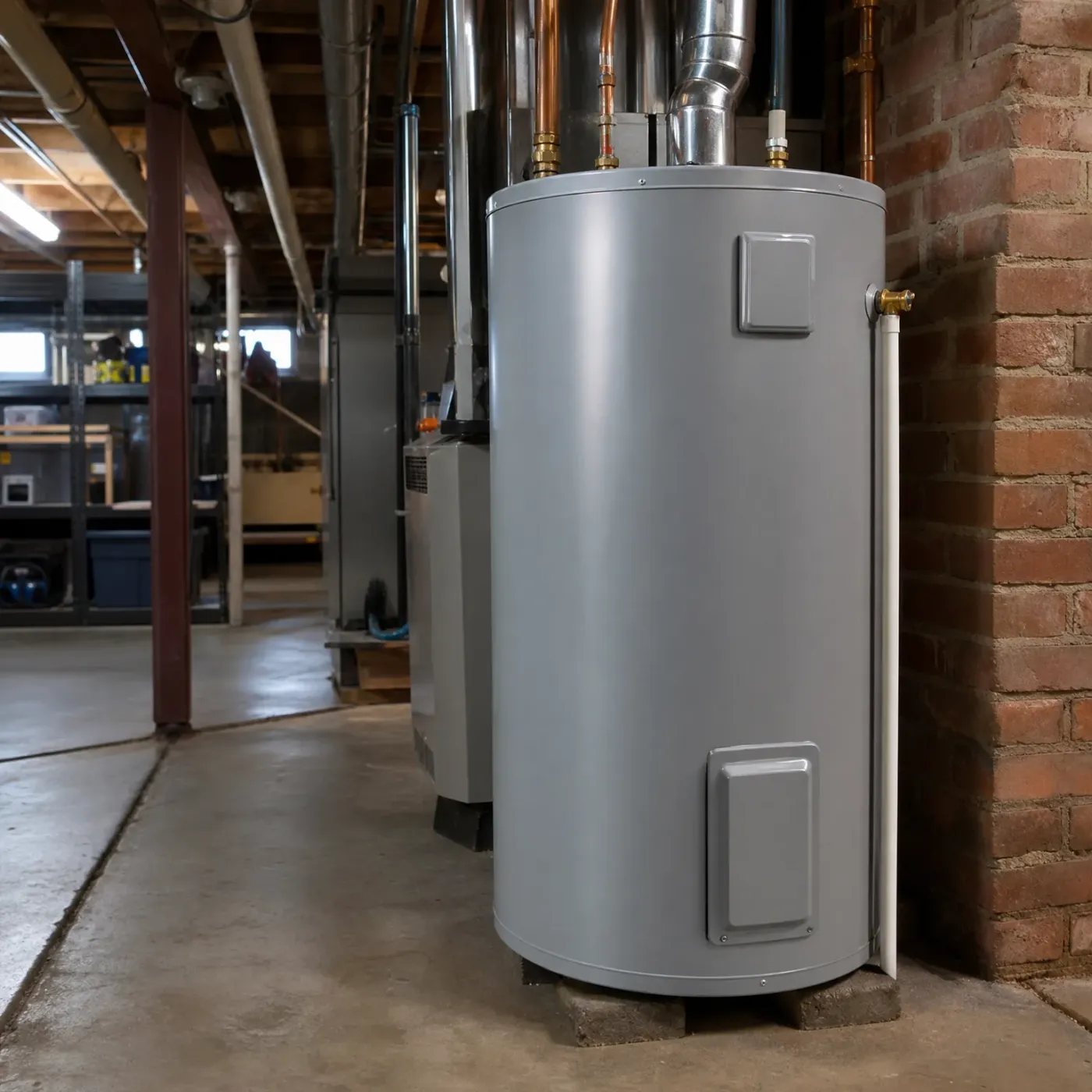
This tank is doing what a water heater is supposed to do. The copper lines run clean, the flue vents straight, and the drain valve near the base gets used once a year. Nothing on this unit is working harder than it has to.

Flush your water heater once a year. Most of South Dakota's water comes from groundwater with a fair amount of dissolved mineral in it, and that mineral settles out as sediment on the bottom of the tank every time it heats. A gas water heater has a burner right under that tank floor, so the sediment sits between the flame and the water it's supposed to be heating. The more it builds up, the harder that burner works to get the same result, and the tank itself takes the heat stress of it. A once-a-year flush clears that layer out before it hardens into something a garden hose can't move. If your water heater came with the house and nobody's flushed it yet, it's worth finding out how long it's been.


The burner on a gas water heater sits right under the tank, so it heats whatever is resting on the bottom first. With South Dakota's groundwater carrying a fair amount of mineral, that means a layer of sediment builds between the flame and the water it's supposed to warm. Over time that layer works like insulation, so the burner has to run longer and cycle more to get the same tank of water hot. Gas units recover fast, which sounds like a good thing, but it also means more heating cycles each day and more chances for that sediment to bake onto the tank floor instead of staying loose. Once it hardens into scale, it stops draining out on its own. You might hear it before you see it, a rumble or popping sound as water gets trapped under the grit and bubbles up through it. The drain valve at the bottom of the tank sits exactly where all this collects, which is the whole reason flushing it works.
Stand near the tank and you might hear it talk back, a rumble or a low popping sound when the burner kicks on. That is water working its way through sediment on the bottom. Hot water might take longer to show up at the tap, or run lukewarm sooner than it used to. Some homes notice a metallic taste or a rusty tint when the tap first opens. None of this is dangerous by itself, but a tank that has to push heat through a thick layer of grit works harder to do the same job, and the relief valve and the tank shell take the wear for it over the years.
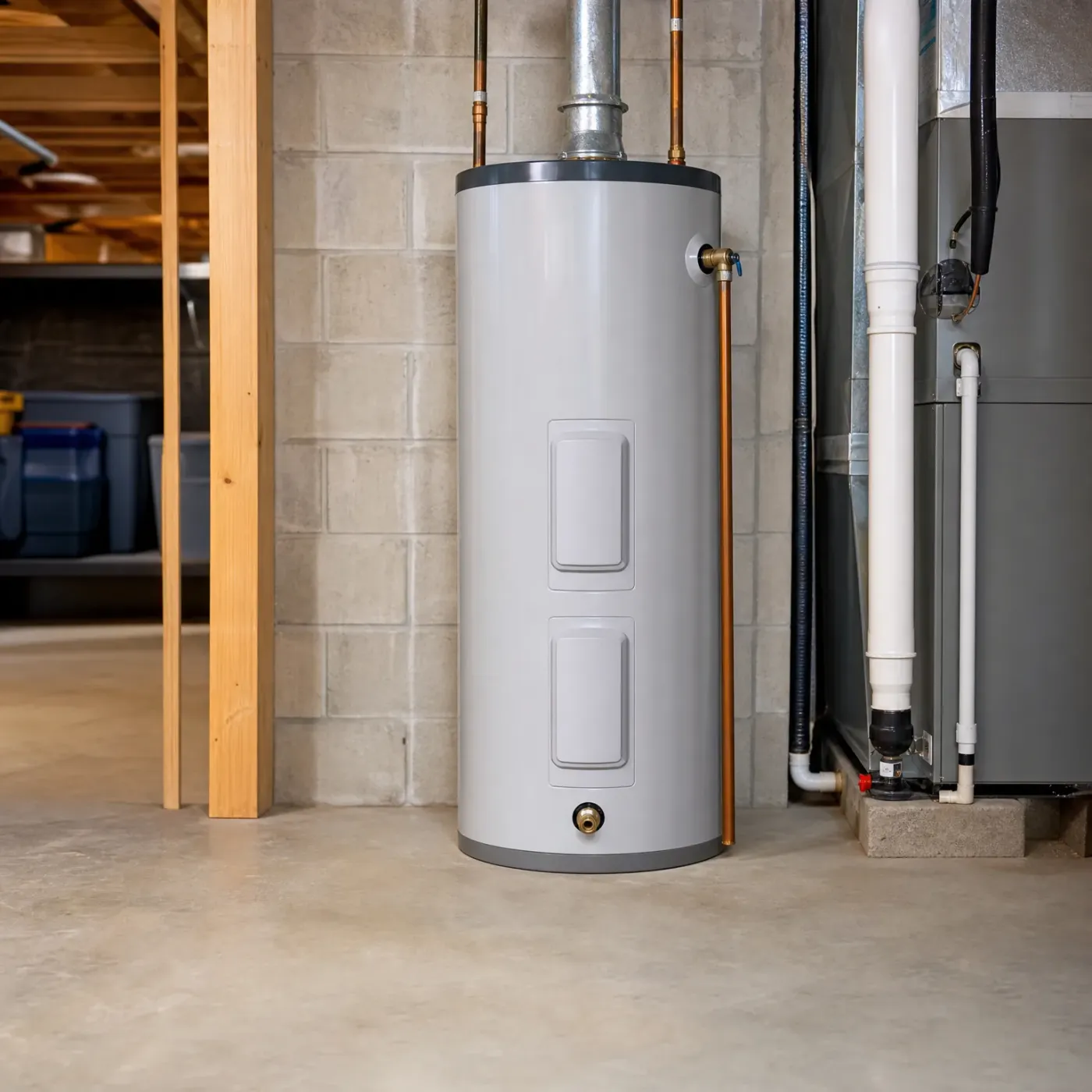
This tank is doing what a water heater is supposed to do. The copper lines run clean, the flue vents straight, and the drain valve near the base gets used once a year. Nothing on this unit is working harder than it has to.
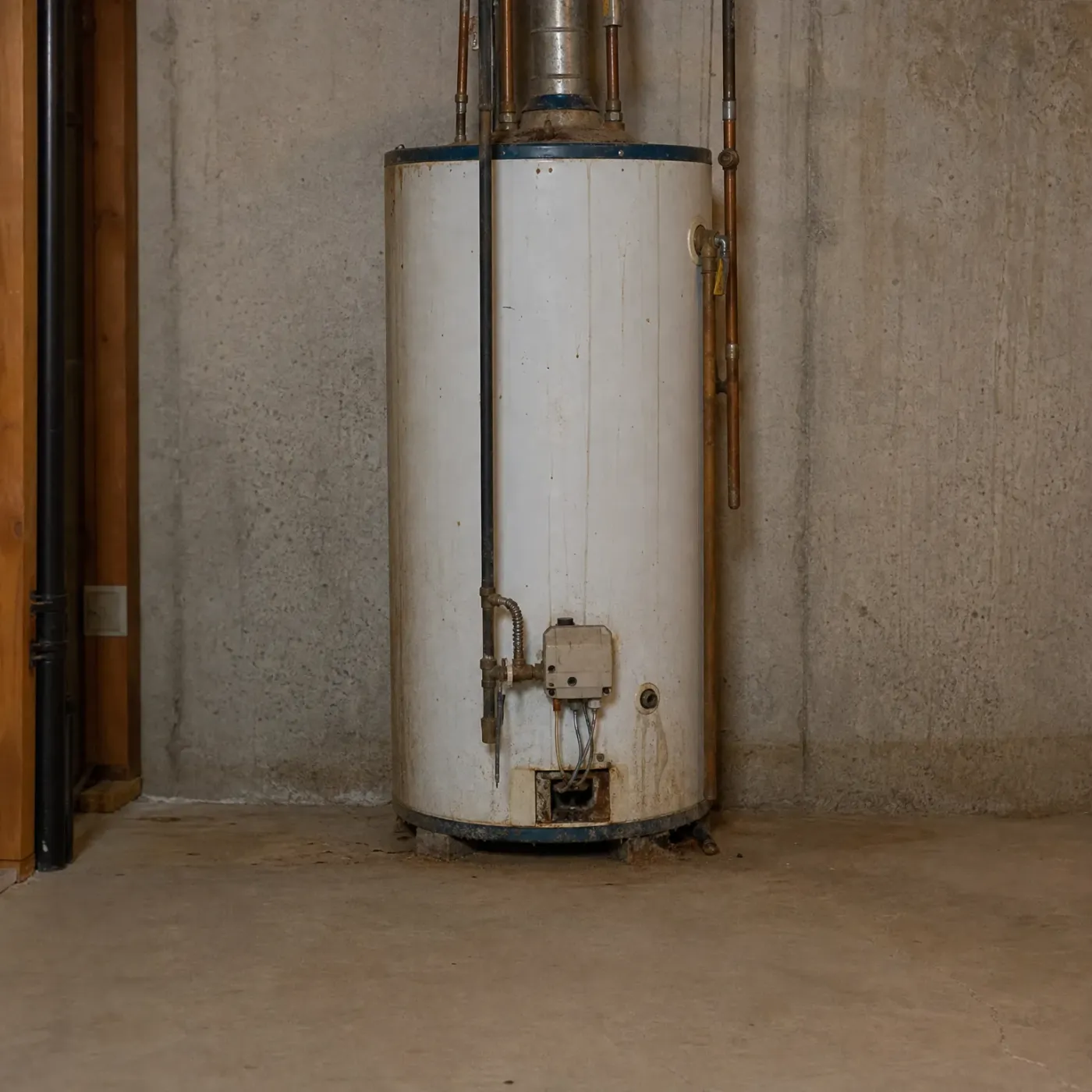
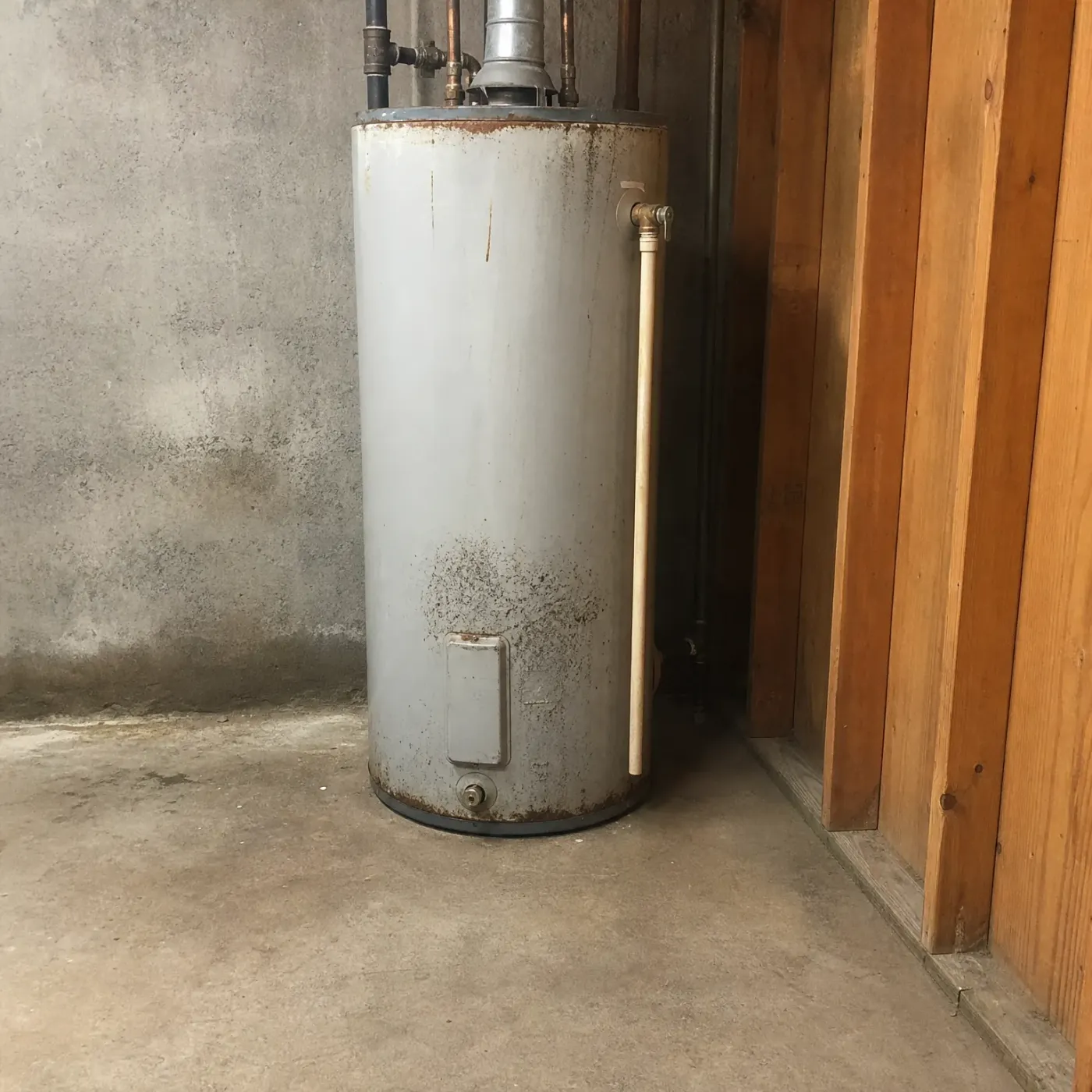
Rust stains down the side and a corroded flue like this usually mean nobody has drained this tank in years. Sediment has been sitting on the bottom the whole time, and the burner has been heating through it with every cycle. The gas valve and fittings show the same wear.
Send the form, and lining up the water heater tune-up stops being yours to chase.
Describe your water heater job, and a local pro who handles it gets in touch.
It costs nothing to send, and you don't have to hire anyone.
You want to know what the process actually involves before you decide whether to do it yourself or have someone else handle it. It is not complicated, but the order matters, and skipping a step is how people end up with a mess or a burned-out element.
The power or gas to the unit gets shut off first, so the burner or element doesn't run dry. The cold water supply stays on while a hose runs from the drain valve near the base to a floor drain or outside. Opening that valve lets the tank empty, and the incoming cold water stirs up whatever sediment has settled, pushing it out through the hose. Once the water runs clear instead of cloudy or gritty, the tank is flushed. The valve closes, the tank refills, and the power or gas goes back on. On a tank that has gone years without a flush, the sediment can be packed hard enough that it takes longer to run clear, or clogs the valve itself.
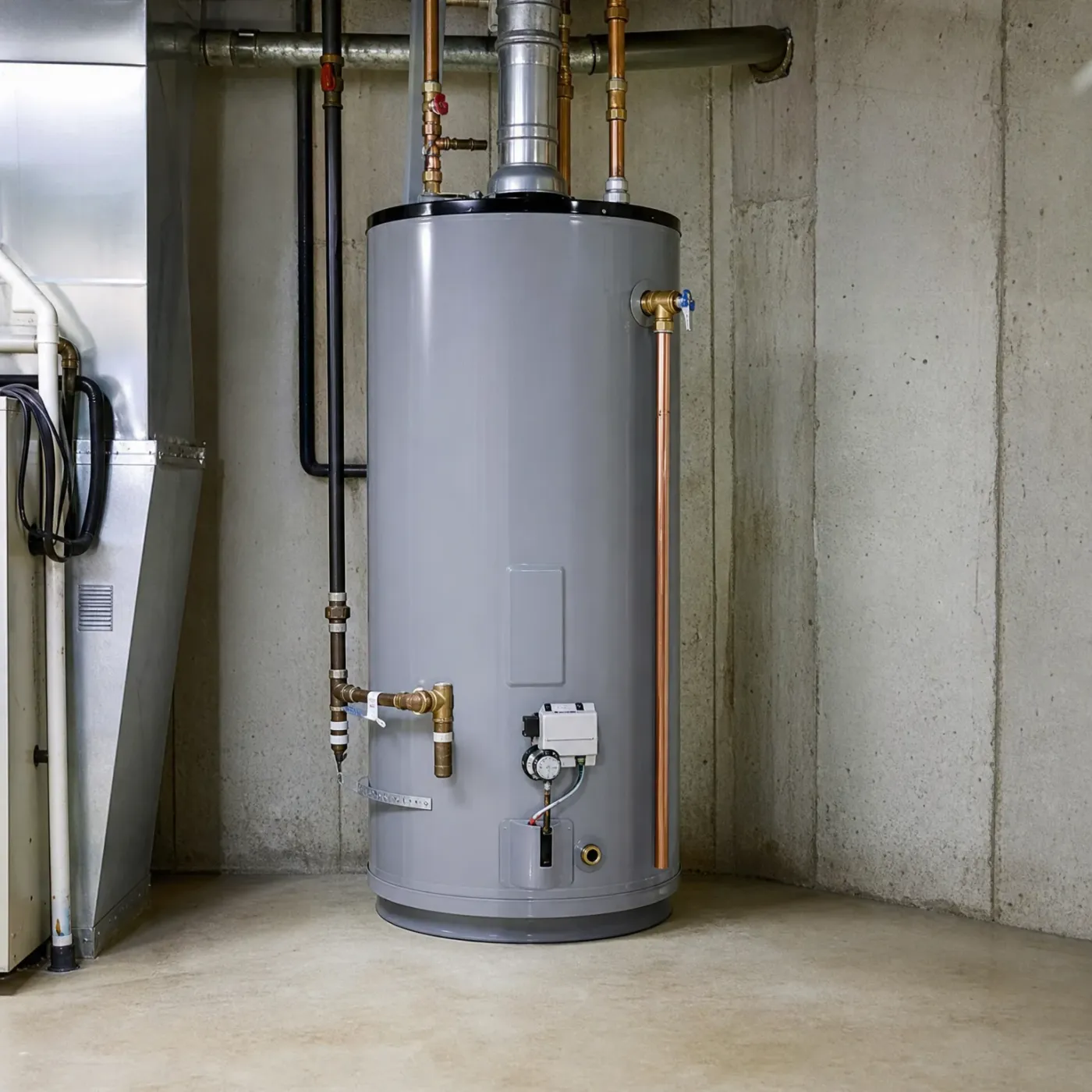
This is what a working water heater looks like. The copper and gas lines are clean, the flue vent runs straight, and the thermostat up front does its job without a fight. Nothing here is hiding a layer of grit on the bottom.
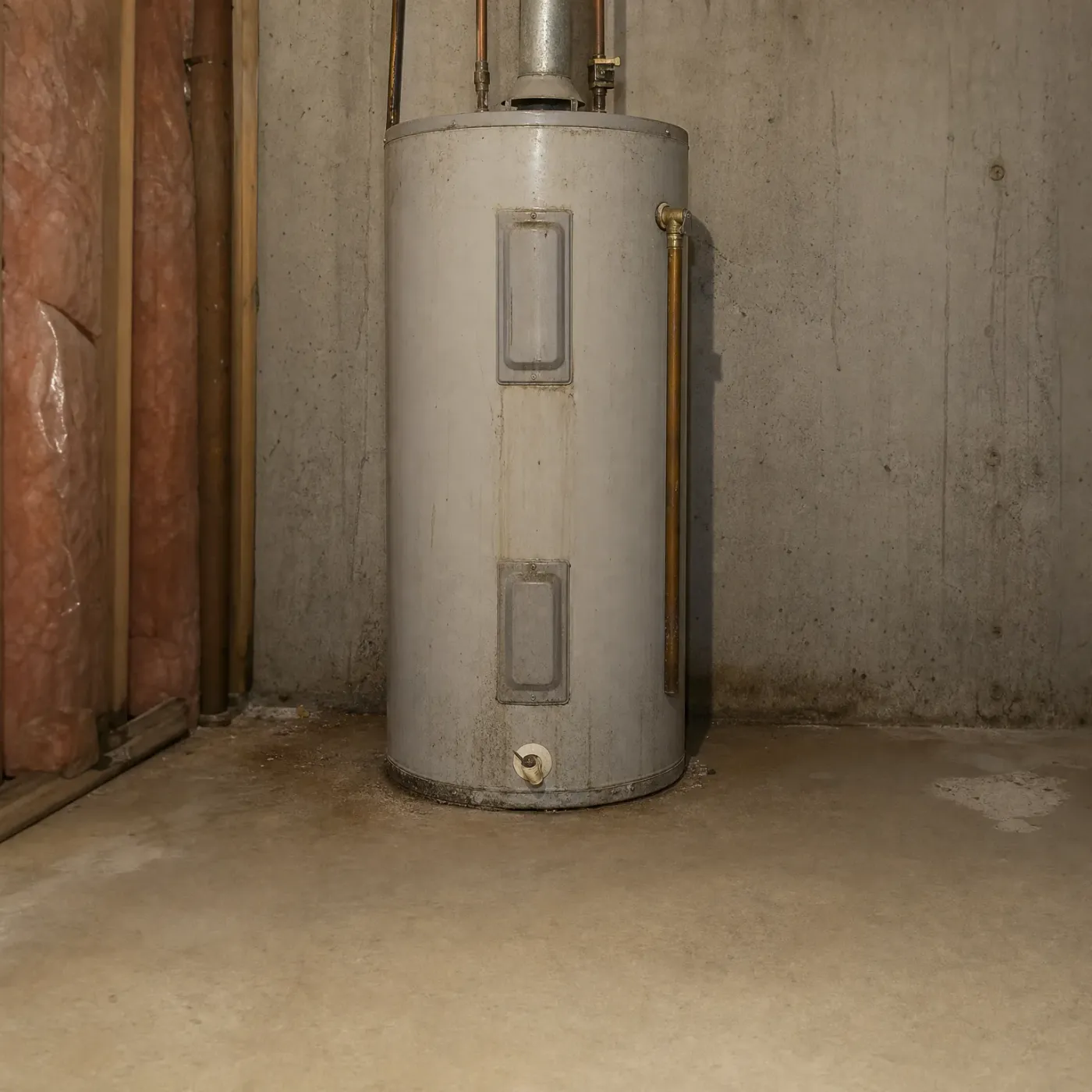
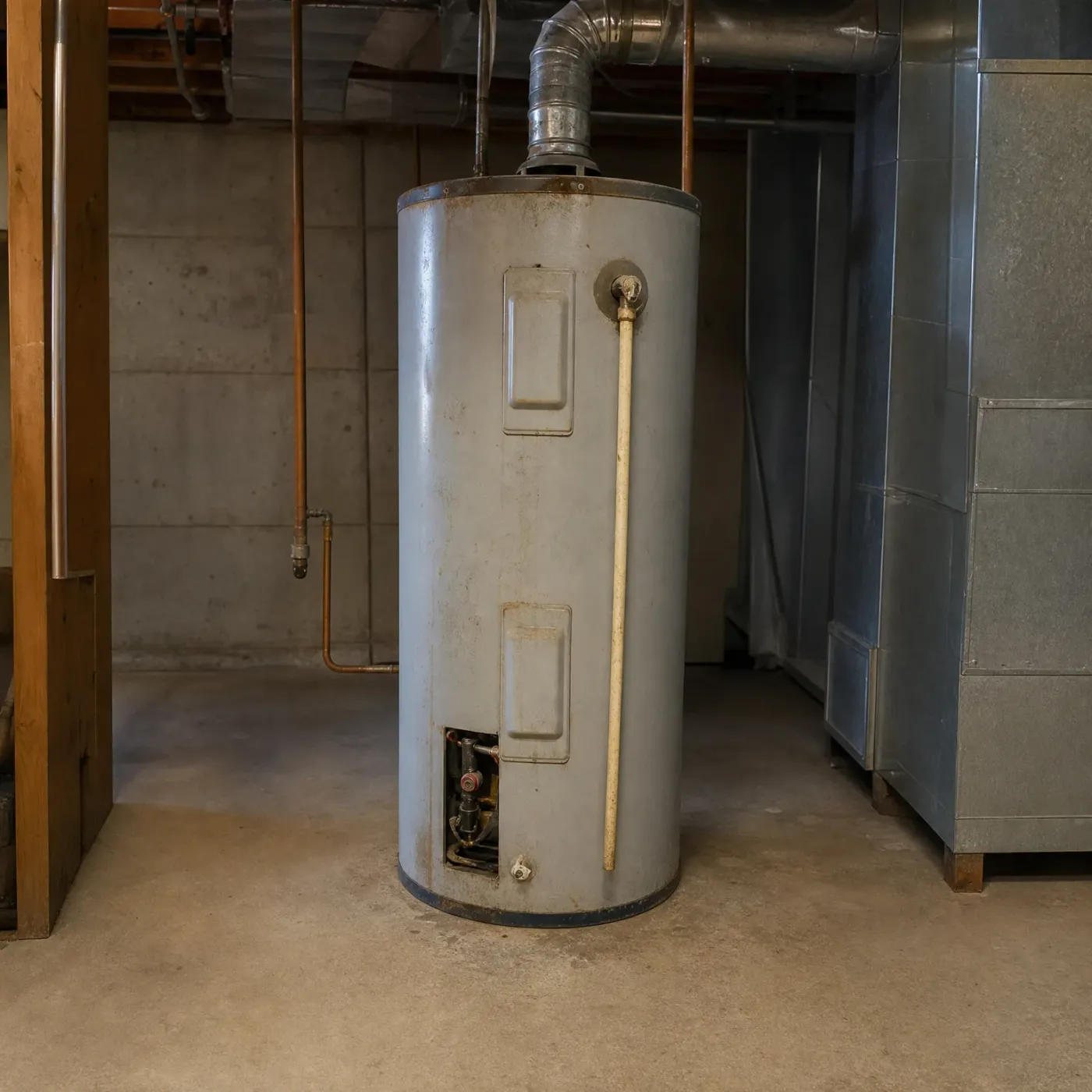
Rust staining like this on an older tank usually means sediment has been sitting on the bottom a long time. The access panels and drain valve are there to maintain it, but once rust shows on the shell, the damage underneath is already done.




Almost half the homes in South Dakota heat with gas, and if yours is one of them, chances are your water heater runs on gas too. That burner sits right under the tank, so a yearly flush is what keeps it heating water instead of fighting sediment.
ACS 2020-2024 5-year B25040
A water heater in South Dakota doesn't need much from you, but it needs this once a year. The groundwater here carries enough mineral that sediment collects on the tank bottom whether you think about it or not, and that layer only grows if you leave it alone. A burner heating through clean metal does its job and stops. A burner heating through sediment runs longer to get the same water to the same temperature, every single time it fires. That's the whole case for flushing: not a crisis, just a yearly reset that keeps the tank working the way it was built to.
If you've heard rumbling or a low popping sound from the tank, that's sediment, and it tells you the flush is overdue rather than telling you something is broken. Rust forming on the shell is a longer story, usually years of sediment sitting underneath rather than a recent problem. None of this requires you to become an expert in your own water heater. It requires finding someone who does this regularly and letting them handle the tank once a year.
That part can happen without becoming another thing on your list. Send the form and the job of finding someone is done. A contractor who handles this work gets in touch, and from there the flush is on their schedule, not something you have to chase down or figure out alone.




Send the form and the water heater tune-up stops being something to remember.
No charge to send it. You decide if you hire them.