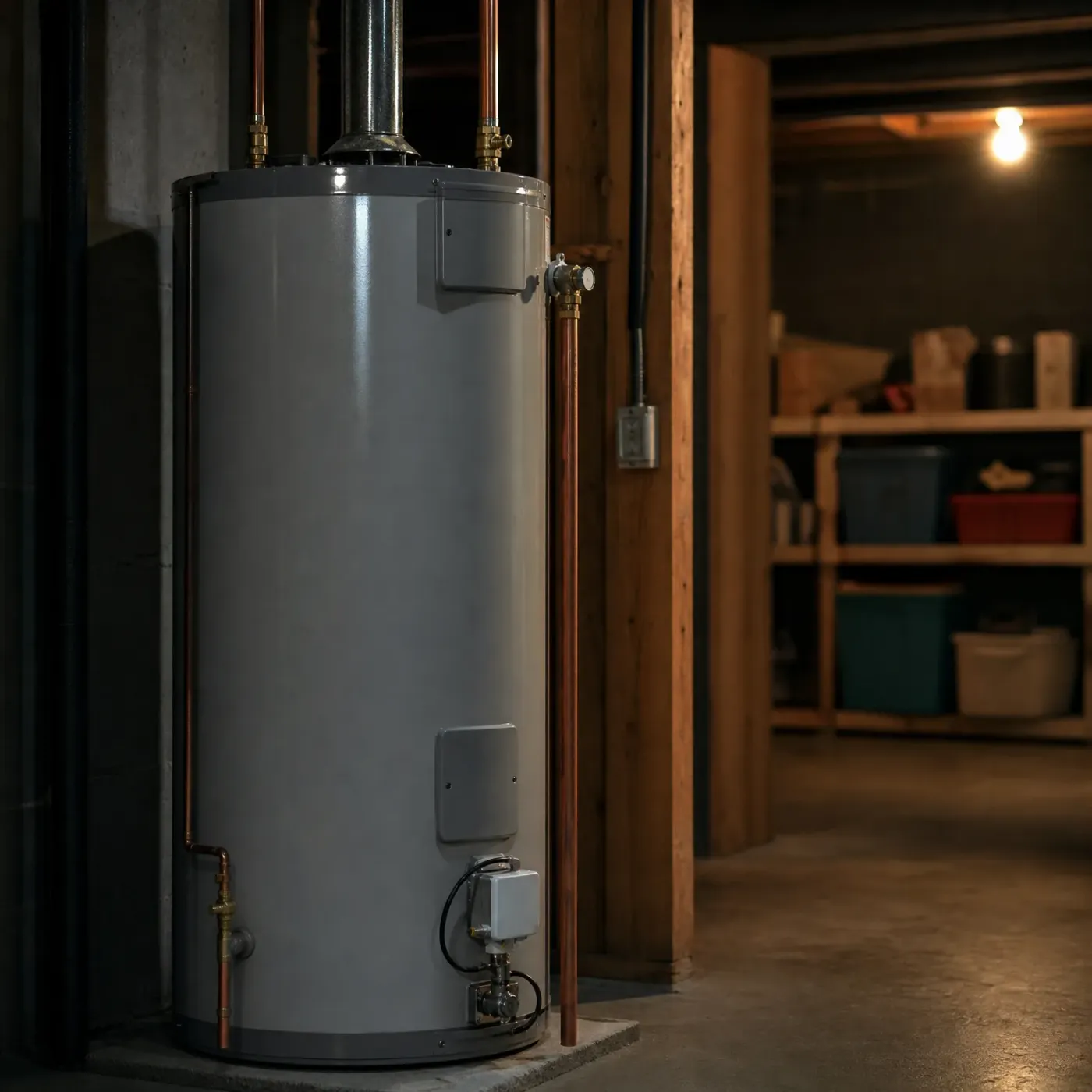


A large gray cylindrical water heater with copper pipes and a metal flue stands on a concrete pad in a dim basement, with wood framing and shelves of storage bins lit by a bare bulb behind it.

Send one request and you're done looking

Is a heat pump water heater worth it in South Dakota

Cheap power and a gas water heater in the next room change the math on a heat pump water heater here. This page gets into what it actually pulls in electricity where the air stays cool most of the year, and whether it makes sense to switch. Send the form and the search for who installs it is off your plate.

Send my request

A heat pump water heater can work in South Dakota, but the savings are harder to earn here than almost anywhere else. These units heat water by pulling warmth out of the air around the tank, which is why they use so much less electricity than a standard electric water heater. That part works fine in a South Dakota basement. The catch is what you're comparing it to. Most homes here heat water with gas, and gas is already cheap to run. Electricity here is cheap too, which narrows the gap further. A heat pump water heater mainly beats an electric tank on operating cost. It does not reliably beat a gas one. If your water heater runs on electricity now, switching can still cut what it draws. If it runs on gas, the case gets much thinner, and it comes down to what you want from the equipment itself, not the bill.

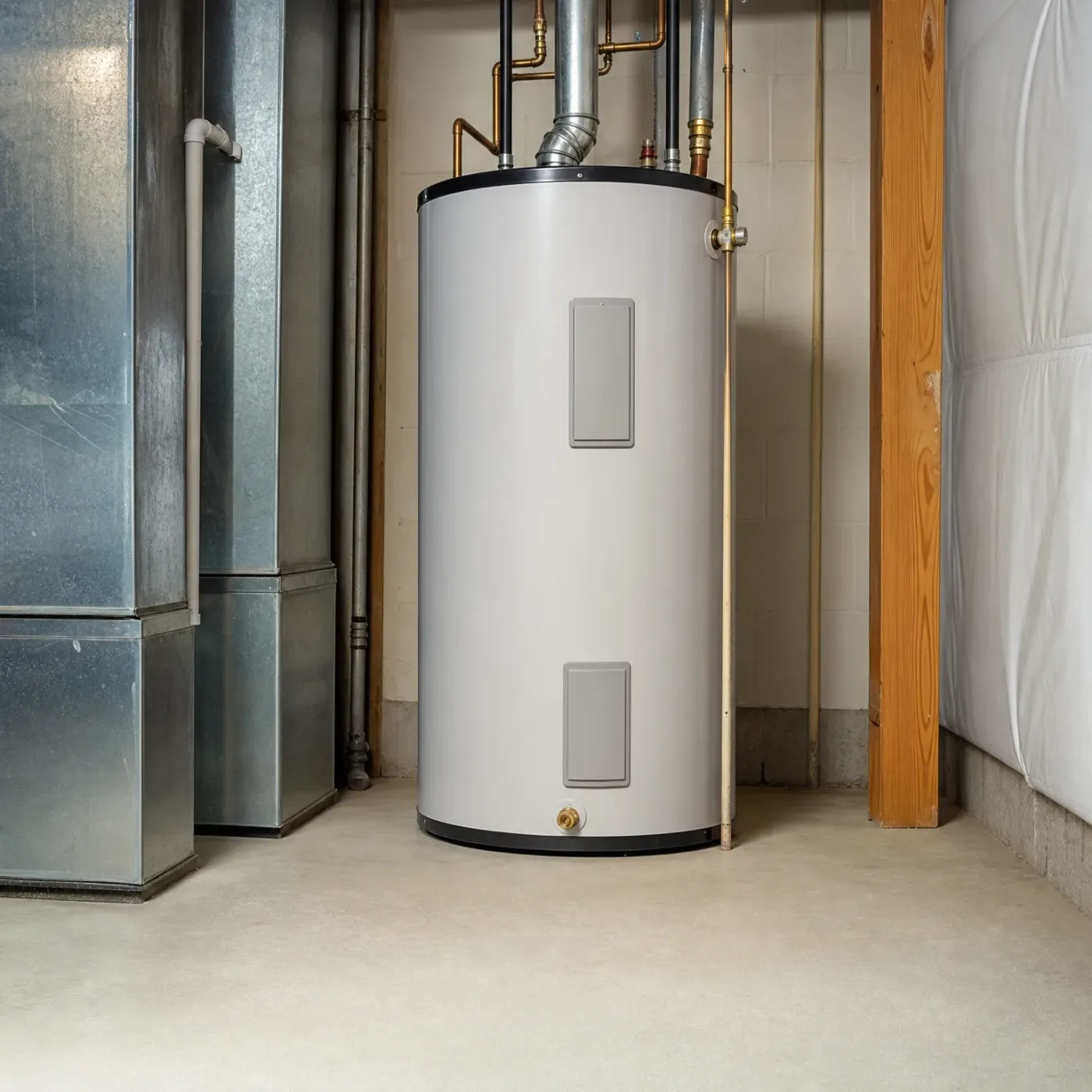
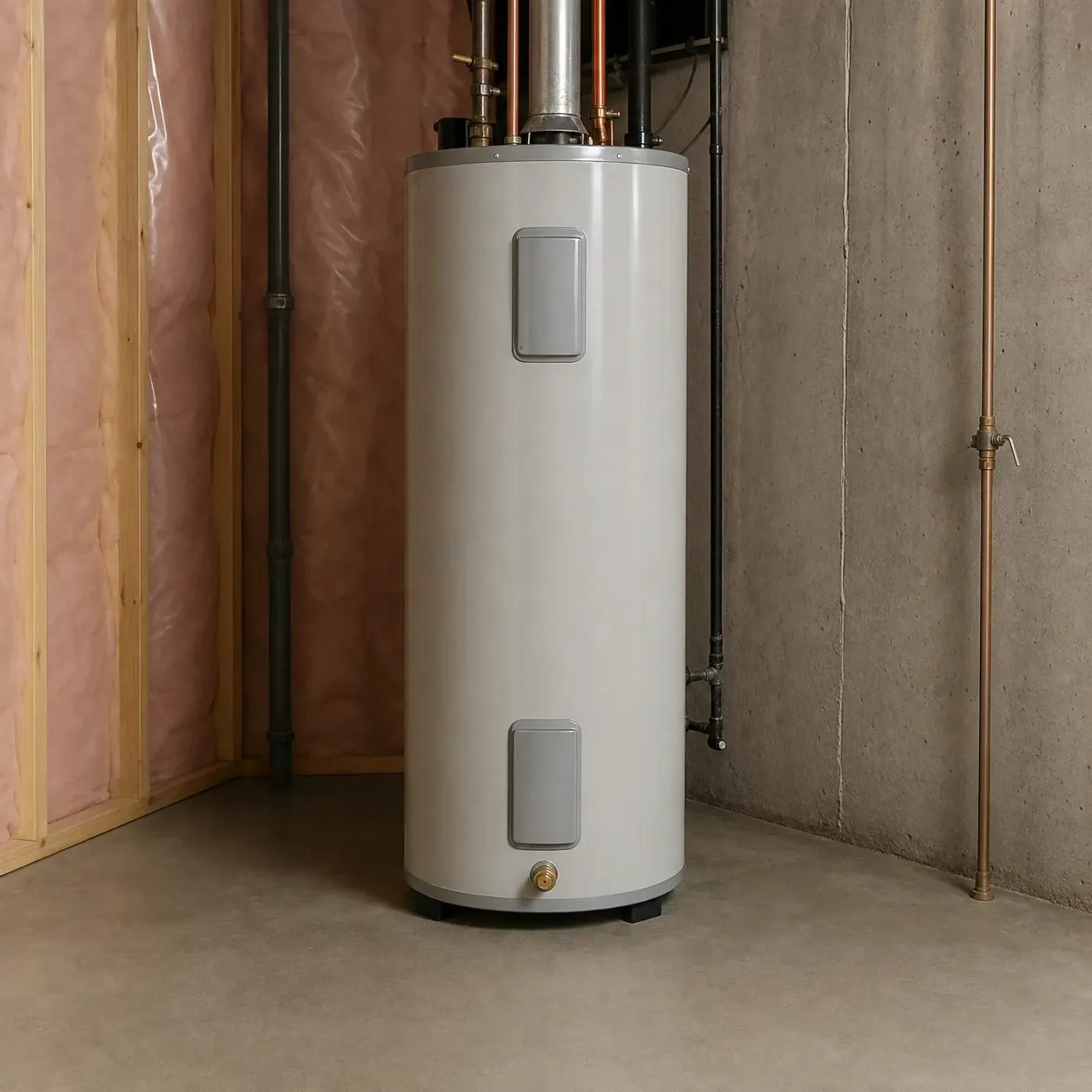
A white cylindrical water heater with two access panels and a brass drain valve stands on a concrete floor in a basement corner, beside a pink-insulated stud wall and a concrete wall with copper and black pipes.
An electric water heater like this one is what a heat pump version would replace, and the swap is straightforward.
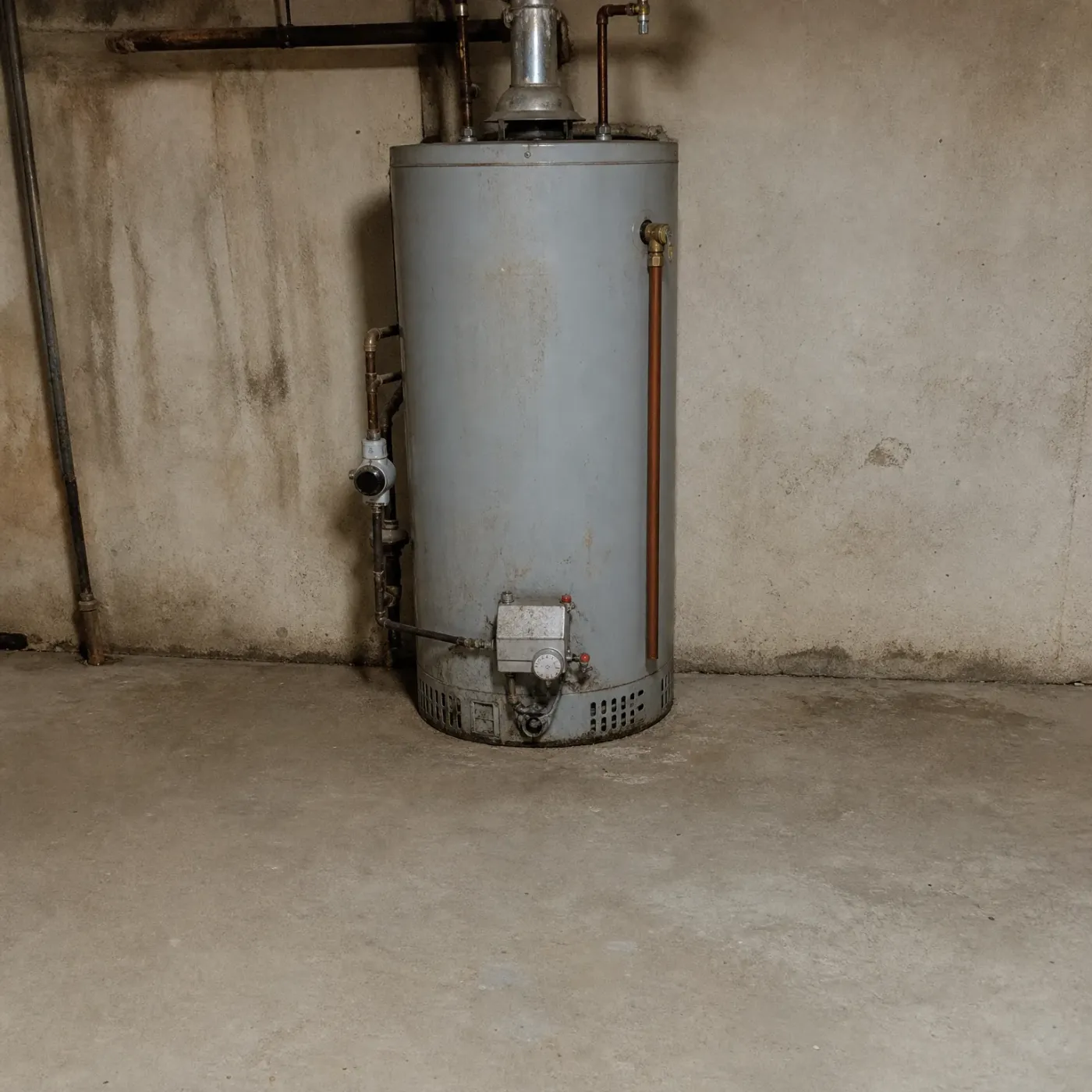
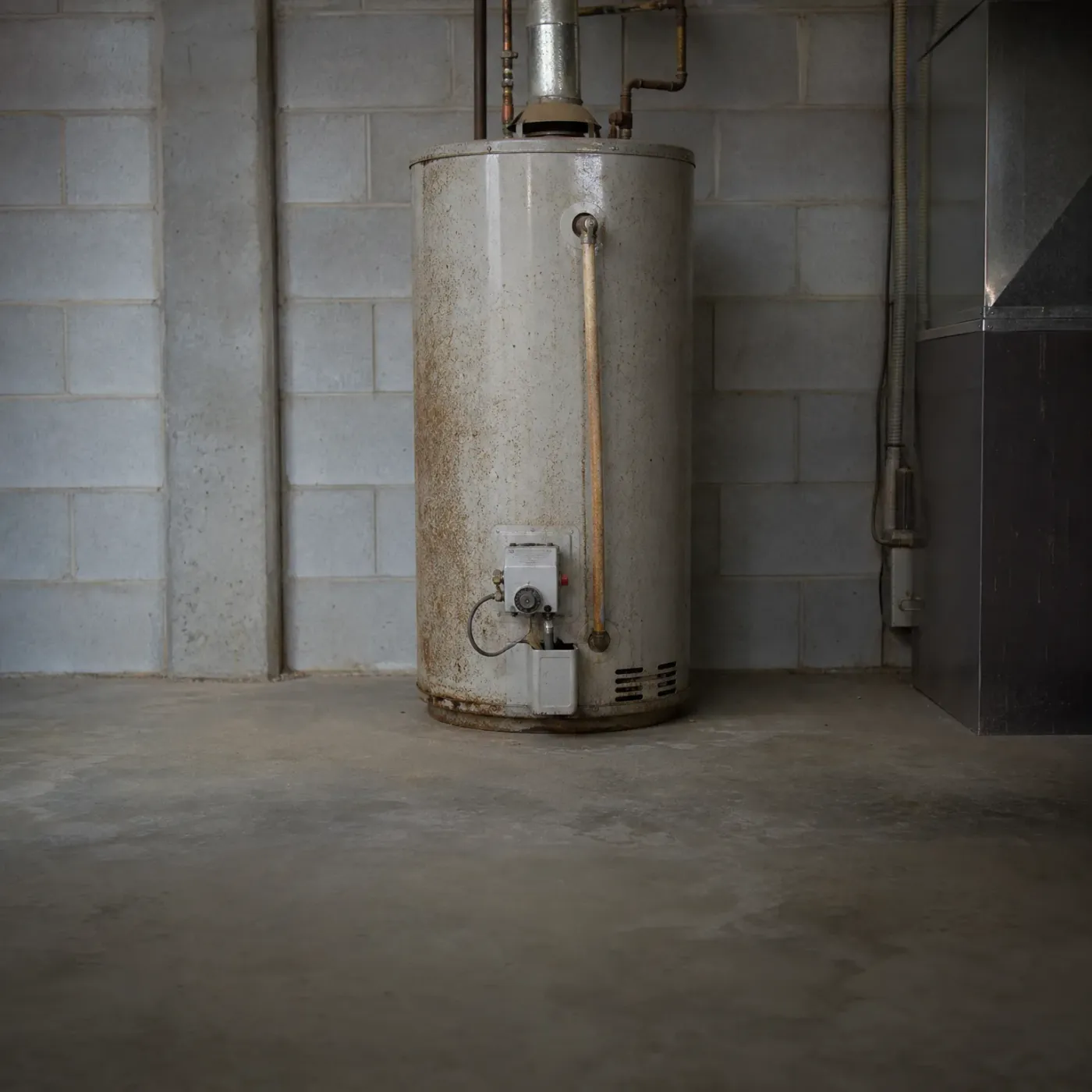
A rusted gas water heater with a flue pipe stands against a concrete block wall on a bare concrete floor, next to a dark metal duct or furnace cabinet at right.
A gas water heater like this one means a switch involves running new electric wiring, not just a new tank.

A heat pump water heater doesn't make heat the way a gas burner or an electric element does. It moves heat that's already in the air into the tank, using a compressor and a fan mounted on top of the unit. That's why it needs space around it to pull air in, usually a few hundred cubic feet, not a tight closet. The compressor isn't running all the time. It kicks on when the water drops below your setpoint and shuts off once it's satisfied, the same way a refrigerator cycles. When several people shower back to back and the tank can't keep up, a backup electric element takes over to recover faster, though that mode uses more power than the heat pump itself. Because the unit is pulling warmth out of the surrounding air, the room it sits in runs a bit cooler and a bit drier than the rest of the house. And since the process makes condensation, the tank still needs a drain pan and condensate line, same as it would for any water heater.

How the Tank Actually Heats Water

  • A heat pump water heater pulls heat from the surrounding air and moves it into the tank instead of generating heat directly, which is why the compressor and fan need room to draw air around the unit.
  • The compressor only runs when hot water use drops the tank temperature below its setpoint, so the unit cycles on and off rather than heating constantly.
  • Most models have a backup electric resistance element that kicks in when hot water demand outpaces what the heat pump alone can recover, which costs more to run than the heat pump mode.
  • Pulling heat from the air cools and dries the space around the tank, so a closet or small utility room will run cooler than the rest of the house.
  • Below a certain air temperature, usually somewhere in the 40s, the unit shifts to resistance heat because there isn't enough warmth in the air to pull from efficiently.
  • The tank still needs the same clearance for a drain pan and condensate line as a standard water heater, since the cooling process produces condensation that has to go somewhere.
An older man with gray hair and a beard leans back on a beige sofa with his eyes closed, in a sunlit room with potted plants, a wicker chair and large windows behind him.
A woman in a cream knit sweater sits in an armchair with her eyes closed and a slight smile, beside an open window showing orange autumn foliage, with a mug, books and a lit candle on a small side table.
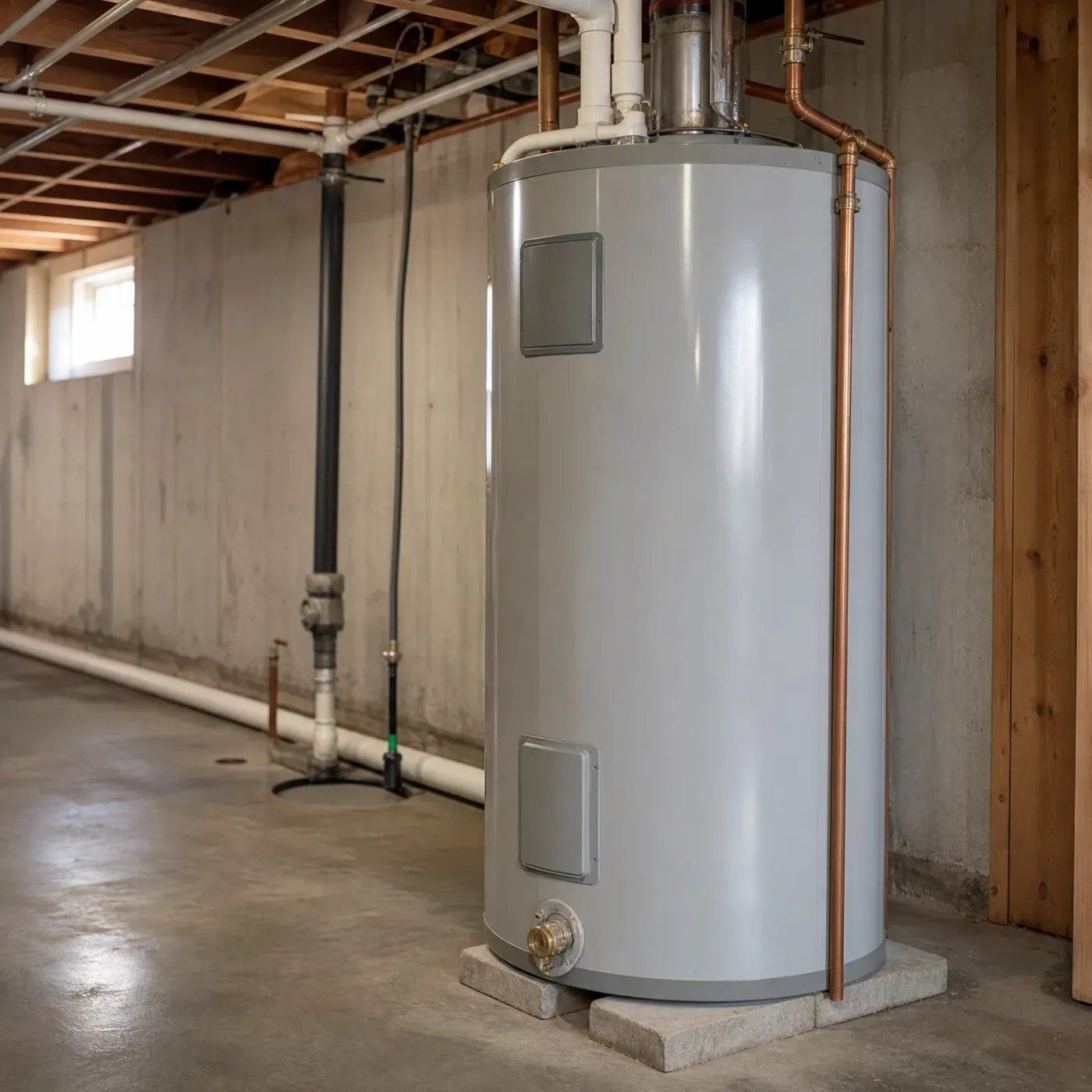
A large white cylindrical water heater on concrete blocks in a basement with poured concrete walls, exposed joists, copper and PVC piping, and a small window.

Finding a pro stops being your job

Your request stays with one local pro.

Send the form and the search for an installer is over.

Find a licensed pro

Asking costs nothing, and the choice to hire stays yours.

Gas, Electric, or Heat Pump

Stay with gas

  • A gas water heater costs nothing extra to run against South Dakota's cheap electricity, since it never draws from the grid for heating in the first place.
  • There's no wiring to add and no breaker to size up, since the replacement is tank for tank in the same spot.
  • A gas unit keeps recovering hot water at the same rate no matter how cold the garage or basement around it gets.
  • If the house runs on gas for the furnace too, a gas water heater is one less system to think about separately.

Switch to heat pump

  • A heat pump water heater pulls most of its heat from the air in the room, so it draws a fraction of the power a standard electric tank would.
  • Cheap electricity here means the lower running cost shows up smaller on the bill than it would somewhere power costs more.
  • The compressor and fan need a space with some room and airflow around the tank, which rules out a tight closet.
  • Switching from gas means adding a dedicated electric circuit, since the unit runs on electricity, not a gas line.
  • Replacing an existing electric tank is a simpler swap, since the wiring and the spot are already there.
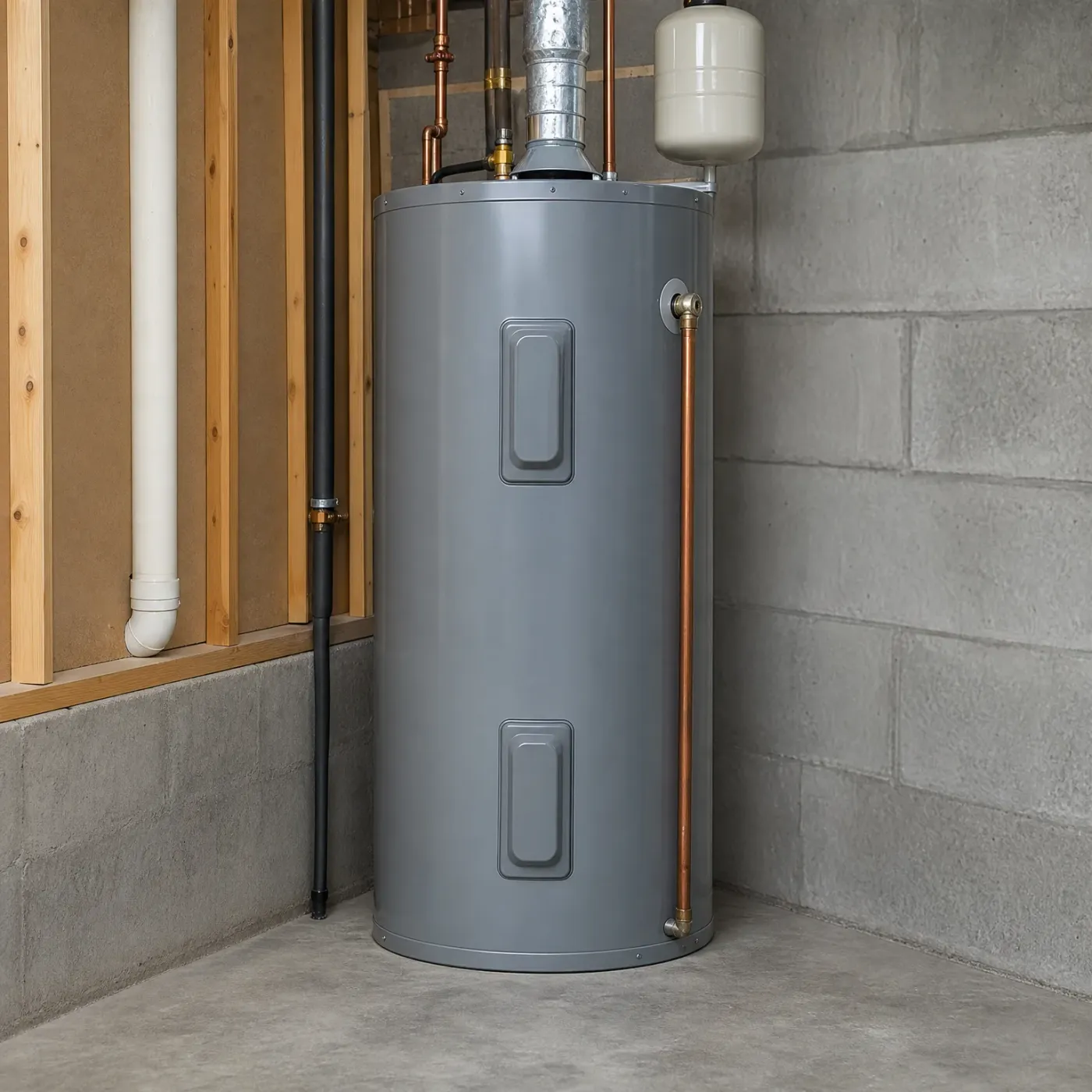
A gray cylindrical water heater with copper piping and an expansion tank stands in a basement corner beside a concrete block wall and exposed wood framing.

A working electric tank

This is what a heat pump water heater looks like once it is running, tied into the same copper lines, drain, and expansion tank an electric unit already has. No flue, no gas line to cap off. It sits in the corner and does its job quietly.
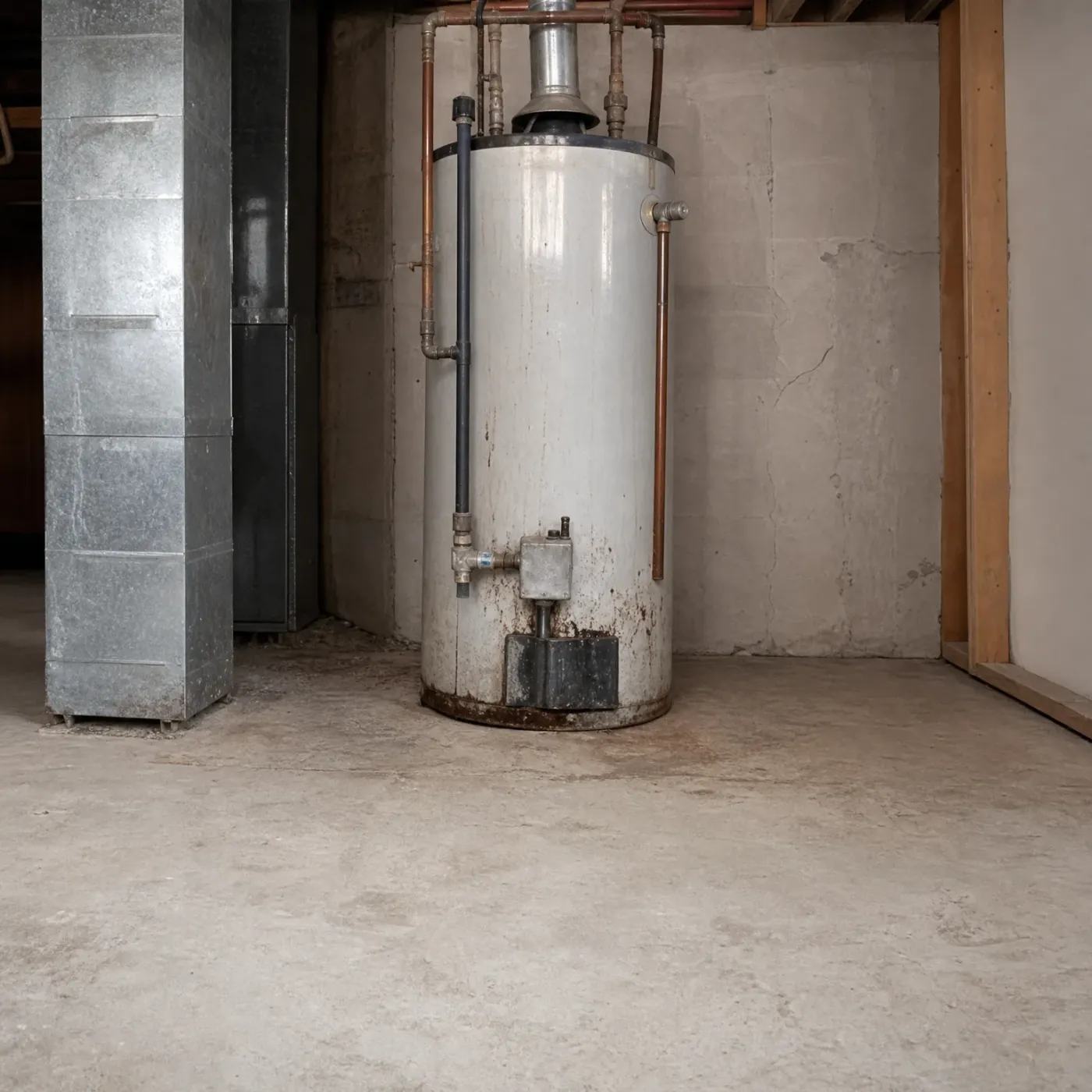

An old rusting cylindrical gas water heater with copper and steel pipes and a flue stands against a concrete basement wall beside metal ductwork on a bare concrete floor.

A gas tank past its prime

Rust and mineral buildup like this mean the tank is near the end, not something to patch. If yours looks like this and gas is what's feeding it, swapping to a heat pump water heater means running new wiring, not just setting in a new tank next to the furnace.

A man in a blue sweatshirt reclines with closed eyes in a brown leather armchair in a living room with a bookshelf, houseplant, sofa, window, and a side table holding newspapers and a dark mug.
A bearded man in a gray pullover reclines with closed eyes on a brown leather sofa in a sunlit room with a window, framed picture, potted plant, and a wooden cabinet holding papers and a dark mug.
A man in a gray sweater leans back with closed eyes in a brown leather armchair beside a wooden side table holding a dark mug and a folded newspaper, with bookshelves and a window seat behind him.
A man in a green sweater reclines in an armchair with his eyes closed and a slight smile, beside a window with plants, a small table holding a mug and folded newspaper, and bookshelves behind him.
  1. The compressor pulls heat out of the surrounding air.

  2. A refrigerant loop carries that heat to the tank.

  3. A coil around the tank transfers the heat into the water.

  4. A backup electric element kicks in if demand outpaces the compressor.

An older gray cylindrical gas water heater with copper and steel piping and a flue, standing on a concrete floor against a stained concrete wall.
Before you get your water heater installation
A white cylindrical water heater with two access panels stands on a concrete floor in a basement corner, beside galvanized ductwork, copper and metal pipes, a wooden post, and a concrete block wall.
After you get your water heater installation

47.6% of homes statewide heat with gas

Almost half the homes in South Dakota heat with gas, and if yours is one of them, that gas water heater sitting next to the furnace is the real obstacle. Swapping it for a heat pump model means running new electric wiring and a breaker, not just setting a new tank in place.

ACS 2020-2024 5-year B25040

Where This Leaves You

  • If you already have an electric water heater, a heat pump model is a straight swap and the math on South Dakota's cheap power works in your favor.
  • If you're on gas, the wiring and breaker work change the decision from a tank swap to a bigger project.
  • A South Dakota installer who works on these year round knows which tank sizes and vent clearances fit your situation without guesswork.
  • Routing the request to one licensed local contractor means a single call back instead of a string of competing bids.
  • The space around your current water heater, not the season, is what decides whether this swap makes sense now.

The answer depends on what's sitting in your utility room right now. An electric tank makes this an easy call, since South Dakota's cheap power stretches further with a heat pump model pulling heat from the air instead of an element. A gas tank changes the question entirely. You're not swapping one tank for another anymore, you're adding a circuit, sizing a breaker, and finding space for a compressor that needs air around it to work. Neither answer is wrong. It just depends on what you've got.

A local installer who handles these year round has seen both situations enough times to know where they go sideways, which vent clearance actually fits your layout, and which tank size makes sense for your household instead of the one that's easiest to sell. That kind of knowledge only comes from doing the work in homes like yours, not from a spec sheet.

Sending the request routes it to one licensed contractor local to South Dakota, not a handful of companies competing for the job. You get one call back, from someone who already knows the kind of questions this install raises here, instead of sorting through several different answers to the same question. Whether you've got an electric tank ready for a straight swap or a gas setup that needs more work, the contractor on the other end of that call is the one who walks the space and tells you what it actually takes.

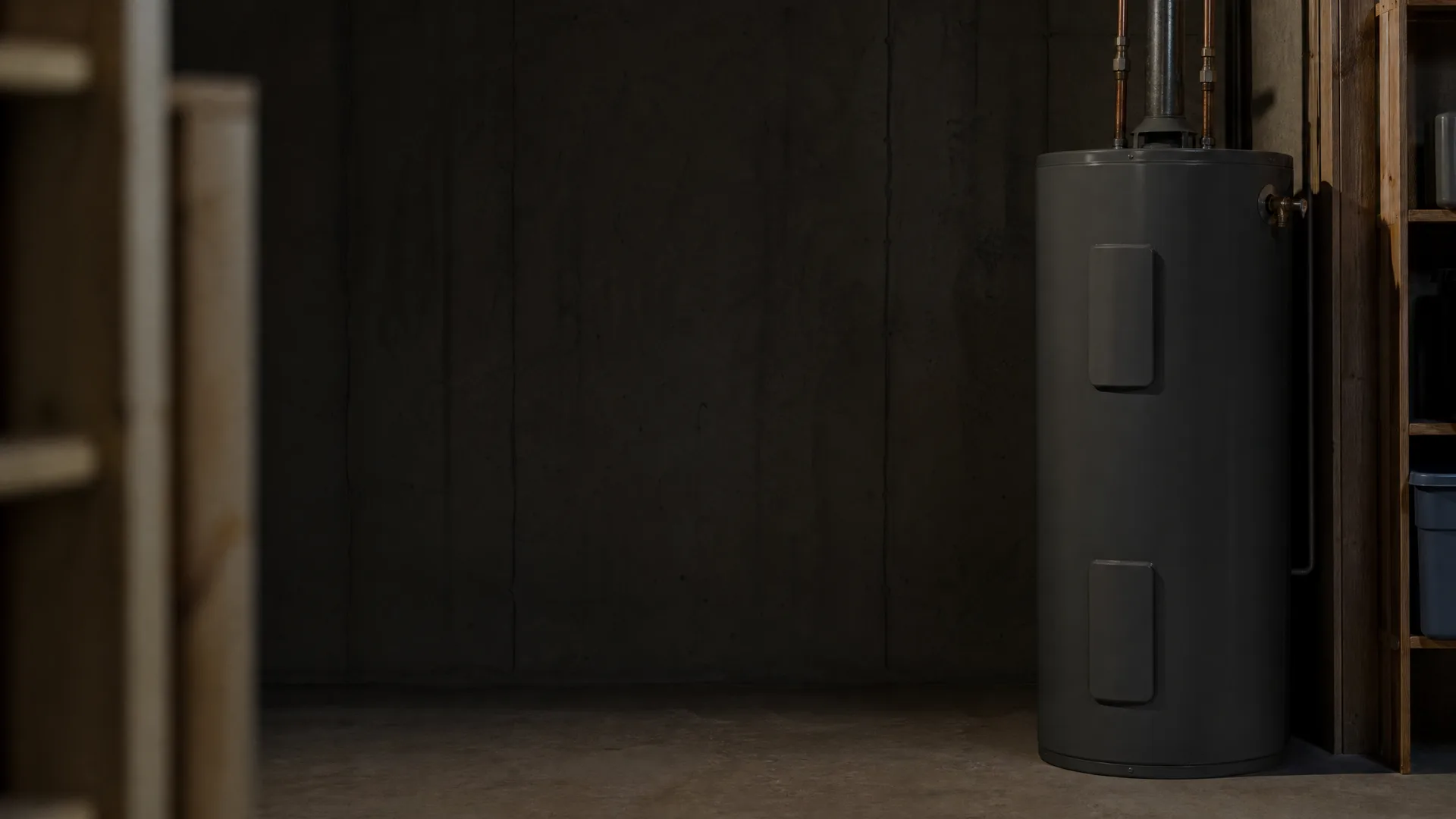
A dark gray cylindrical water heater with copper pipes at its top stands against a concrete basement wall, with wooden shelving and framing in the foreground at both edges.

Let someone else find the pro

Your request goes to one pro, not a list of companies.

Step 1 of 3: Equipment