Signs your water heater needs replacing in South Dakota

Answer a few questions instead of calling shop after shop.

Skip the calls

Rusty water, a tank that's leaking, or a pilot light that won't stay lit are the clearest signs it's time to replace your water heater. Most homes in South Dakota run on gas, and a gas water heater usually lasts somewhere around 8 to 12 years. Past that, the tank itself starts to go, rusting from the inside out, and once it's leaking at the seams there's no repair for it, only replacement. Lukewarm water, a popping or rumbling sound as it heats, or water around the base are all signs the tank is failing rather than something a repair can fix. Hard water speeds this up by building sediment at the bottom of the tank, which makes it work harder and wears it out sooner. If your water heater is original to the house or already past that 10 year mark, these signs mean it's closer to the end than the middle.

A smiling bearded man in a navy sweater sits at a candlelit dinner table with a glass of red wine, a bowl of salad, and plates of food in the foreground.
A woman with dark hair in a bun reclines on a sofa with her eyes closed, wrapped in a cream fleece blanket, a closed blue hardcover book resting in front of her, with a lit lamp and a vase of dried flowers in the background.
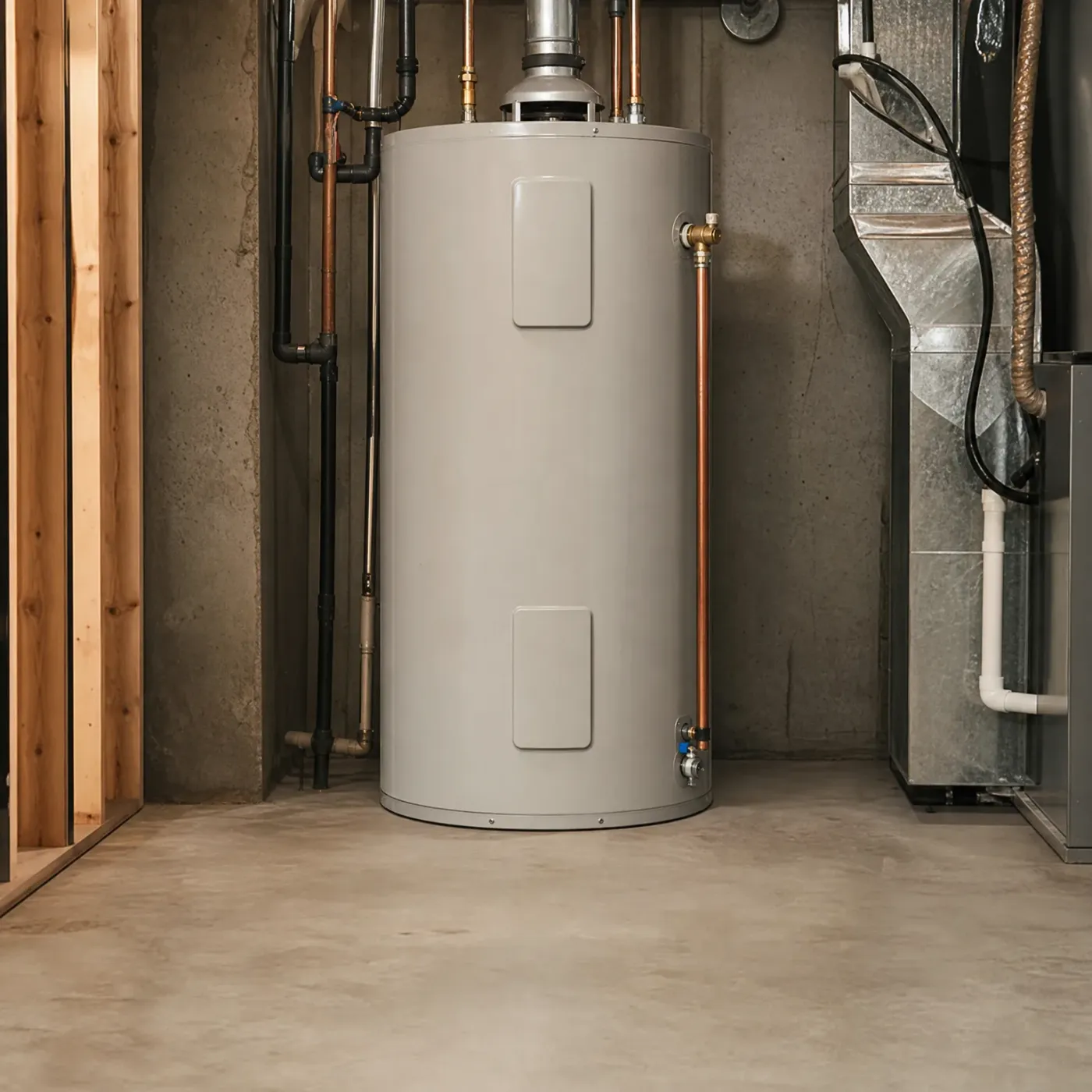
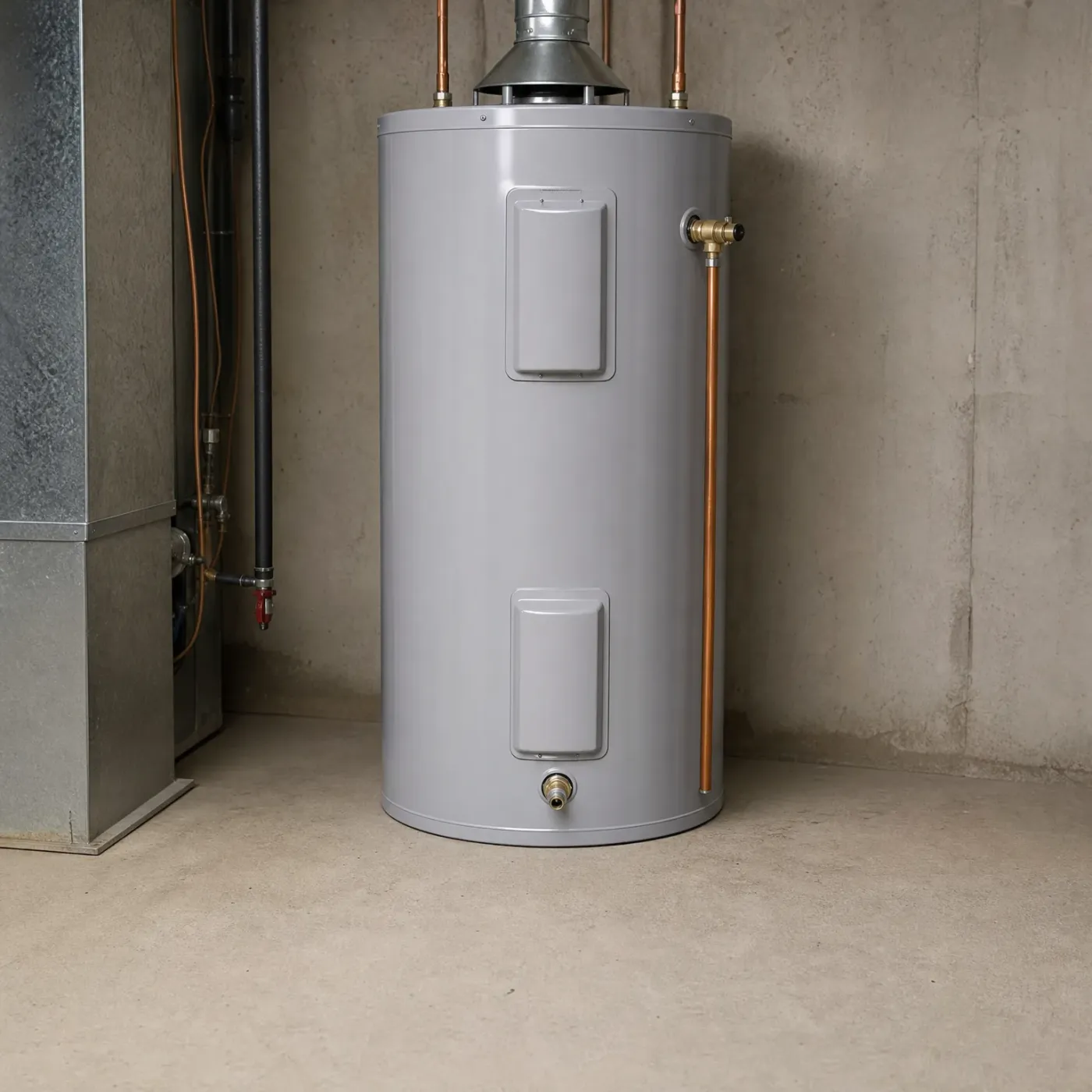
A gray cylindrical water heater with copper piping and access panels stands against a concrete basement wall beside ductwork and vertical pipes.
Steady hot water, no rust on the tank, no pooling water at the base, and the relief valve looks dry.
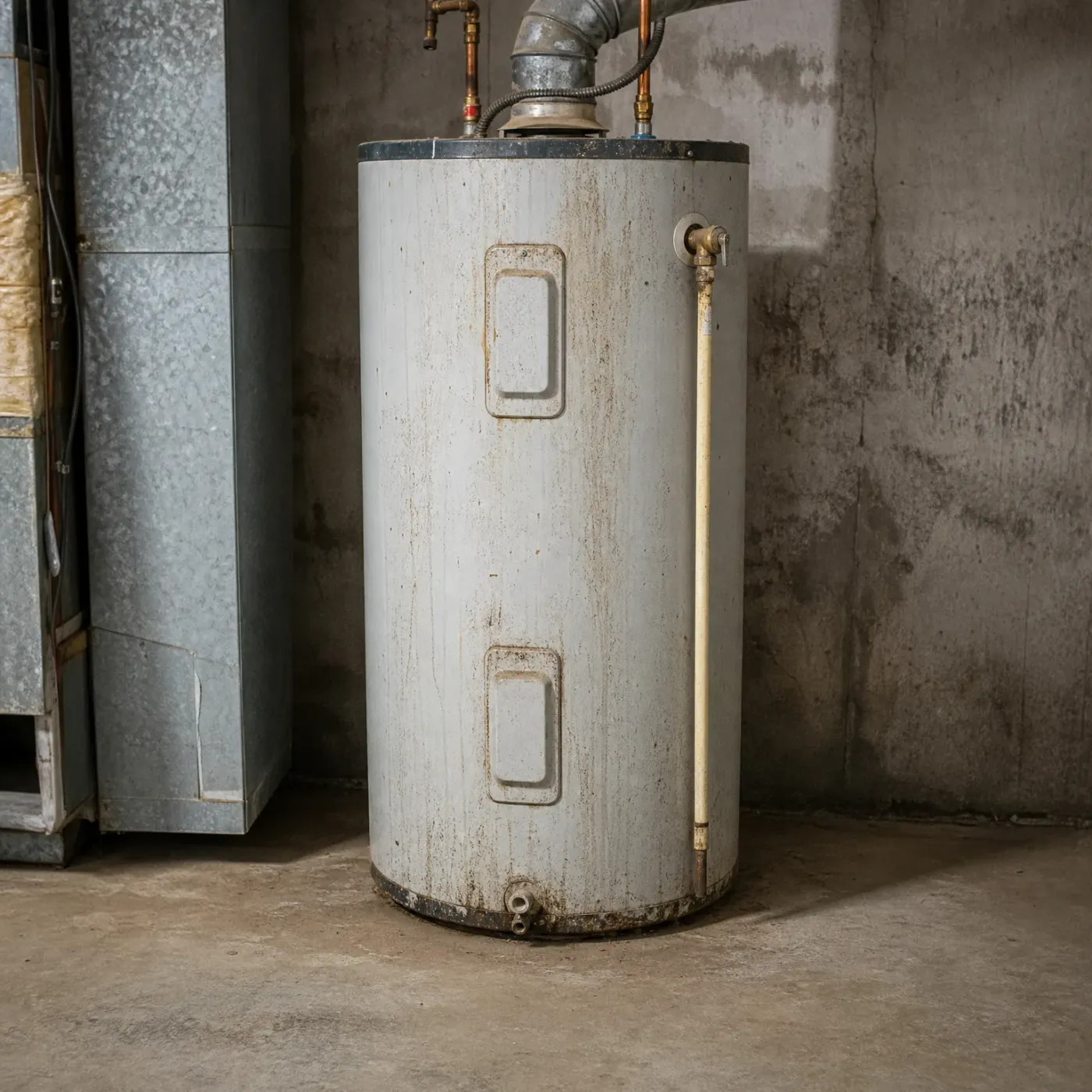
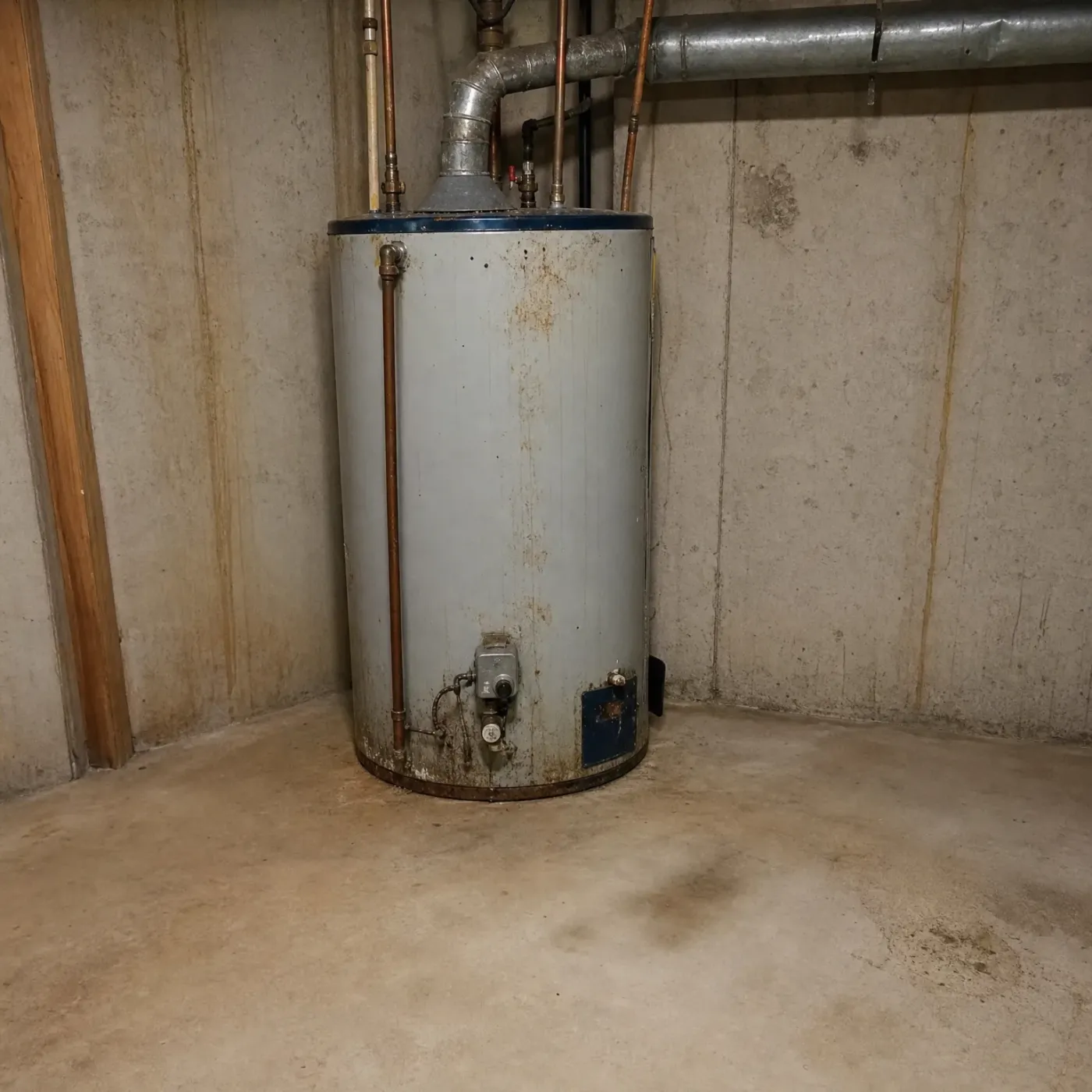
An old rust-streaked cylindrical water heater with two access panels, copper pipes and a flue at the top, and a discharge pipe along its side, standing on a concrete floor beside galvanized ductwork against a bare concrete wall.
Rust spreading across the tank, water collecting underneath, and fittings corroding is a tank near the end.

How a gas water heater fails

  • A gas water heater heats water by burning fuel at a burner under the tank, not by an element inside it like an electric one.
  • Sediment settles on the bottom of the tank over years, and that layer makes the burner work through it before the water above ever warms.
  • A popping or rumbling sound during a heating cycle is usually water boiling under that sediment layer, not the tank failing outright.
  • The anode rod inside the tank corrodes on purpose, drawing the rust reaction away from the steel, and once it's used up the tank starts rusting instead.
  • The temperature and pressure relief valve on top is there to open if pressure builds past a safe point, and a damp valve means it's already working harder than it should.
  • A pilot light that won't hold usually points to a worn thermocouple, a part that's simple to check and often simple to replace.

A gas water heater works by burning fuel under the tank, not by heating water with an element inside it the way an electric one does. That flame has to heat through whatever has settled on the tank bottom first. Over years, sediment builds up there, and the burner ends up heating through that layer before the water above it ever gets warm. That's usually what's behind a popping or rumbling noise during a heating cycle. It's not the tank failing outright, it's water boiling underneath that sediment and pushing steam up through it. Inside the tank, a rod called the anode rod is doing its own job. It's built to corrode first, on purpose, pulling the rust reaction onto itself instead of the steel tank wall. Once that rod is used up, the tank has nothing left protecting it, and the rusting moves to the tank itself. On top of the unit sits the temperature and pressure relief valve, which opens if pressure builds past a safe level. If you find that valve damp or dripping, the tank is already working harder than it should be. And if the pilot light keeps going out, the usual cause is a worn thermocouple, a small part that senses the flame and tells the gas valve to stay open. It's a straightforward part to check and often a straightforward one to replace, separate from the tank itself giving out.


A smiling woman with dark shoulder-length hair in a cream V-neck sweater sits at a marble counter with a glass of red wine, with a kitchen and softly lit living room behind her.
A woman in a dark green sweater laughs while seated at a marble kitchen island with a glass of red wine, with open shelving, cabinets and a living room visible behind her.
A woman with long dark hair in a cream knit sweater laughs while looking off to the side, seated at a counter with a glass of red wine, in a dimly lit living room with a sofa, lamp, framed pictures and houseplant behind her.
A smiling woman with long dark hair in a beige sweater sits at a marble kitchen counter with a glass of red wine, with a dimly lit living room behind her.

Skip calling around

Once you've spotted rust in the water, a damp spot under the tank, or a pilot that keeps going out, the next part is finding someone to look at it. That usually means searching around, calling a few places, explaining the same problem three times, then sitting with quotes trying to guess which one is fair. This button skips that. It goes to one licensed contractor working near you in South Dakota, someone who deals with gas water heaters all year and has seen what sediment and age do to a tank like yours. You won't get a string of calls from companies you didn't pick. A water heater that's already leaking or short-cycling the pilot doesn't get better left alone, and the longer it sits, the more likely it fails when you need hot water most. Handing it off now means one person looks at it, not five.

Why the tank itself fails

A gas water heater's tank is glass-lined steel. Once that lining cracks, usually from years of heating and cooling as the burner cycles, the steel underneath is exposed to water and starts to rust. Rust doesn't stay in one spot. It spreads along the seams and the bottom of the tank until the metal gives out, and at that point the tank leaks rather than ages gracefully. That's why rust in the water or around the base matters more than how old the unit is on paper. The tank either holds or it doesn't.

What a dying pilot tells you

A pilot light that won't stay lit is usually a worn thermocouple, the small sensor that proves to the gas valve there's a flame before it lets fuel through. On its own, that part can be replaced. But on a tank that's already 8 to 12 years old, a thermocouple going is often the first of several parts failing around the same time, since they've all been through the same years of heat and use. If you're relighting the pilot every few days, that's worth weighing against putting money into a tank that's already near the end.

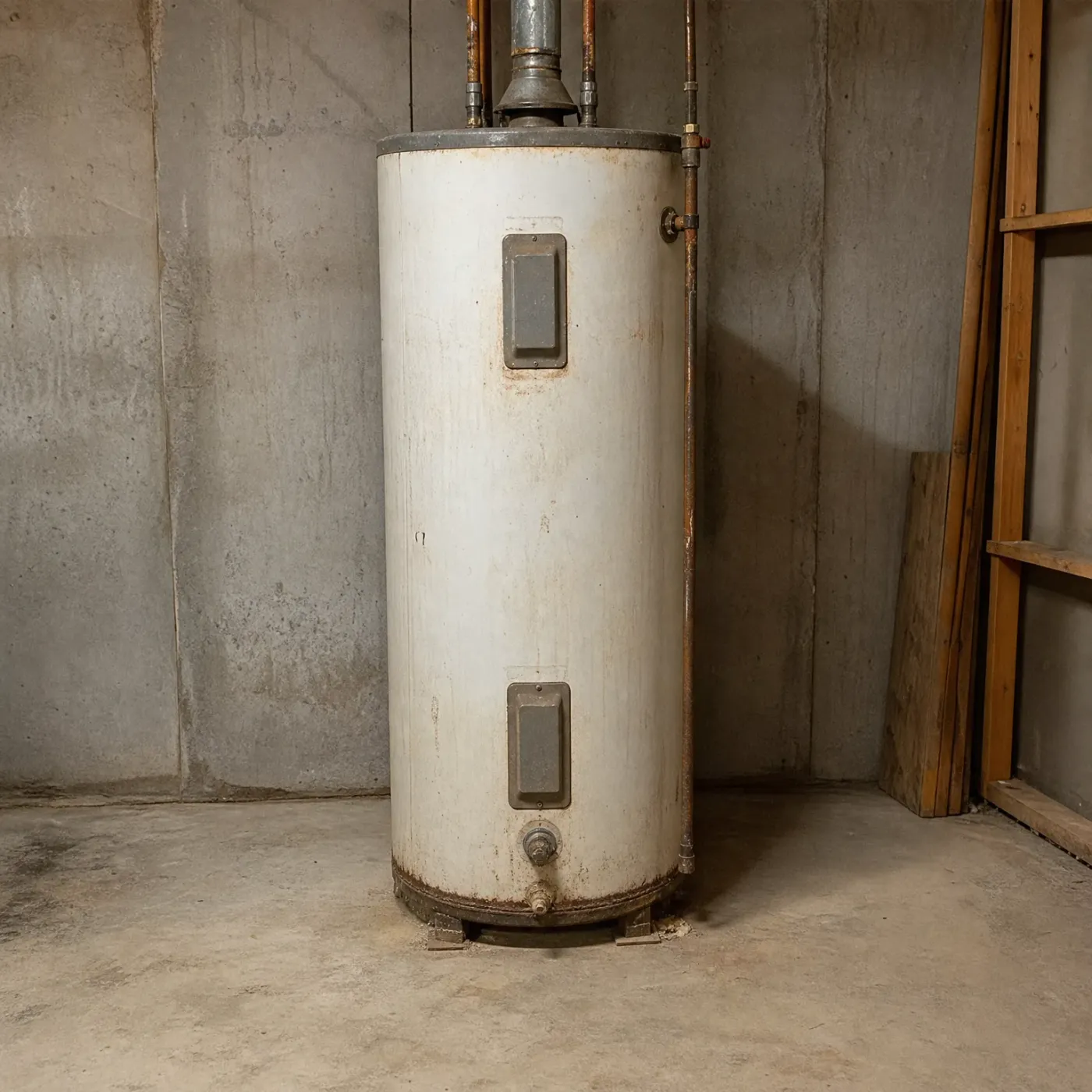
A rusted white cylindrical water heater with two access panels stands in a concrete-walled basement corner, with pipes rising from its top and wooden boards leaning against the wall at right.
Before you get your water heater installation
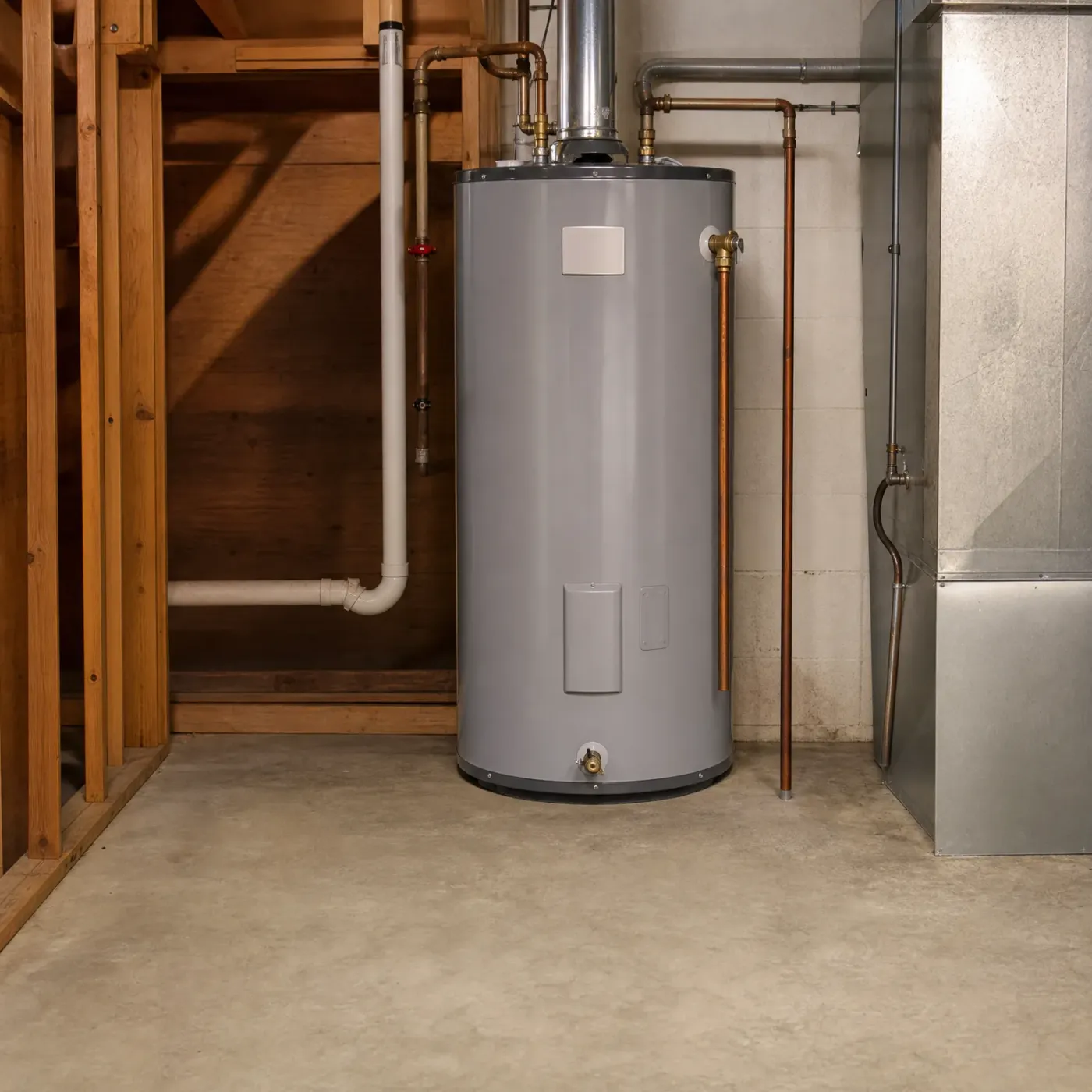
A gray cylindrical water heater stands on a concrete basement floor between an unfinished wood stud wall and a metal furnace duct, with copper and PVC pipes running along the concrete block wall.
After you get your water heater installation
A gray cylindrical water heater with copper piping and a flue stands on a concrete floor in a basement corner beside ductwork and metal equipment.

Working the way it should

No rust on the tank, no water pooling at the base, and the relief valve stays dry. The flue draws clean at the top and both access panels sit flush. This is what a water heater looks like when there's nothing to worry about yet.

An aging gas water heater with rust streaks stands in the corner of a concrete-walled basement, with copper pipes and a metal flue duct running overhead.

Past the point of fixing

Rust has worked through the tank body and stained the floor underneath it. The galvanized flue and copper lines still connect at the top, but the tank itself is corroding from the inside out. A tank rusting like this won't stop or slow down.

47.6% of homes statewide heat with gas

Close to half the homes in South Dakota run a gas water heater, same as yours probably does. That burner under the tank is what you want checked when the pilot won't hold or the water runs lukewarm, since that's usually where the trouble starts.

ACS 2020-2024 5-year B25040

  1. Sediment builds up on the tank bottom over years of use.

  2. The burner has to heat through that layer first.

  3. The steel under the glass lining starts to rust once it cracks.

  4. Rust spreads and weakens the tank until it leaks.

A closed laptop and a cream mug of coffee on a coaster sit on a dark wooden table, with a potted plant at left and a kitchen counter, tiled backsplash and shelf of ceramics in the background.

So that's what to watch for

Rust in the water, a damp spot at the base, a pilot that won't hold, or a tank past 12 years. Any one of those means it's time to start looking at replacement instead of another repair. You know your water heater better than anyone walking in cold, so trust what you've already noticed.

The part that's usually a hassle is finding someone to do the work. Calling around, explaining the same problem to three different companies, waiting on quotes that come back at different prices for different reasons. Here that step is one call to a contractor local to South Dakota who works on gas water heaters all year and knows what a failing one looks like before you finish describing it.

A living room corner with a light beige sofa holding a textured taupe cushion, a large ceramic vase of olive branches by a window, a framed neutral artwork on the wall, and a dark bowl with stacked books in the foreground.
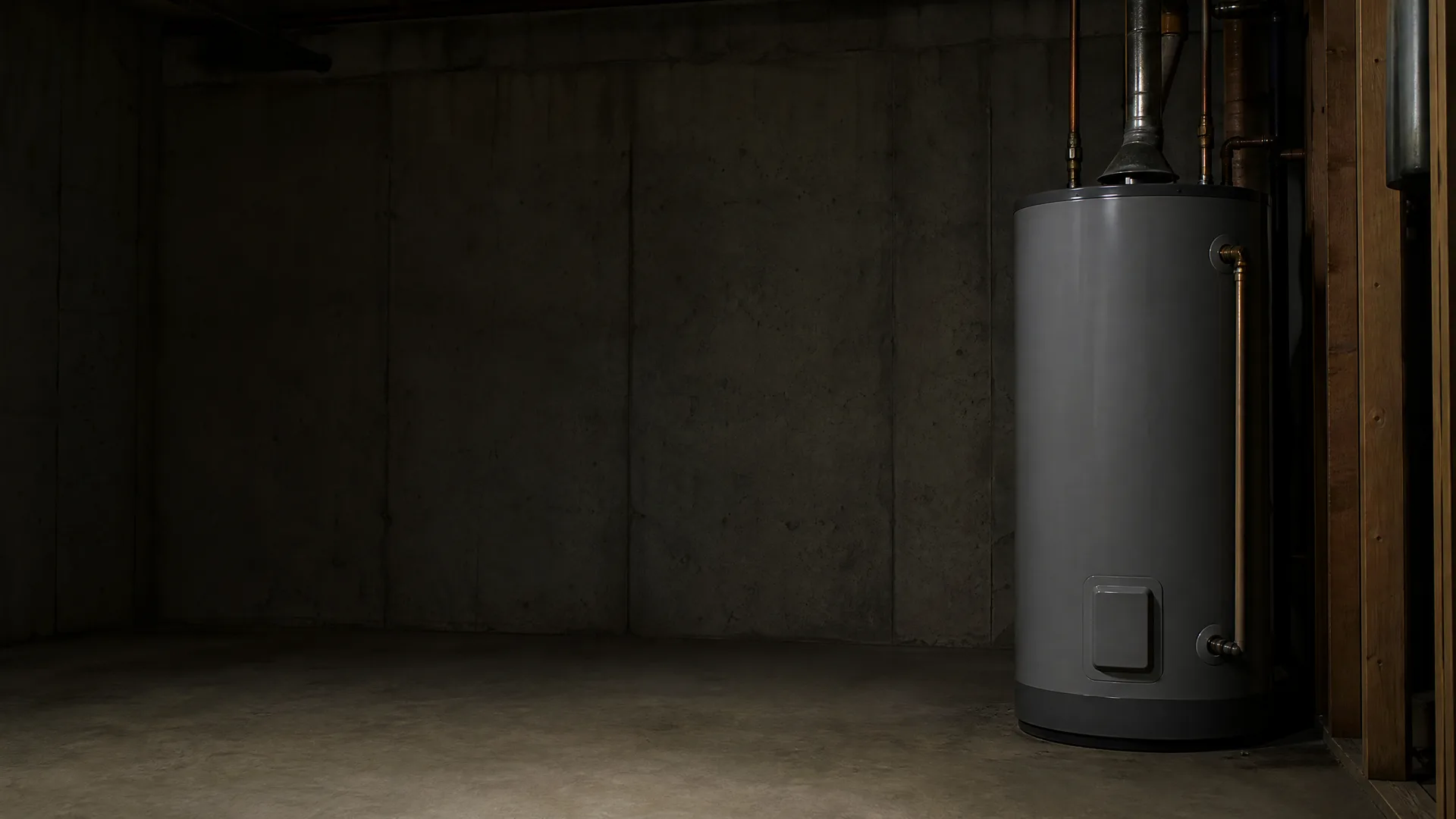
A gray cylindrical water heater with copper pipes and a metal flue stands against a concrete wall in a dim basement with a bare concrete floor.

Describe it once

Only one pro gets your request, so you hear from one company.

Step 1 of 3: Equipment