Tank or tankless water heater for a South Dakota home

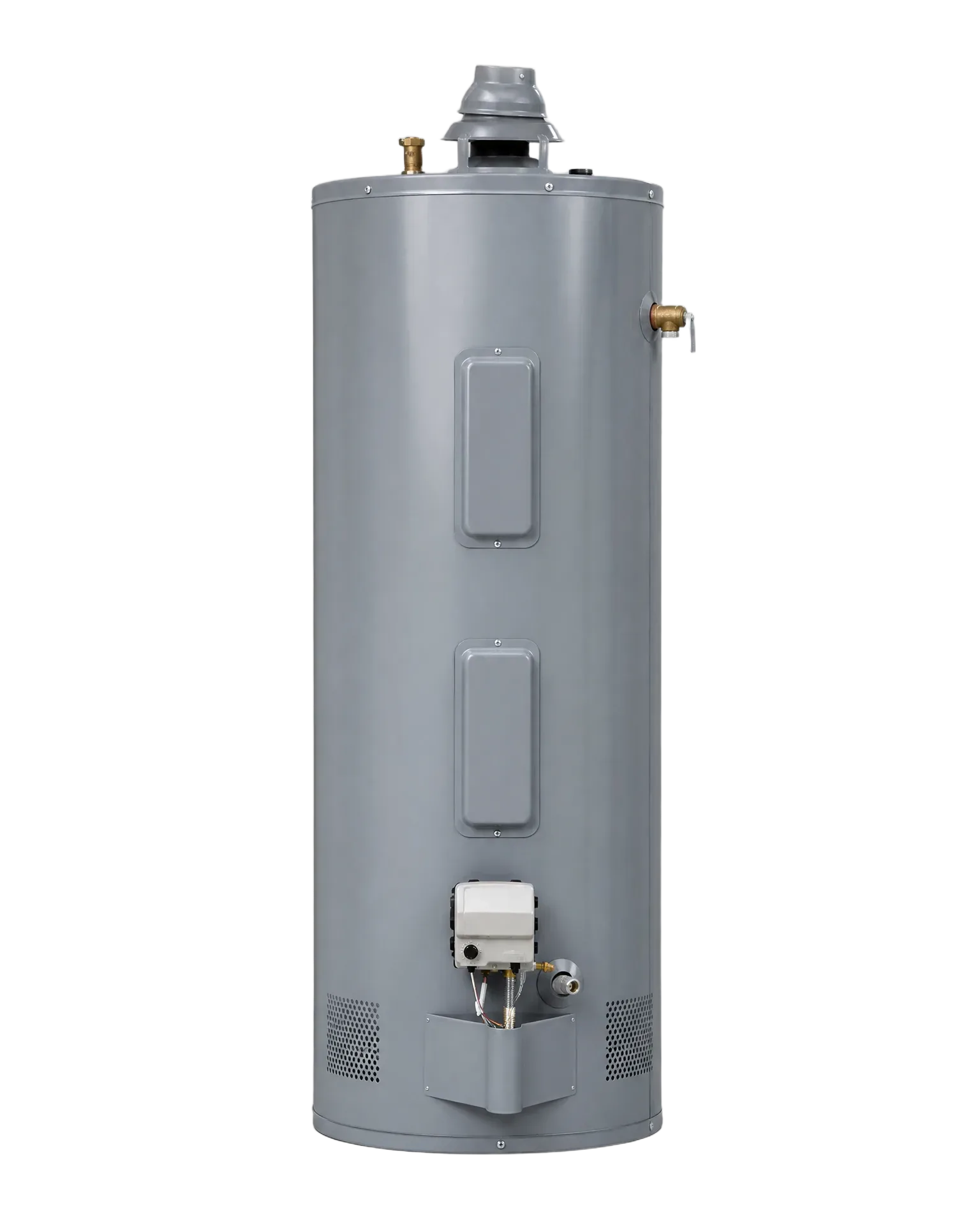
A gray cylindrical gas water heater with a top flue hood, brass fittings, two access panels, a control valve and burner cover, photographed against a plain gray background.
Find my pro

Should I get a tank or tankless water heater in South Dakota?

You're planning ahead for a water heater change and want to know which type makes sense for your house before you start looking for someone to install one. Tank and tankless both show up when you search, and the right call depends on what you already have for gas service and how your household uses hot water, not just which one sounds newer.

A gas tank water heater is the simpler fit for most South Dakota homes

Most homes in South Dakota already heat with gas, and a gas tank water heater works with that setup without any extra venting or gas line work. Tankless units run on gas too, but they need a larger gas line and a different vent than a tank model, which usually means more work during installation. A tank heater also keeps a reserve of hot water ready, which matters if your household runs showers, laundry and dishes close together. Tankless makes sense if you're set on endless hot water or you're tight on space, but it's a bigger install job to get there. If your current heater runs on gas, replacing it with another tank keeps the installation straightforward.

A woman with long gray hair wrapped in a checked blanket sits on a sofa by a window with yellow autumn foliage outside, with a lamp, framed picture and plant in the background.
An older woman in a cream knit sweater sits on a sofa by a window, looking out at sunlit trees with yellow and orange autumn leaves, with a bookshelf and lamp behind her.
A woman with gray shoulder-length hair in a dark knit sweater sits on a cushioned seat by a window, looking out at yellow autumn foliage, with a living room, armchair, houseplant and framed picture behind her.
An older woman with gray hair in a bun, wearing a cream knit sweater, sits on a sofa with a gray blanket and looks out a large window toward yellow-green autumn trees, with a lit table lamp and dark armchair behind her.
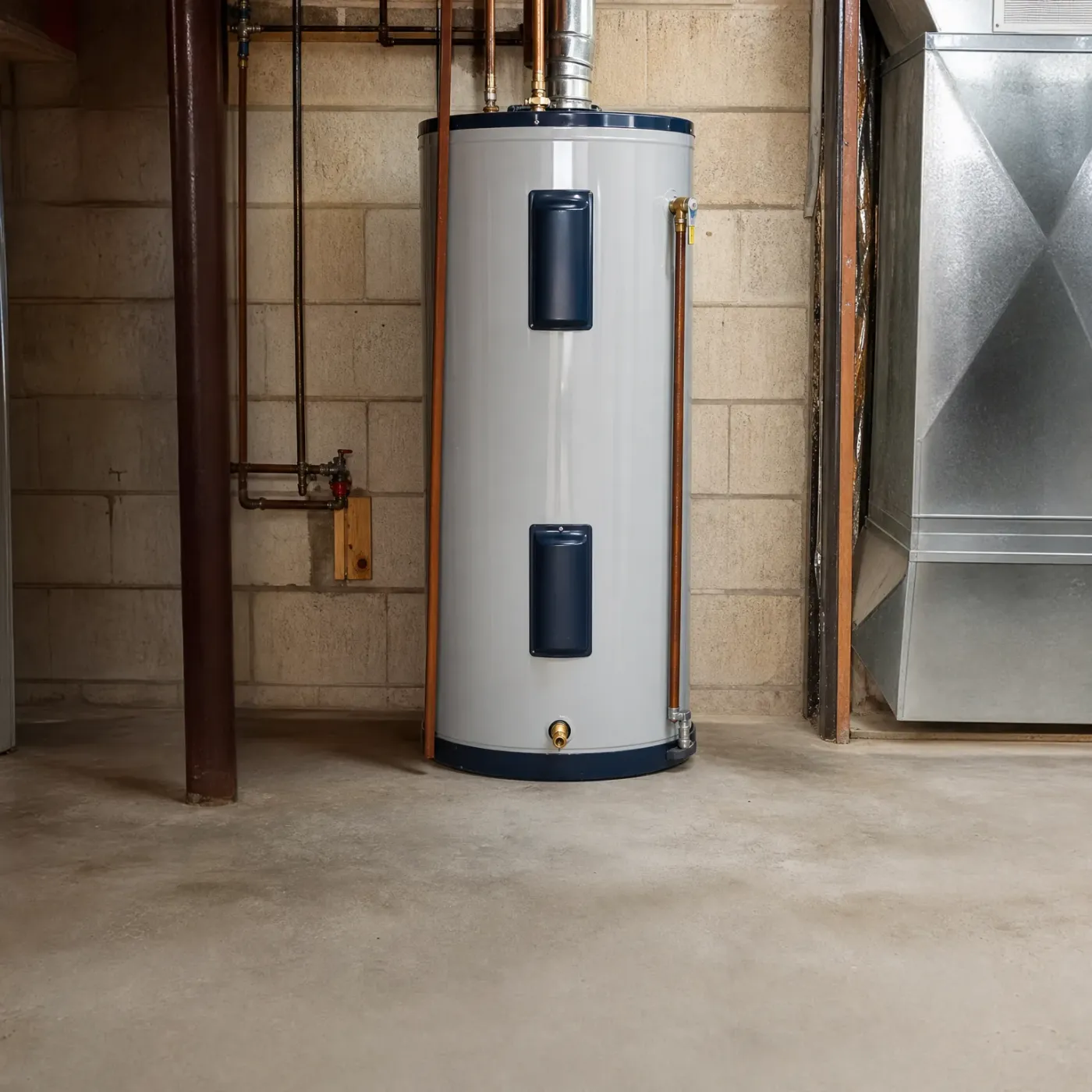
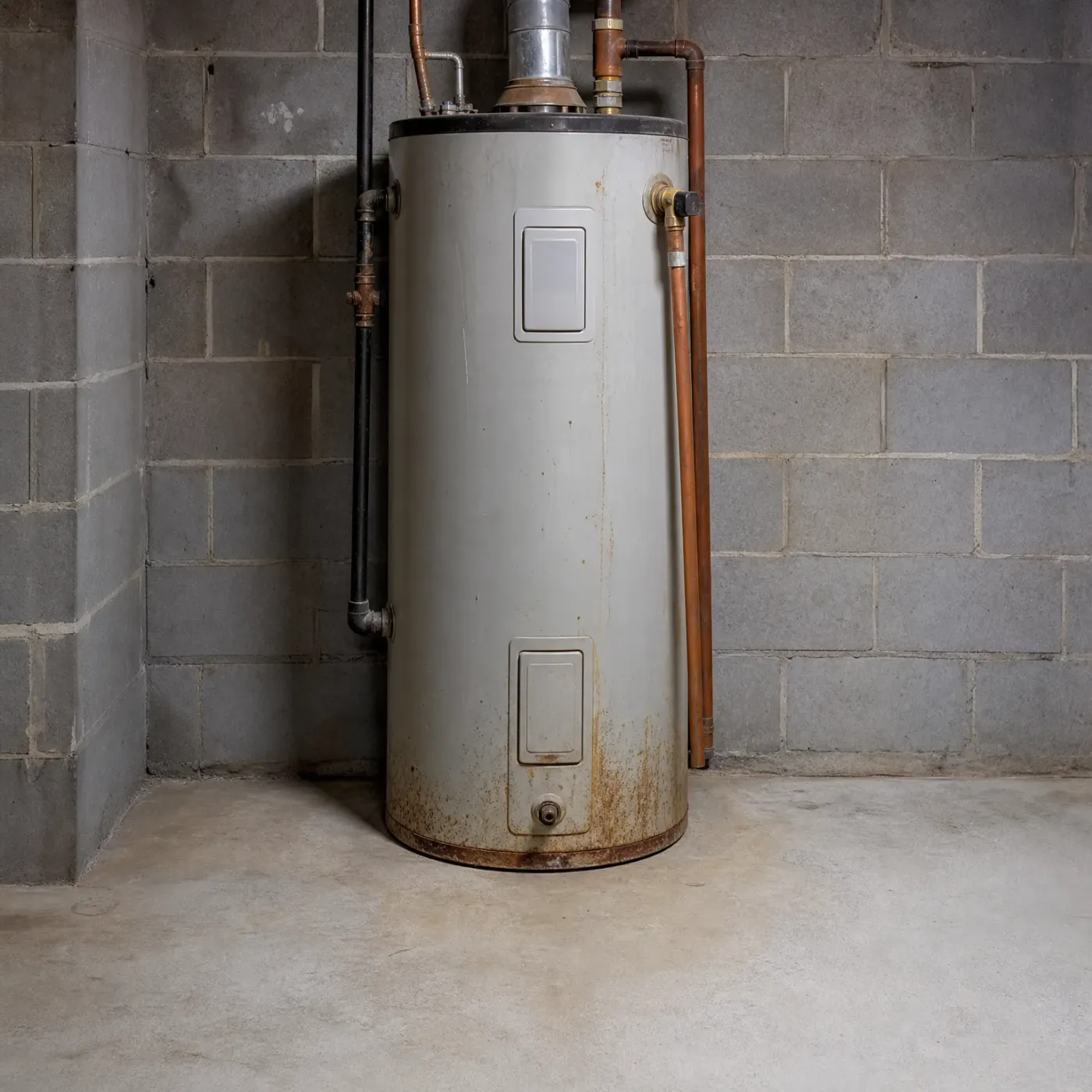
A white cylindrical water heater with two dark access panels stands on a concrete basement floor against a concrete block wall, with copper pipes, a flue duct above, and sheet metal ductwork at right.
A tank water heater sitting next to the furnace and ductwork, running as it should, is a known quantity: it heats, holds, and reheats on a schedule you can plan around.
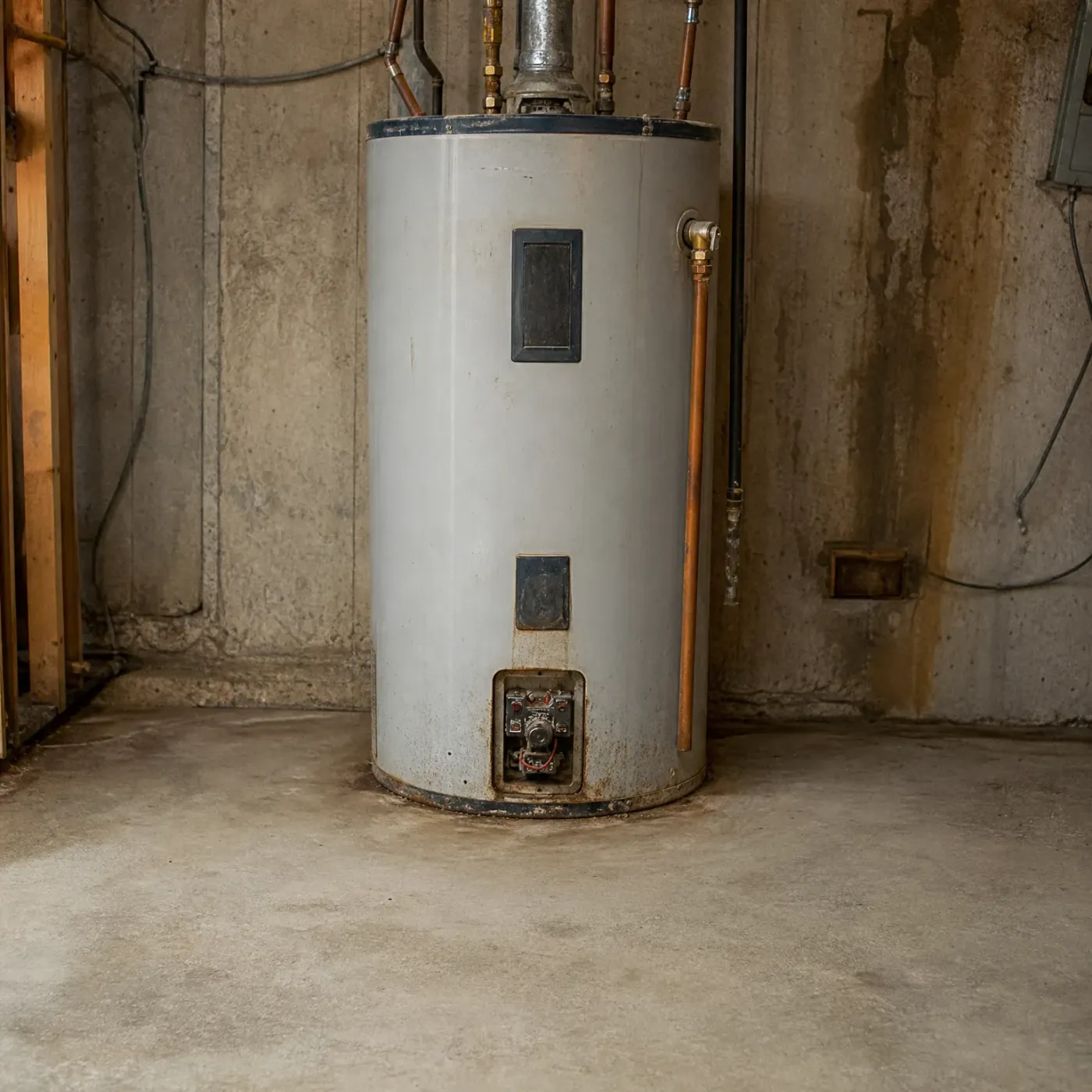
A white cylindrical water heater with copper piping and a gas control valve stands against a stained concrete basement wall on a bare concrete floor.
A tank showing rust at the seams and worn fittings is on borrowed time, and in a South Dakota winter you don't want to find out when it fails.
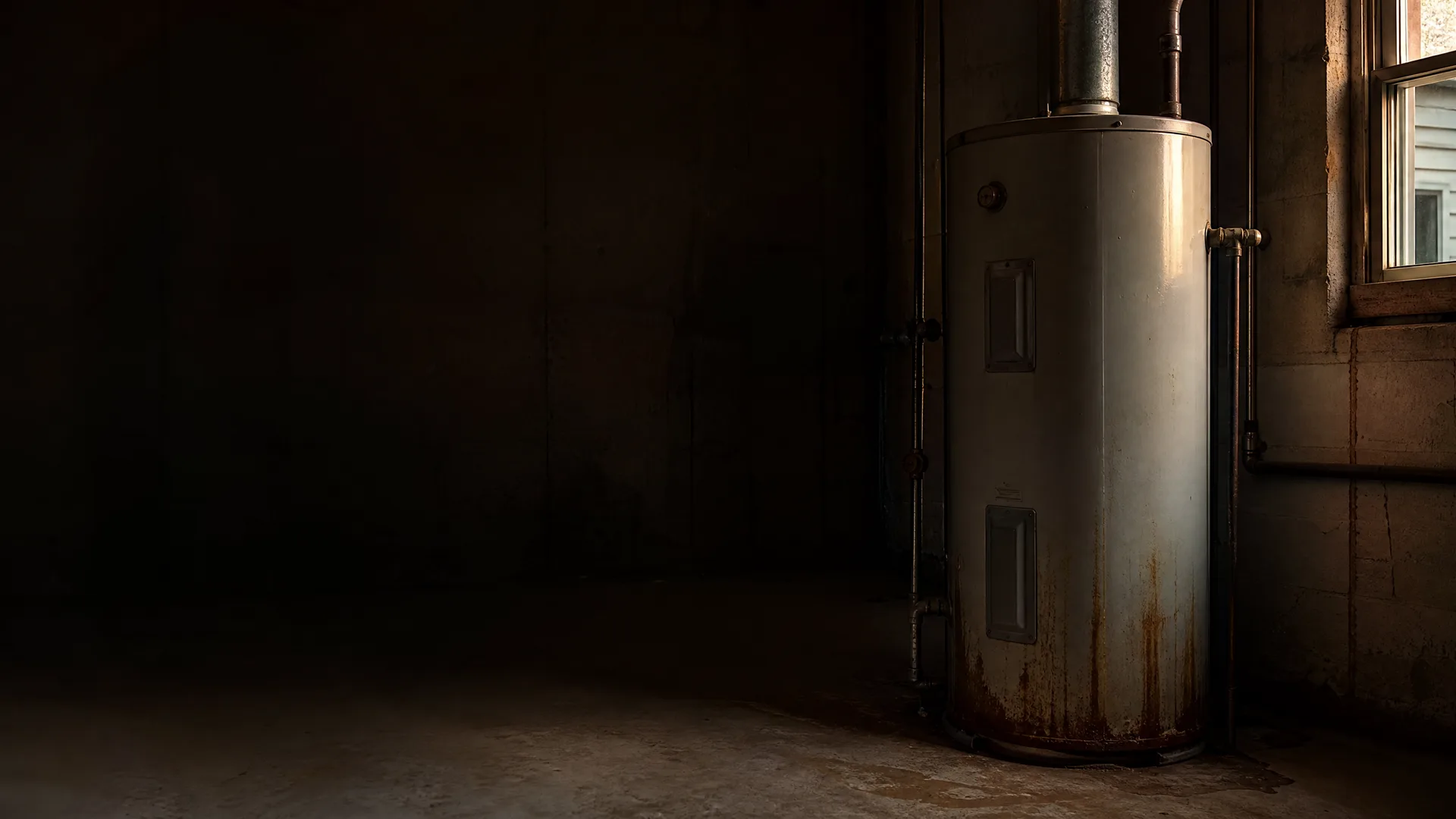
A rusting cylindrical water heater with connected pipes stands against a dim concrete basement wall near a window.

You go down to the utility room after dinner to grab something from the chest freezer, and the floor by the water heater is damp. Not a puddle, just a dark ring on the concrete where the tank meets the base, and when you crouch down you see the rust, streaked down from one of the seams like it's been weeping for a while. The pilot light is still going. Nothing smells, nothing's hissing. You put your hand near the streak and it's dry up top, wet lower down. Outside it's gone dark and cool, a plain South Dakota evening, and you're standing there doing the math on how much longer this tank has left.

Tank Versus Tankless: Weighing the Trade-offs

Tank

  • Runs on gas, which is how most homes here are already set up, so installation works with what's there instead of against it.
  • Holds 40 to 50 gallons ready to go, which covers back to back showers on a cold morning without a dip in temperature.
  • Recovers fast on gas, so a full tank refills quicker than it would on electric.
  • Costs less upfront to install than switching to tankless.
  • If it fails, it tends to fail slow, giving you warning through rust or a slow leak before it quits outright.
  • Needs floor space near the furnace or in the utility room, so it's not a fit if you're trying to free that area up.

Tankless

  • Heats water on demand, so you're not paying to keep 40 gallons hot around the clock when nobody's using it.
  • Mounts on the wall, which gives you back the floor space a tank takes up.
  • Never runs out partway through a long shower or a sink full of dishes, since it's not working off a limited supply.
  • Usually needs a gas line sized for it, so the installation is more involved than swapping one tank for another.
  • Lasts longer than a tank on average, which matters if you're trying to avoid doing this again in a few years.
  • Costs more to install than a like for like tank replacement.
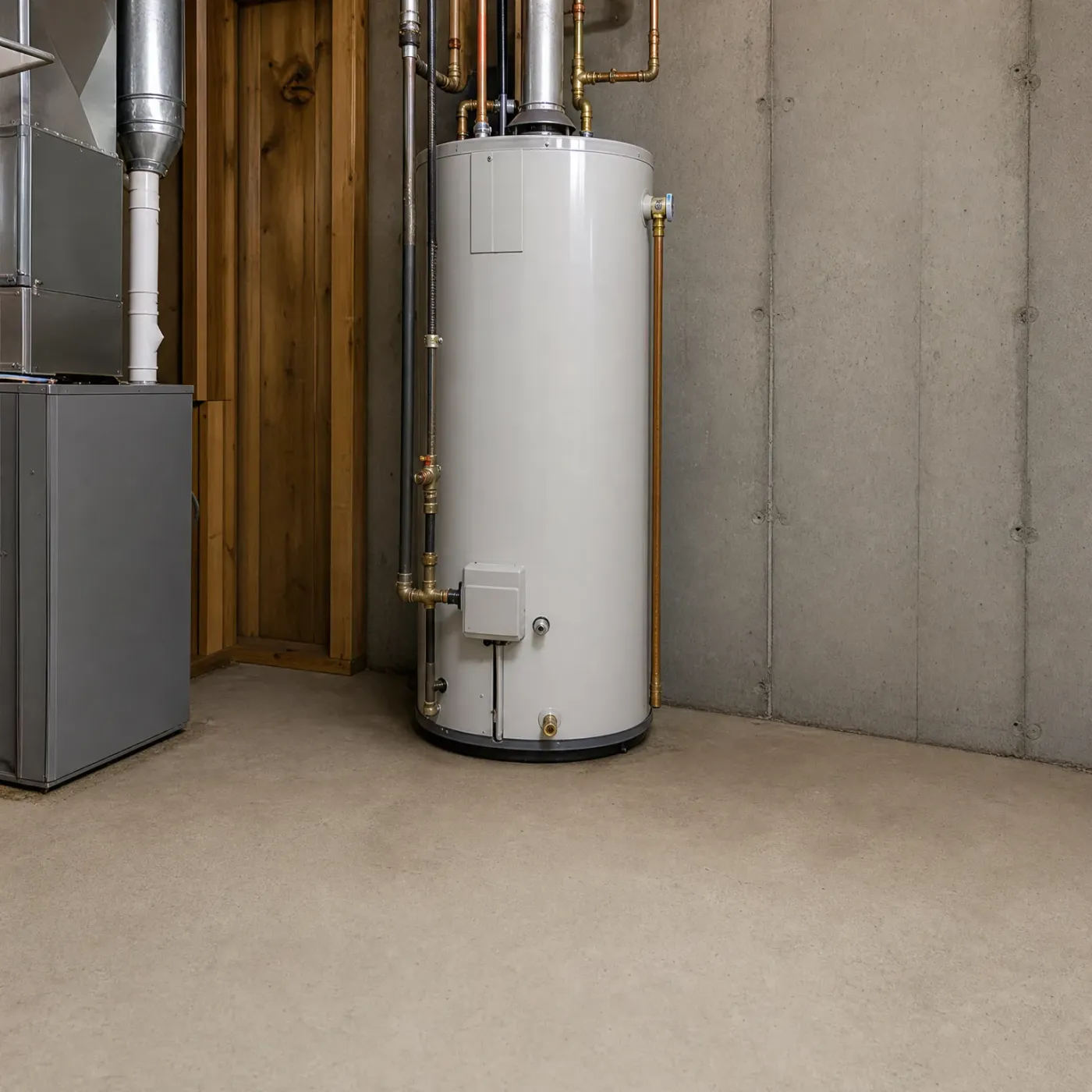
A white cylindrical gas water heater with copper and steel pipes stands against a concrete basement wall beside a gray furnace and wood-paneled wall.

A tank doing its job

This is a gas water heater standing next to the furnace, piped into the same gas line that already runs through your house. Nothing about the setup is straining. It heats on schedule, holds its gallons, and reheats between uses without anyone thinking about it.

A rust-streaked cylindrical water heater with copper and black metal pipes stands in a concrete-block basement corner on a bare concrete floor.

A tank at the end of its life

Rust along the base and seams like this means the tank is failing, not just aging. Once it lets go, you're not choosing a replacement on your own schedule, you're calling around same day trying to find someone who can install one before more water hits that concrete floor.

A woman in a cream knit sweater sits in an armchair with her eyes closed near a window showing yellow autumn foliage, with a mug on a round wooden side table beside her.
A gray-haired man with a beard in a blue button-placket shirt reclines on a couch with his eyes closed, beside a sunlit window with a green plant.

The right pro for this job

Most houses in South Dakota already run gas to the water heater, and cheap power here doesn't change the math much in favor of tankless. A gas tank fits the setup you have. Tankless can work too, especially if you're short on space or tired of running out of hot water with a full house, but it usually means new venting and gas line work to get the sizing right, and that's a bigger job than swapping one tank for another. Either way, the decision depends on your gas line, your venting, and how your current unit is set up, not just a preference for one or the other. That's not something to work out alone from a product page. Getting a contractor to look at what's actually in your utility room, the gas line, the vent, the space, tells you which option really fits your house, and saves you from guessing wrong on a system you'll live with for years.

What a tank is actually doing

A gas tank holds 40 to 50 gallons and keeps that water hot around the clock, reheating it as it's drawn down. The burner cycles on when the thermostat calls for it, same as it has for years. That's why it can run two showers back to back without a cold stretch. It's also why it keeps a pilot or burner lit even in the stretches of a day nobody's using hot water. The tradeoff for that standing reserve is the tank itself, sitting there with gallons of water in it, which is the part that eventually rusts through.

What tankless changes about that

A tankless unit doesn't hold water at all. It fires the burner only when you open a hot tap, heating water as it passes through a coil rather than storing it. That means no standing pilot loss and no tank to rust out from the inside. It also means output is tied to flow rate, so running two fixtures hot at once in winter, when incoming groundwater is colder, asks more of the unit than the same two fixtures in July. There's no gallon count to run out of, just a limit on how much it can heat at once.

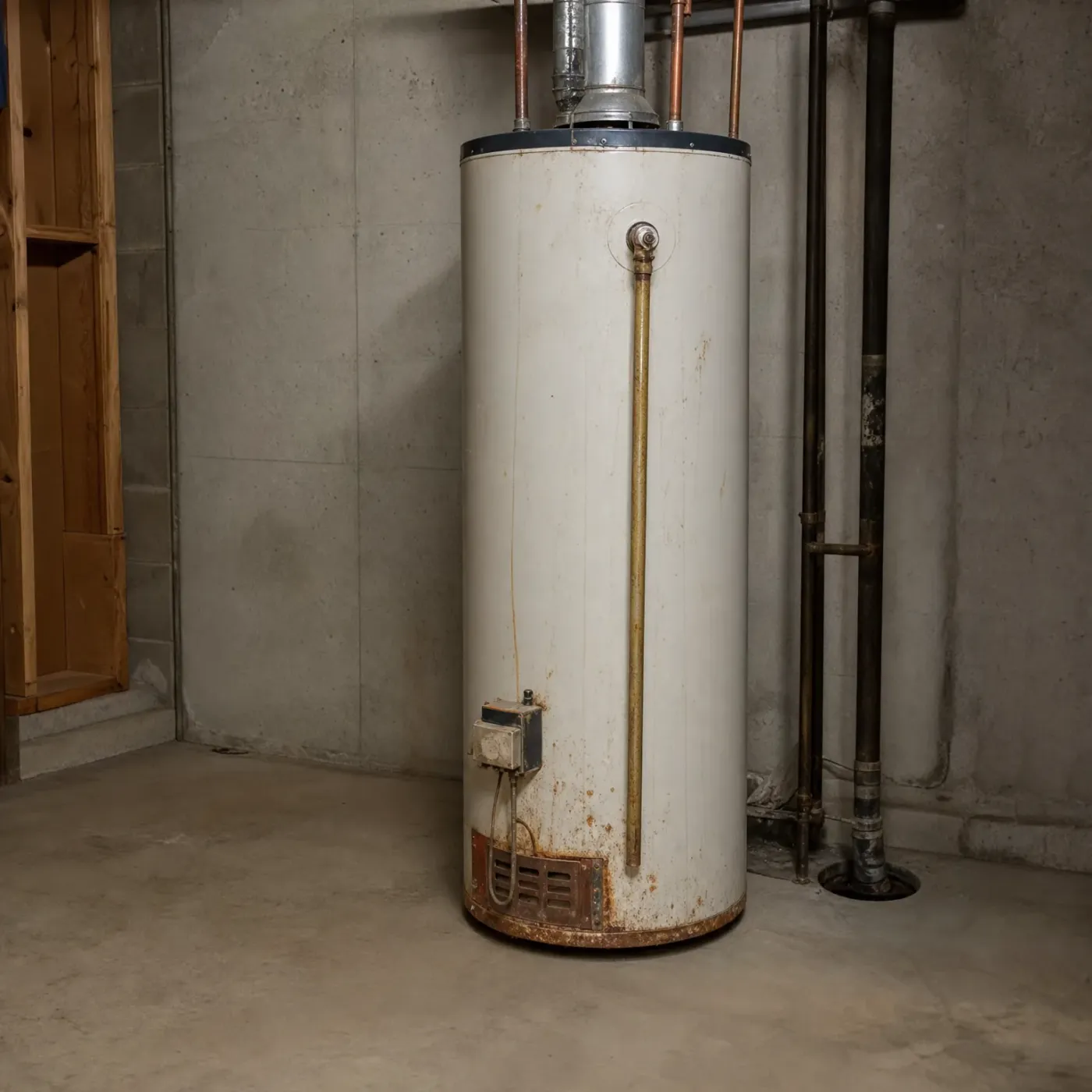
An older white gas water heater with rust staining and an exposed vertical pipe stands against a concrete block basement wall, with a metal flue above and black vertical pipes to the right.
Before you get your water heater installation
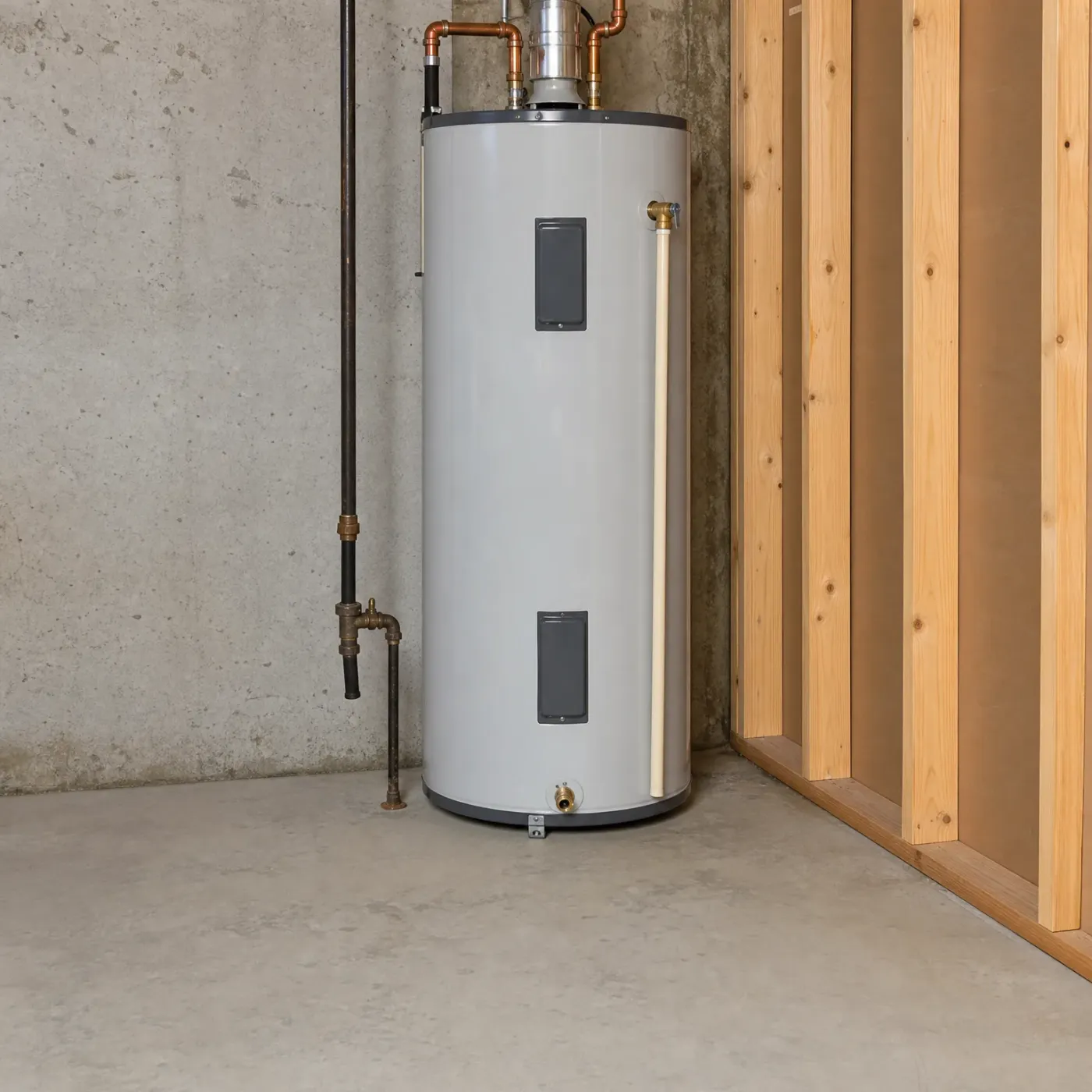
A light gray cylindrical water heater with two access panels stands on a concrete floor against a concrete wall, with copper and black pipes beside it and an unfinished wood stud wall to the right.
After you get your water heater installation

12 to 15 years

That's the stretch a gas tank usually gives you before it needs replacing. Plan the swap before it fails and you pick the timing, not the tank.

Connect with a pro

No tank to fail

Tankless units don't hold water that can rust out or leak, so you trade that failure point for a different install, one worth sizing right for your house.

Connect with a pro

47.6% of homes statewide heat with gas

Close to half the homes in South Dakota heat with gas, and yours is likely one of them. That matters here because a gas tank or gas tankless unit installs onto a line that's probably already run to where your water heater sits, no rewiring or new gas service needed.

ACS 2020-2024 5-year B25040

A gas tank fits the house you already have, and that's reason enough for most people here to pick it. Tankless makes sense if you're short on space or tired of running out of hot water, but it's a bigger change to make. Either way, you don't have to work out the gas line sizing, the venting, or whether your situation calls for one over the other by yourself. You'd otherwise be the one calling around to different installers, explaining your setup each time, and weighing quotes that don't match up because nobody looked at the same thing twice. Once you're matched with a contractor who installs water heaters in South Dakota, that work is off your plate, and they'll reach out to go over what your house needs. You already know whether you want to stick with a tank or try tankless. What's left is getting someone qualified to do the work, and that part doesn't have to be yours to sort out.

At dusk, a dark board-and-batten house with a standing-seam metal roof and lit entry walkway of stone pavers, with two large outdoor heat pump units on a stone-walled pad at right and trees and hills in the background.

Water Heater Installation

A water heater pro near you

Step 1 of 3: Equipment
  • A brown leather and wood armchair with a cream knit throw sits in a corner beside a woven basket holding a dark cushion, under a framed mountain photograph, with a wood-trimmed window showing yellow and green foliage.
    • Say what's going on with your water heater, and a pro who works on them reaches out.
  • A dark wood dresser against a pale wall holds a ceramic vase of eucalyptus branches, a stack of books with a wooden bowl, and a woven basket, with a framed landscape painting above and a woven basket holding a knit blanket on the floor beside a window.
    • Send the form and stop researching installers for the new water heater.
    • One request ends the search for a water heater installer.
  • A window seat with beige linen and brown textured cushions, a chunky knit blanket, and an open book, beside a window showing blurred yellow autumn foliage.
    • Answer a few questions instead of calling shop after shop.
    • Describe your water heater job once, to one pro.
  • A cream upholstered armchair with a rust-colored pillow and knit fringed throw sits beside a window with a ceramic vase of orange-leafed branches on the sill, overlooking autumn trees and leaf-covered ground.
    • One installer gets your project, so there's no bidding war over it.
    • The pro who reaches out is licensed in South Dakota.