Tell us about the job
Takes about a minute. No obligation.
Gas water heater installation in Hughes County starts with what the house already has: a flue, a gas line, and enough combustion air to feed the burner safely. Utility gas heats more occupied homes in Hughes County, South Dakota than any other fuel, at 48.1% (2020-2024 ACS 5-year). A contractor sizing a replacement on utility gas has to confirm the venting path before quoting the unit, because the wrong draft configuration on a sealed or semi-sealed install will fail inspection. The burner, the ignition system, and the connections to the gas supply are all local decisions shaped by how that fuel moves through the home.
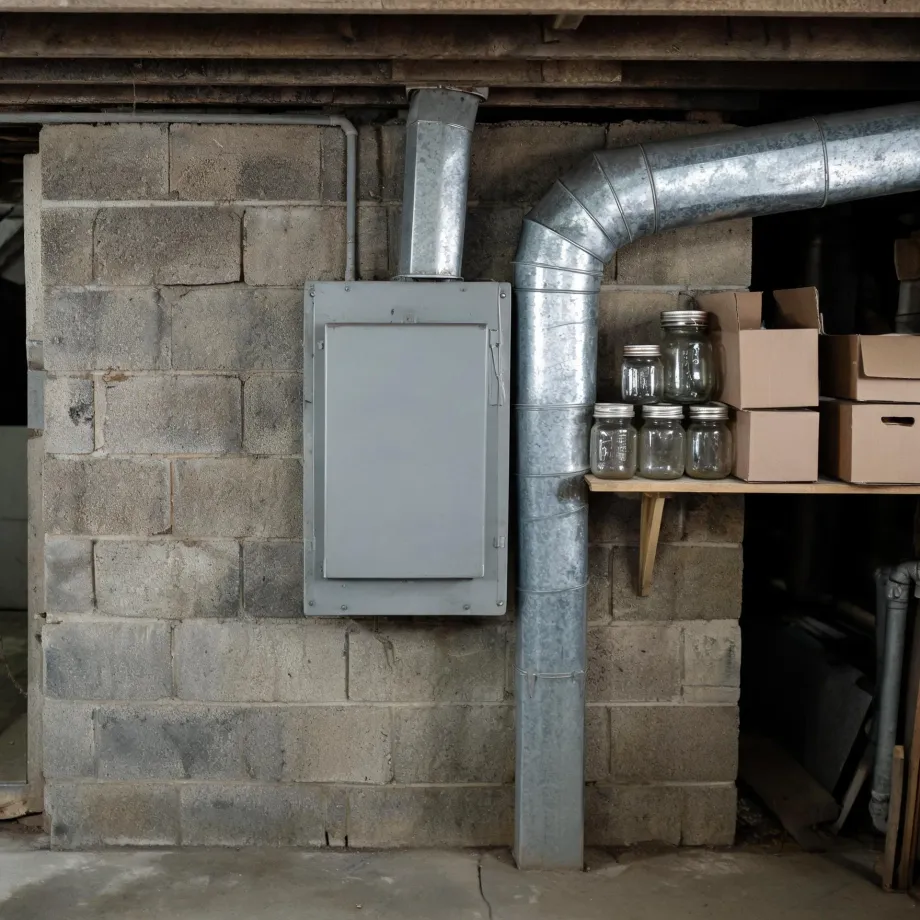
Existing ductwork and electrical service were put in for equipment that has long since been replaced, and those original configurations are still in place. Half the homes in Hughes County, South Dakota were built in 1978 or earlier (2020-2024 ACS 5-year). A contractor sizing and placing a new water heater works around what the house already has, not just what the new unit needs, which means the ductwork and the panel get examined before the equipment gets priced.
What a Water Heater Installation Covers
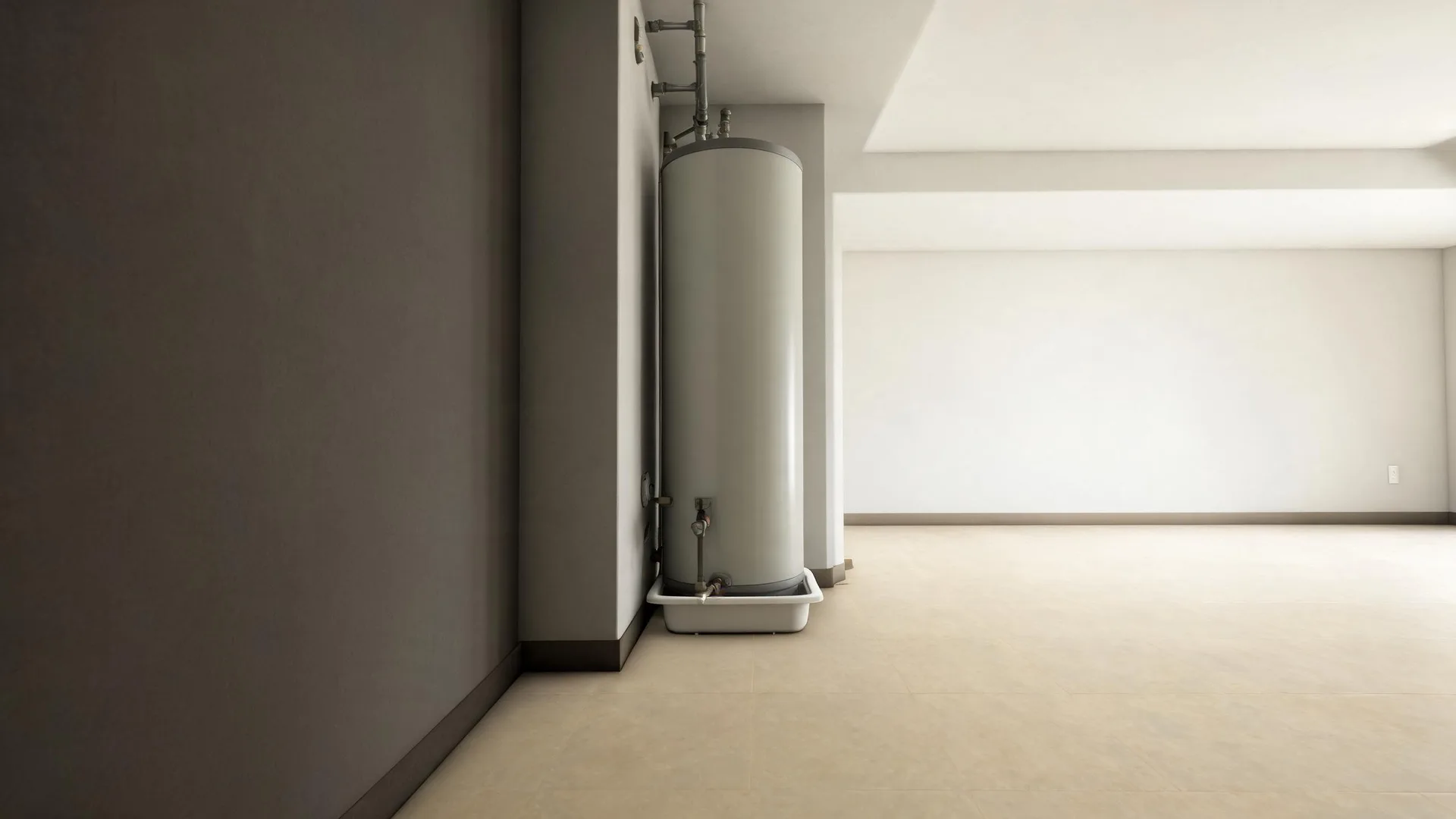
The tank or tankless unit is the heart of the system. A storage tank sits in a utility closet, garage, or basement and holds a ready supply of hot water. A tankless unit mounts to a wall and heats water only when a tap opens. Either way, this is the piece the contractor sets into place first.
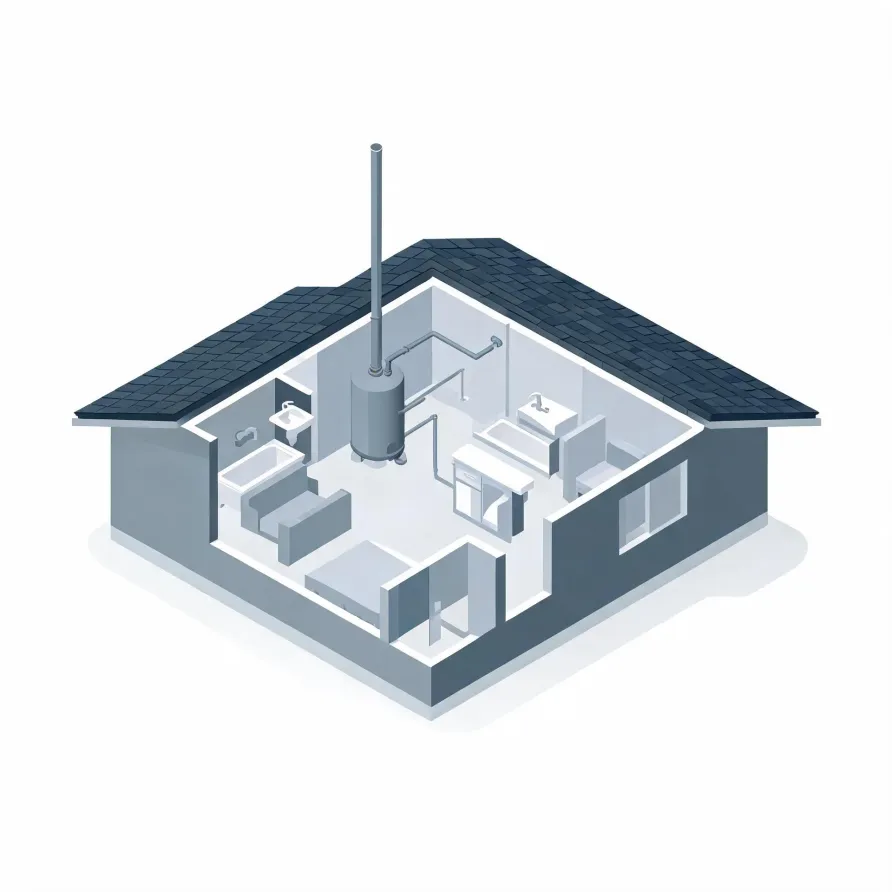
Connected to that unit are the cold-water supply line coming in, the hot-water line going out, a pressure relief valve on the side of the tank, and the flue or venting pipe that carries combustion gases outside. Each of those connections is part of what a licensed contractor fits and secures during the installation.
The drawing shows the general layout of a water heater system, and a licensed contractor determines what applies to your specific house.
Find a contractor in Hughes CountyHughes County by the Numbers
224 severe weather events were recorded in Hughes County, South Dakota between 2015 and 2024.
NOAA National Centers for Environmental Information, Storm Events Database, bulk CSV export, events 2015-01-01 through 2024-12-31.Half the homes in Hughes County, South Dakota were built in 1978 or earlier (2020-2024 ACS 5-year).
U.S. Census Bureau, 2020-2024 American Community Survey 5-Year EstimatesHughes County, South Dakota holds 7,997 housing units (2020-2024 ACS 5-year).
U.S. Census Bureau, 2020-2024 American Community Survey 5-Year EstimatesOwners occupy 72.0% of the occupied homes in Hughes County, South Dakota (2020-2024 ACS 5-year).
U.S. Census Bureau, 2020-2024 American Community Survey 5-Year EstimatesSevere Weather Events in Hughes County
Weather in Hughes County puts real stress on water heating equipment, driving demand cycles that vary year to year based on local conditions. Knowing what the climate here has done helps a contractor size and install a system built for the actual load, not a generic one.
224 severe weather events, 2015–2024. Source: NOAA National Centers for Environmental Information, Storm Events Database.