Water heater leaking in Sioux Falls, SD

One request and the search for a pro is handled.

I'm done searching

Why is my water heater leaking?

A puddle under the tank or water creeping across the floor is unsettling, especially when the unit still seems to be running fine otherwise. You want to know if this is something to watch or something to shut off right now, and whether it means a quick repair or the whole tank needs to go. In Sioux Falls winters, a leak near the water heater also raises the question of whether it will freeze or make the problem worse.

It's usually a failing tank, a loose fitting, or pressure relief doing its job

Most leaks come from one of three places. Water pooling at the base often means the tank itself has rusted through from the inside, and that's not something a repair fixes. Water around a pipe connection or the drain valve is usually just a loose or worn fitting, which can often be tightened or replaced. Water dripping from the overflow pipe on the side means the temperature and pressure relief valve is releasing built-up pressure, which can point to a faulty valve or a thermostat running too hot. Shut off the water supply to the tank and the power or gas to it until someone can look at it, since a cracked tank will keep leaking and a stuck relief valve is a safety issue, not a cosmetic one.

A bathroom with a glass-door shower lined in marble-look tile with a recessed niche and showerhead, a white towel hanging on a wall-mounted bar, and a window with green foliage outside.

You turn the shower on and wait for the steam that usually fogs the mirror. It doesn't come. The water's gone lukewarm, then cold, and when you step around the tub to check the handle, your sock lands in a half inch of water pooling near the baseboard. Outside it's still dark, the kind of February morning Minnehaha County mornings tend to be, and the towel on the rail is still dry because you haven't used it yet. You crouch down, feel the carpet near the hall closet where the water heater sits, and it's damp too. The shower stays off. You've got a load of laundry that isn't getting done and a floor that needs drying before anything else happens.
What does a leaking water heater in Minnehaha County usually mean for your house?

  • 2.33 people per household on average

    Half the homes in Minnehaha County were built in 1987 or earlier, so a lot of water heaters here are on a second or third unit, and tanks do eventually fail at the seams.

  • Half the homes here were built by 1987

    With 2.33 people in the average household here, most tanks run 40 to 50 gallons, and that's what ends up on your floor if the tank itself has split.

  • 64.2% of homes heat with gas

    64.2% of homes here heat with gas, which means most water heaters have a flue and a gas valve, and a leak near those parts is worth shutting down right away.

ACS 2020-2024

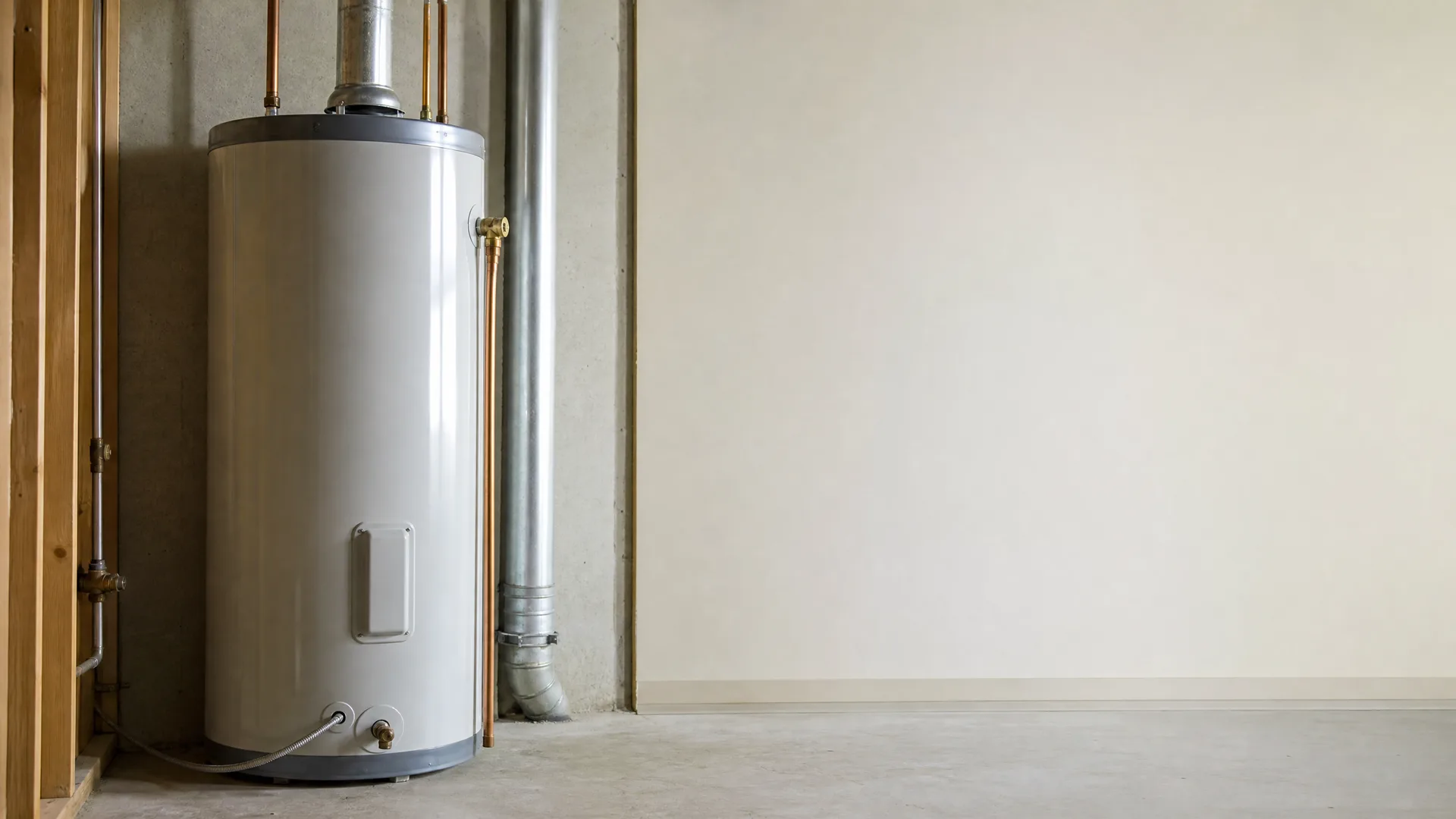
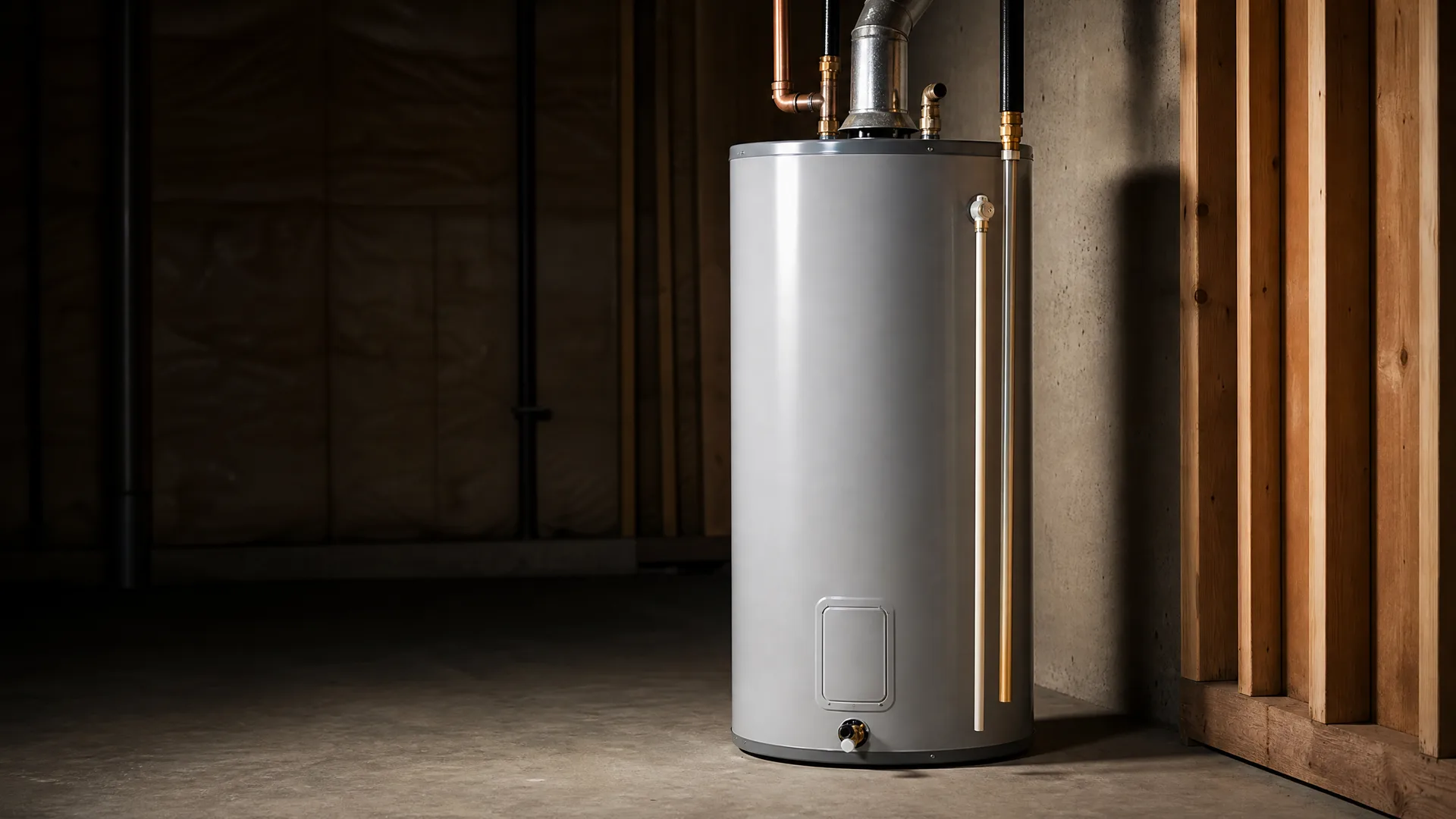
A white cylindrical water heater with copper pipes and a metal flue stands in the corner of an empty room with bare concrete floor, wood framing at left, and a plain light-colored wall.

The tank itself is failing

Water collecting at the base, rust colored or clear, usually means the tank has rusted through from the inside. Once the steel lets go, no fitting or valve fixes it. A contractor can confirm this by drying the area and checking where the water shows up again first. If it's coming from the bottom seam, replacement is the only real option, and waiting just means more water on your floor.

A white cylindrical water heater with copper and black pipes stands against a plain white wall on a gray floor, beside a concrete wall and metal ductwork.

A part is loose or worn

Leaks from the top, around a fitting or the pressure relief valve, often point to something smaller. A loose connection, a worn gasket, or a valve that's stuck open can all let water out without the tank itself failing. These are the leaks worth having checked before you assume the worst. A licensed contractor near Sioux Falls can pressure test the fittings and tell you within minutes whether it's a repair or a replacement.

Repair the Part or Replace the Tank

Repair

  • If the leak is coming from a fitting, the drain valve, or a supply line connection, a contractor can usually replace that single part.
  • A leak from the temperature and pressure relief valve sometimes means the valve itself is bad, not the tank, and swapping it stops the water.
  • Repair makes sense if the tank itself is dry and sound and the water is tracing back to something attached to it.
  • A unit that's only a few years old is worth having checked before anyone assumes the whole thing needs to go.
  • Fixing the part that failed costs less up front and keeps the rest of a working water heater in service.

Replace

  • Once water is coming from the tank itself, rust colored or not, no part replacement stops it, because the steel has rusted through.
  • A tank built in the 1980s or earlier has likely outlived what most water heaters are built to last, leak or no leak.
  • Replacing it now means choosing the new unit on your schedule instead of after it fails completely and leaves you without hot water.
  • A contractor can tell you during the same visit whether the tank is the problem, so replacement isn't a guess.
  • If the unit has needed more than one repair already, a new tank often makes more sense than another patch.
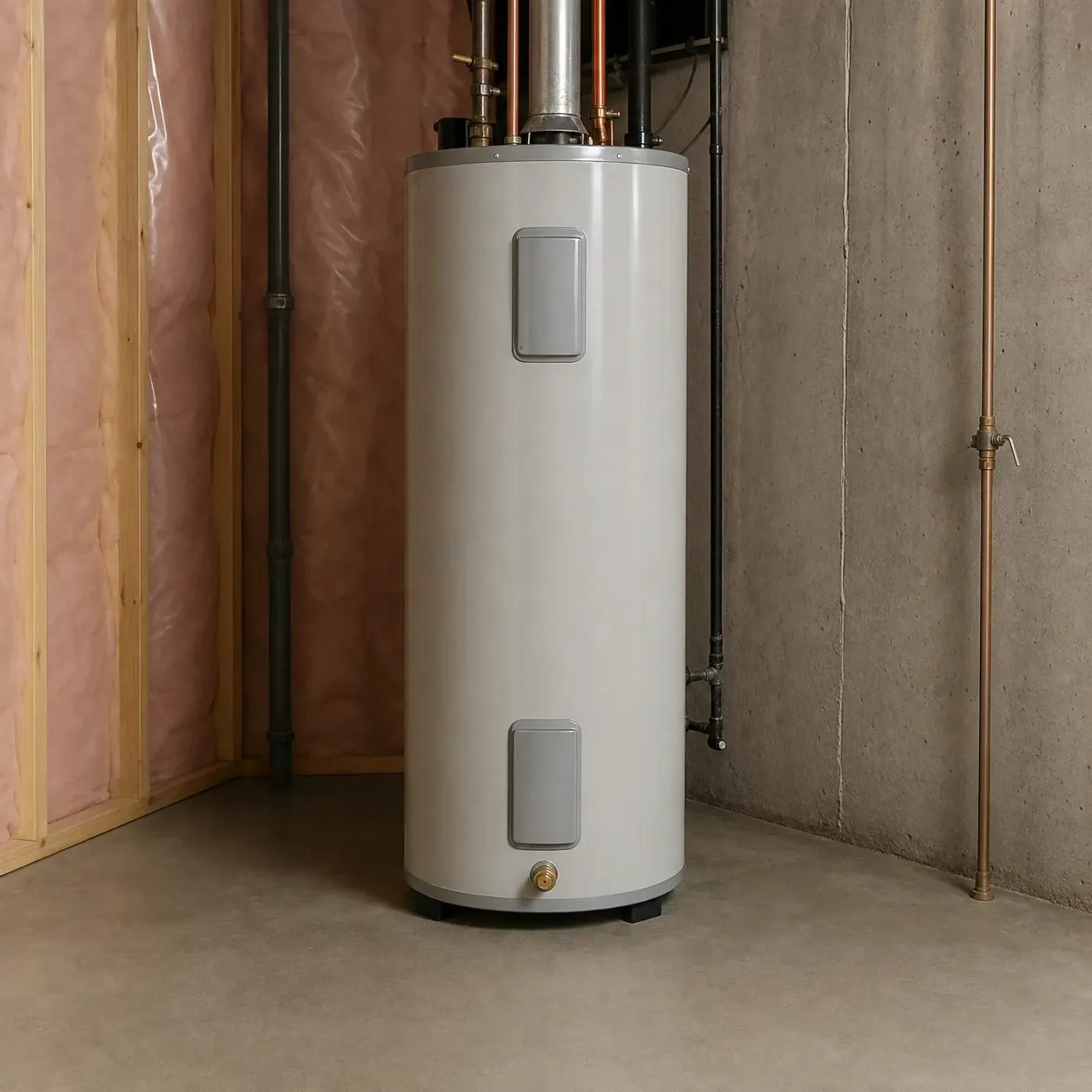
A white cylindrical water heater with two access panels and a brass drain valve stands on a concrete floor in a basement corner, beside a pink-insulated stud wall and a concrete wall with copper and black pipes.

Working as it should

No puddle, no rust streaks on the floor around it. The fittings are dry, the shutoff valve is clean, and the tank holds its temperature without short cycling. A water heater in this shape has no reason to need more than a yearly look.

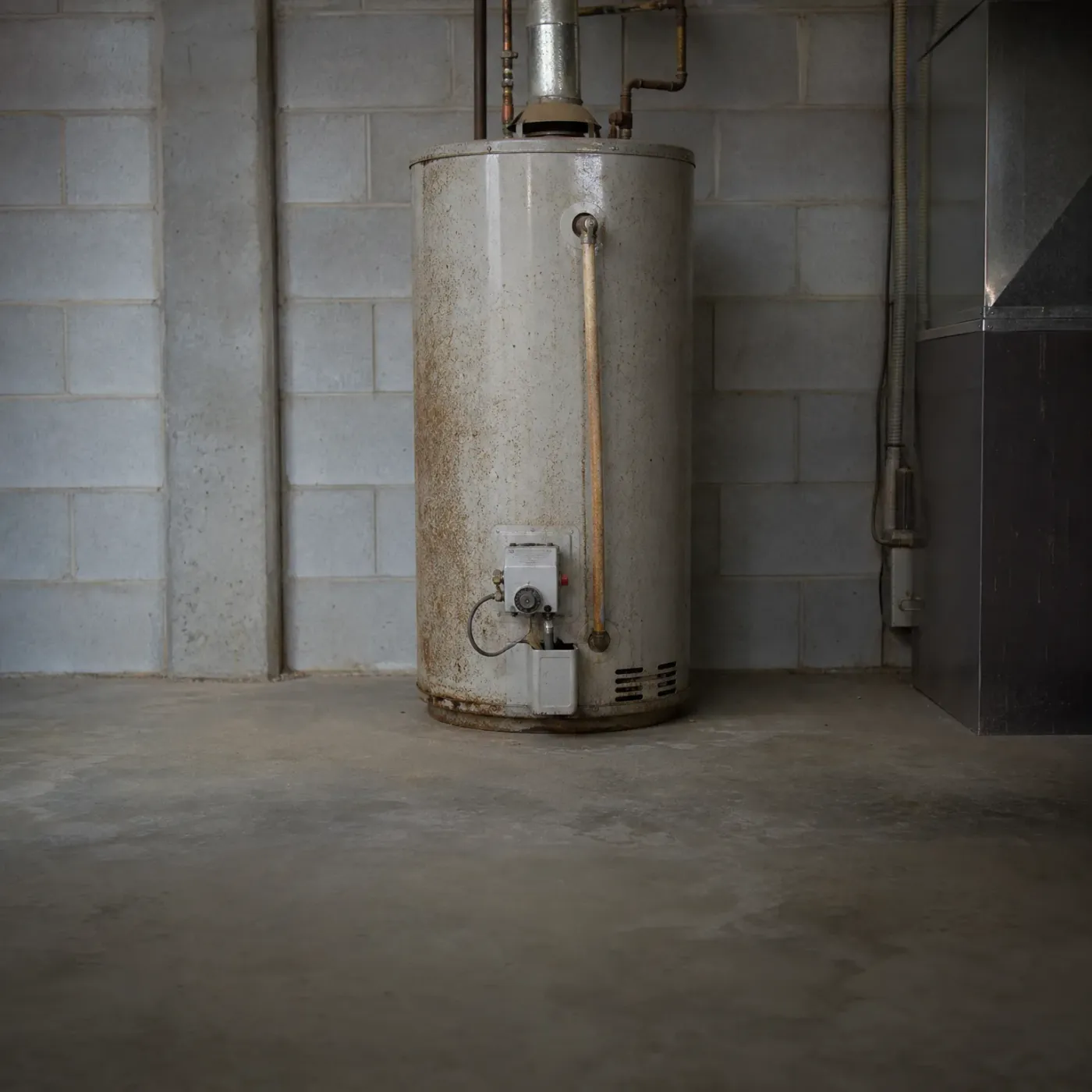
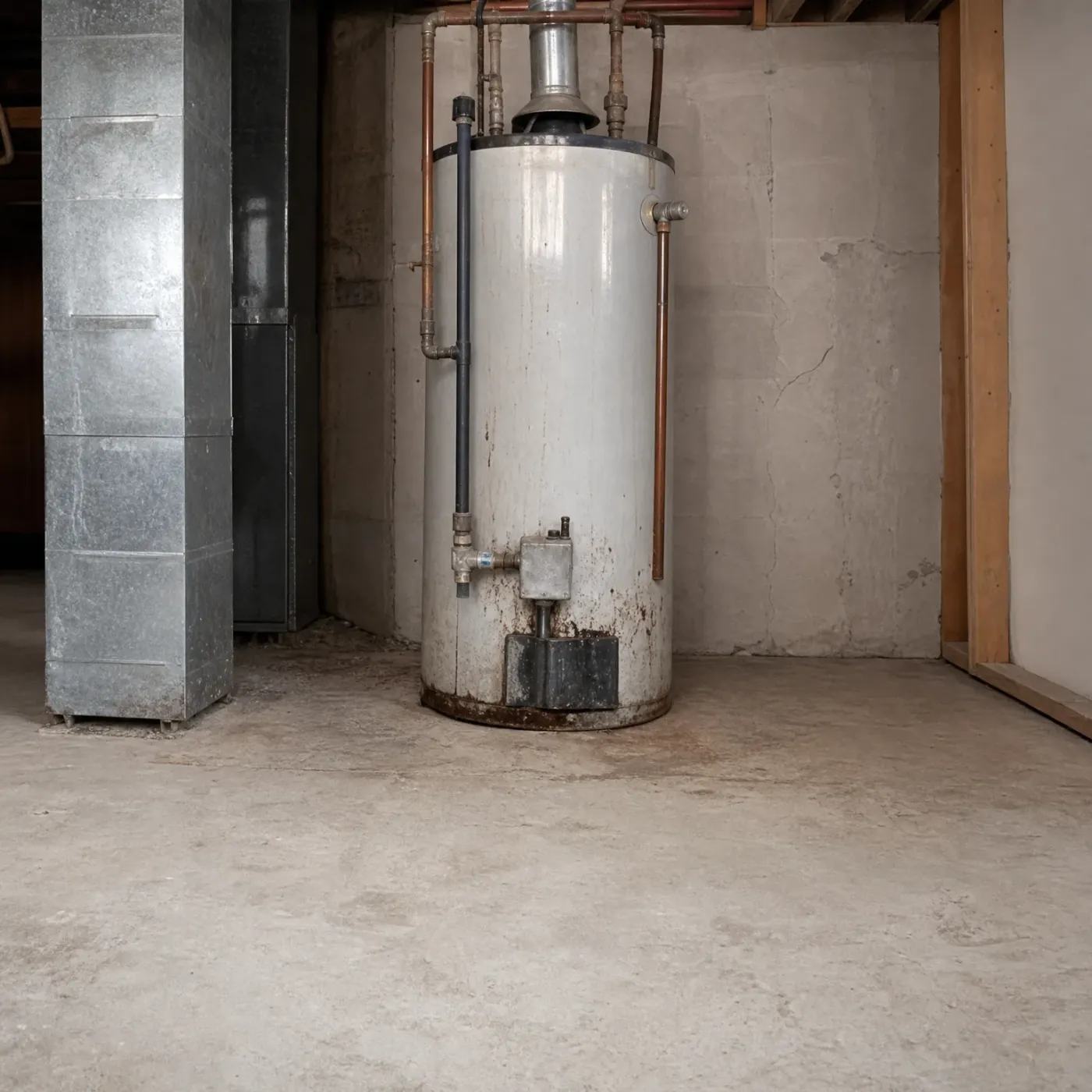
A rusted gas water heater with a flue pipe stands against a concrete block wall on a bare concrete floor, next to a dark metal duct or furnace cabinet at right.

A tank on its way out

Rust has worked its way down the tank and onto the fittings above it. Once the steel shows that much corrosion, the leak is rarely one part failing. A contractor can tell you fast whether this one is worth repairing or needs to come out.

What is the leak actually doing to your house

A water heater closet or basement corner stays damp longer than you'd think, and drywall or a wood subfloor sitting next to that puddle will start to soften and stain before you notice a smell. If the tank is on a floor above living space, water finds the gaps around the base and shows up as a stain on the ceiling below before you ever see it pooling upstairs. Check the shutoff valve on the cold line into the tank. If you can turn it and stop the flow, do that now and leave the water off until someone looks at it. If the valve is corroded or won't move, that's worth mentioning when you call, since it changes what needs fixing first.

A smiling bearded man in a dark green hooded jacket and blue t-shirt sits on a couch in a living room with shelves, a potted plant, and a bowl of popcorn on a wooden table.
A smiling man in a green long-sleeved shirt sits on a beige sofa in a living room, with a bowl of popcorn in the foreground, a large potted plant and shelving behind him.
A smiling man in a dark blue T-shirt sits on a couch in a dimly lit living room with a bowl of popcorn and a remote on a wooden table, a lit floor lamp and bookshelves behind him, and windows showing greenery.
A smiling bearded man in a dark green long-sleeved shirt sits on a leather couch in a living room, with a bowl of popcorn and a remote control on a wooden table in the foreground.

Let someone else find the pro

The pro who gets in touch is licensed in South Dakota and works in Minnehaha County.

It costs nothing to send, and you don't have to hire anyone.

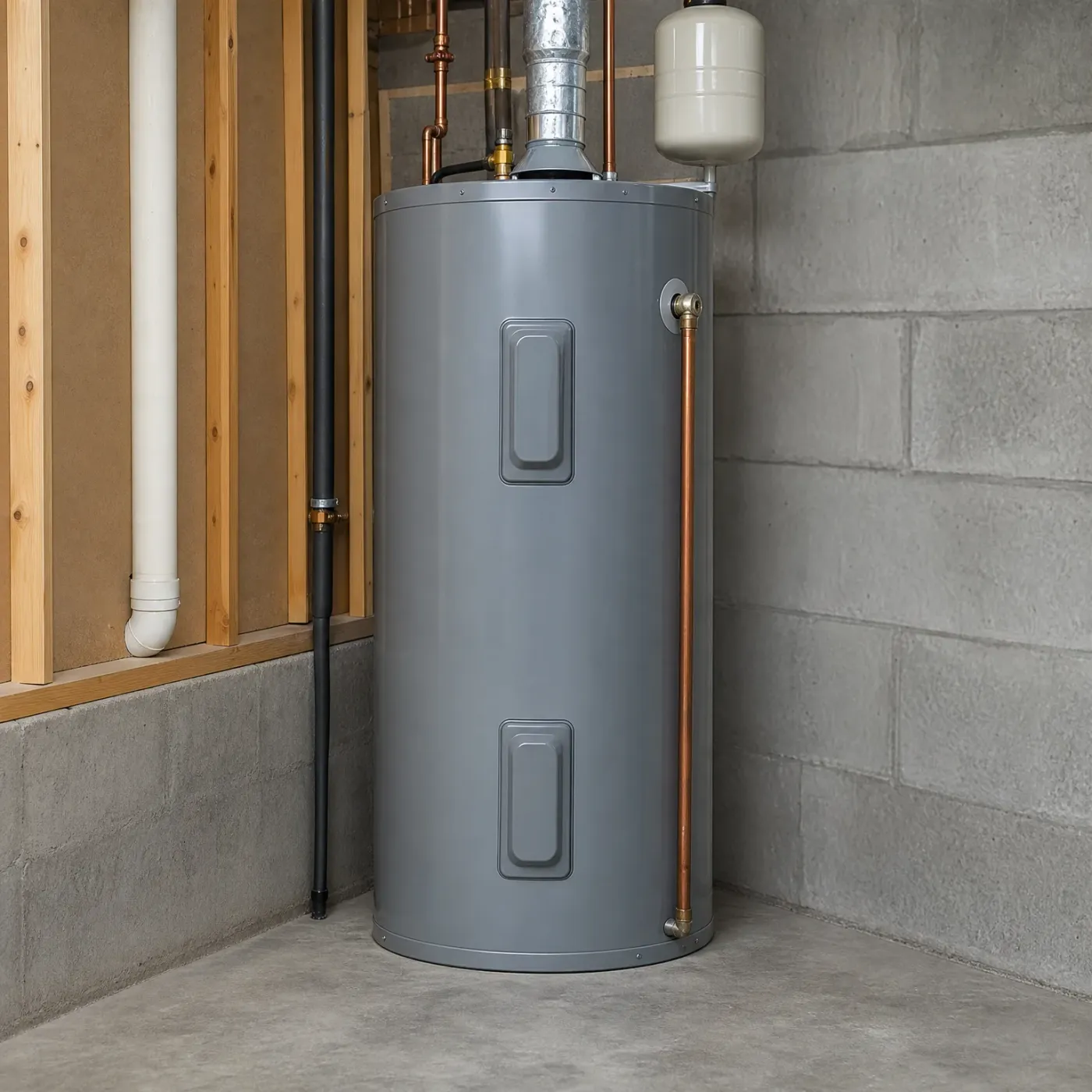
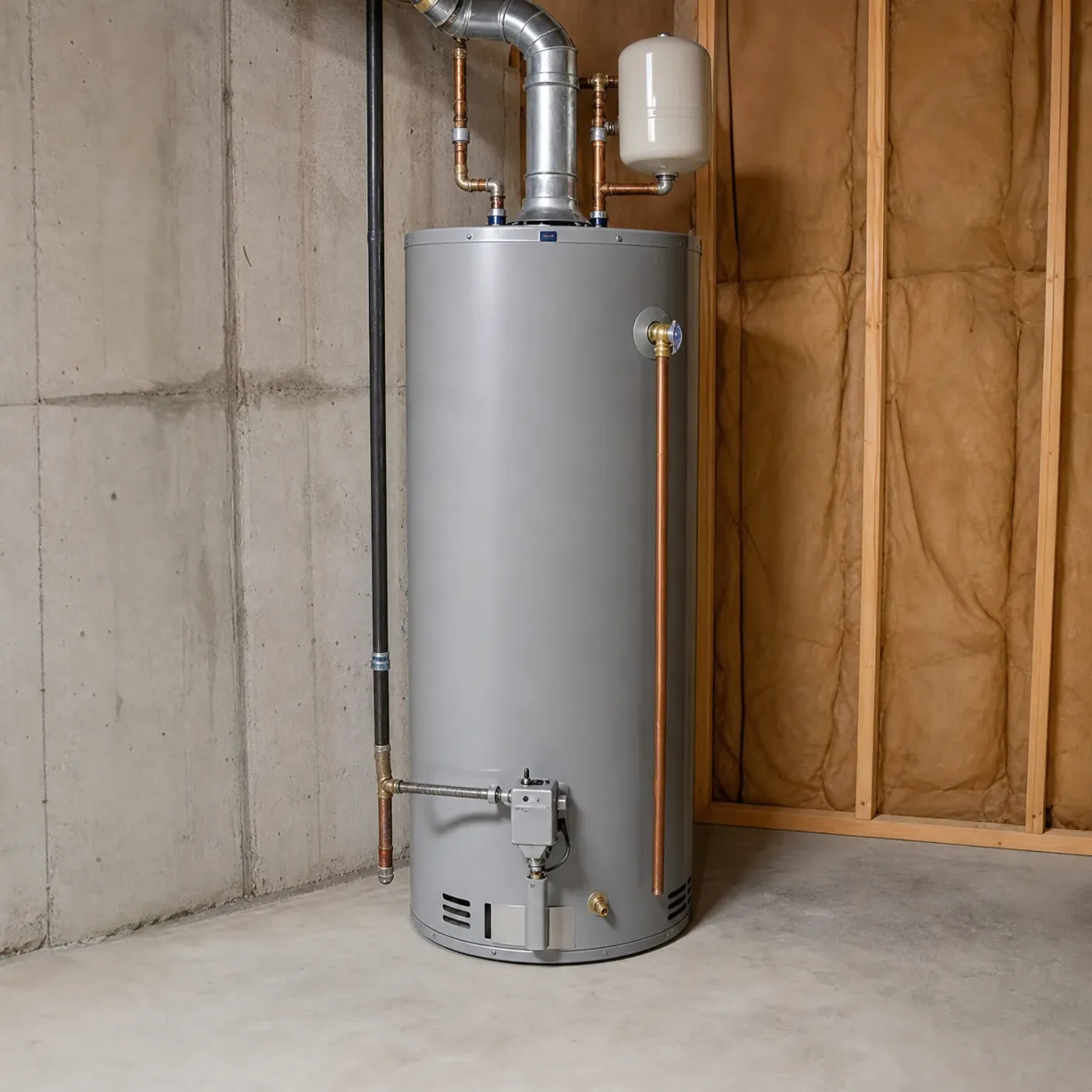
A gray cylindrical water heater with copper piping and an expansion tank stands in a basement corner beside a concrete block wall and exposed wood framing.

Holding up fine

This electric tank sits dry in its corner, copper lines and the drain pipe all clean where they meet the unit. No streaks down the side, no puddle at the base. The expansion tank above it is doing its job keeping pressure off the seams.

An old rusting cylindrical gas water heater with copper and steel pipes and a flue stands against a concrete basement wall beside metal ductwork on a bare concrete floor.

Past its point

Rust has worked its way across the whole tank, not just one spot, and the mineral buildup around the fittings tells you this has been going on for a while. A gas tank in this shape next to the furnace is close to letting go at the seam, if it hasn't started already.

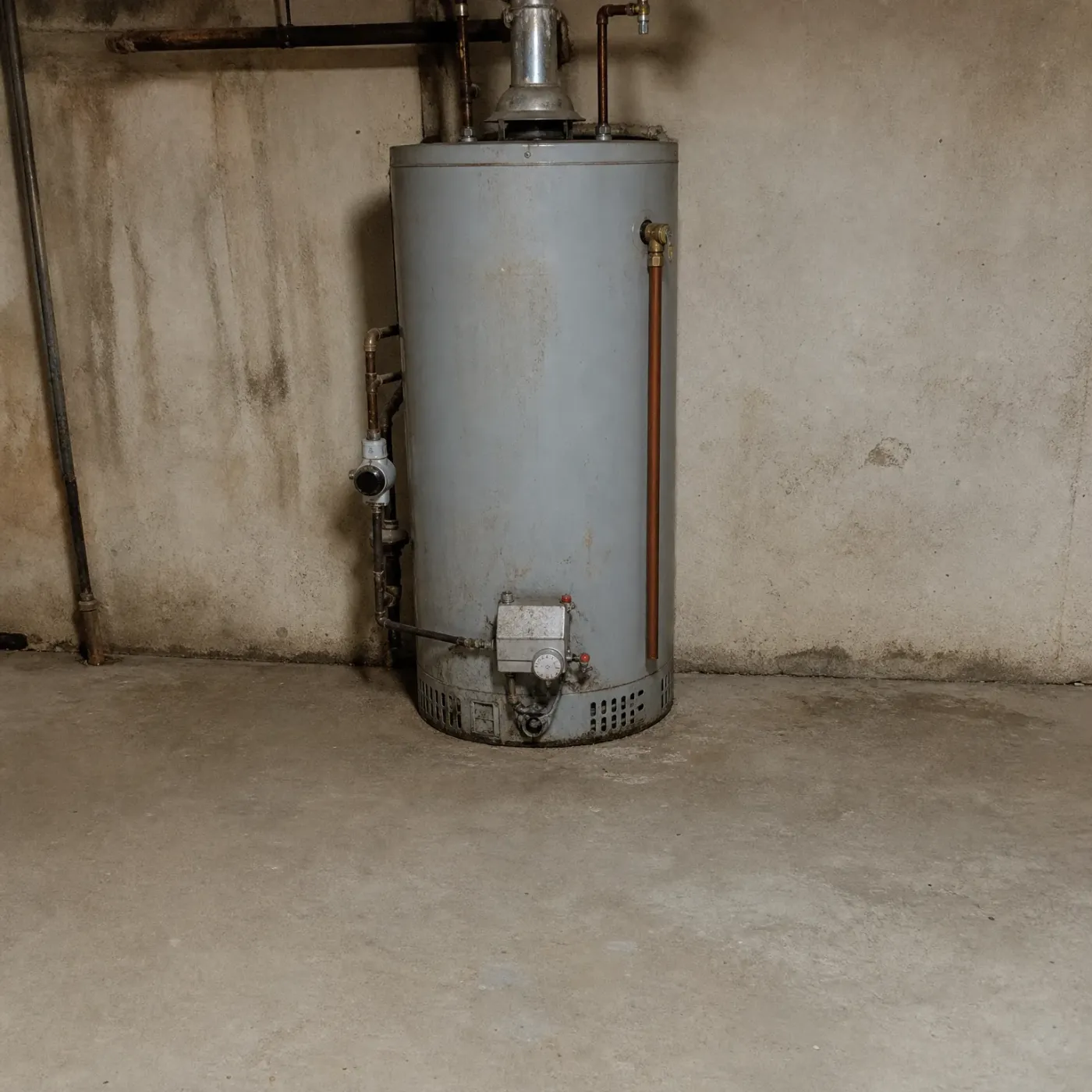
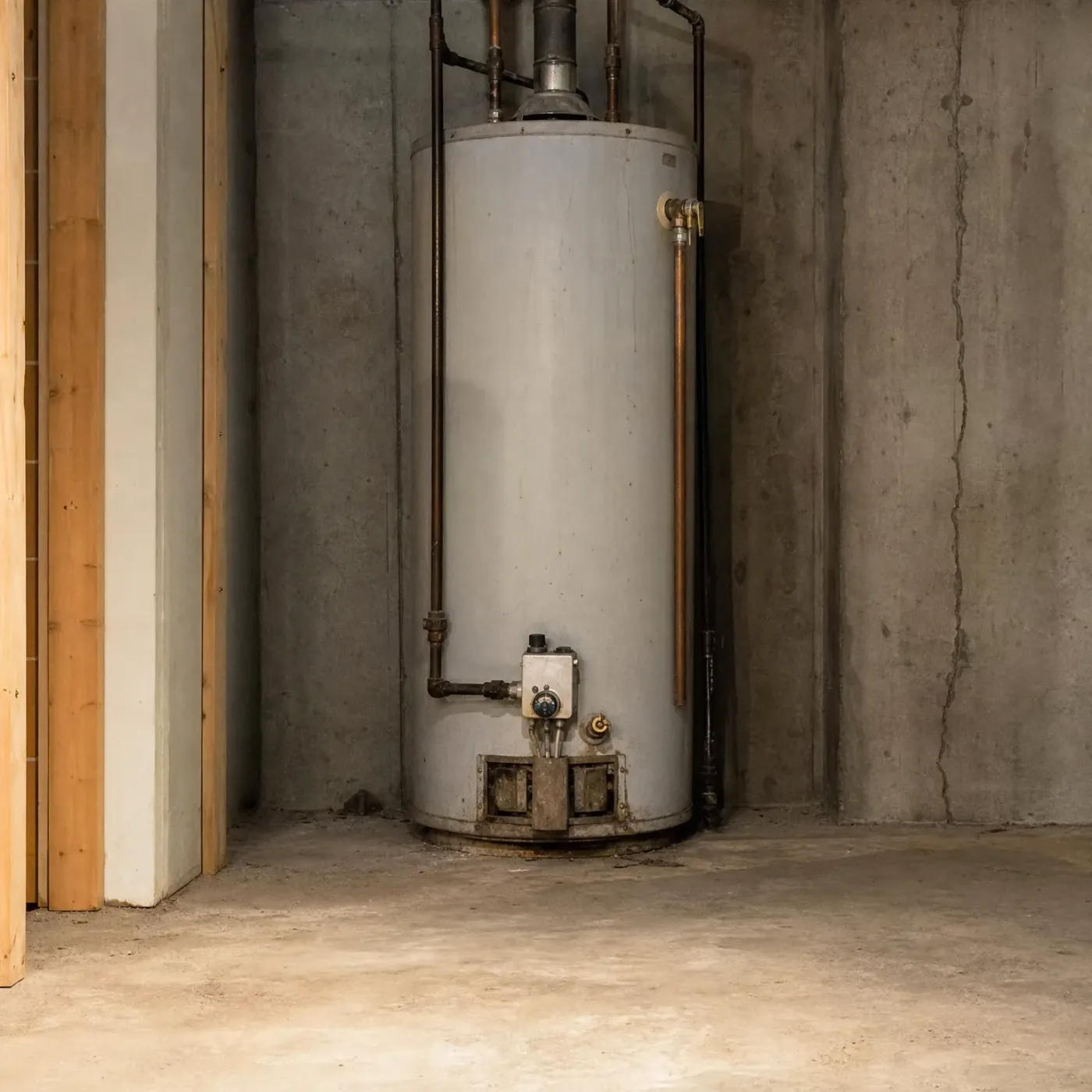
An older gray cylindrical gas water heater with copper and steel piping and a flue, standing on a concrete floor against a stained concrete wall.
Before you get your water heater repair
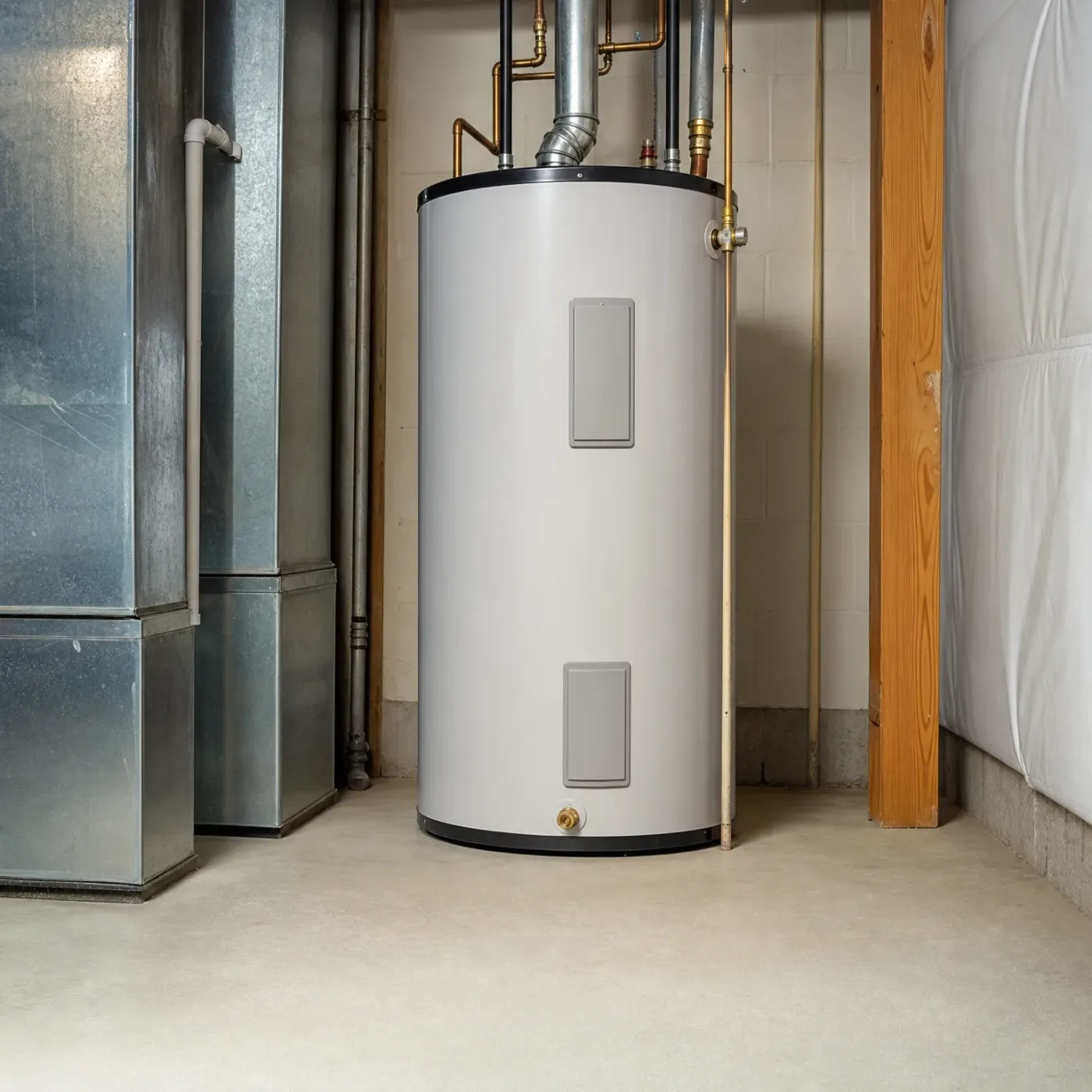
A white cylindrical water heater with two access panels stands on a concrete floor in a basement corner, beside galvanized ductwork, copper and metal pipes, a wooden post, and a concrete block wall.
After you get your water heater repair

Why tank age decides the outcome

A gas or electric water heater tank is glass lined steel, and that lining is what keeps the water from eating the steel underneath. It never covers every inch. Small gaps form as the tank heats and cools year after year, and once the steel underneath is exposed, rust works through from the inside out until it finds a seam or the tank floor. There's no patch for that because the failure is inside the wall of the tank itself, not at a joint you can tighten or a part you can swap. A contractor can tell you the tank's age from the serial number on the rating plate, which is usually the fastest way to know what you're dealing with.

What the shutoff valve buys you

Every tank has a cold water shutoff on the line feeding it, usually a quarter turn or a few turns of a wheel handle. Closing it stops new water from entering the tank, which is what keeps a slow leak from becoming standing water across the floor while you wait. It doesn't drain what's already inside, and on a gas unit it doesn't do anything about the burner underneath, so a tank that's actively failing can still get worse even with the water off. Knowing where that valve is and turning it before you leave the house is worth more than guessing at the cause.

Power here costs 13.16 cents per kilowatt-hour

At 13.16 cents a kilowatt-hour, running an electric water heater here doesn't cost much to begin with, so a leak isn't driven by what you're paying to heat the water. It's the tank itself giving out, not the power bill, that's worth watching.

EIA-861 2025

  1. A contractor shuts off the cold water supply to the tank

  2. The power or gas to the unit gets switched off

  3. The tank and lines get checked dry to find the exact source

  4. A pressure test or visual check confirms whether the tank itself failed

A gray cylindrical gas water heater with copper piping, flue vent, and a small expansion tank stands in a basement corner between a concrete wall and an insulated stud wall.
Copper and black iron pipes run clean to the tank, with the expansion tank doing its job overhead.
An older gas water heater with copper and black pipes stands in the corner of a bare concrete basement next to a wood-framed partition wall.
Rust at the base of an old tank, with the gas valve still ticking along, isn't a fitting problem anymore.
A woman in a dark gray sweater reclines on a couch with her eyes closed and a knit blanket over her lap, an open book resting face-down in front of her, with a lit table lamp and shelving blurred in the background.
A bearded man in a dark navy sweater over a collared shirt smiles and looks off to the side while seated at a dinner table with a glass of red wine, a lit candle, and a plate of food in the foreground of a dimly lit room.

Leak from a fitting or valve

A loose connection, a bad drain valve, or a failing relief valve can be swapped out. The tank stays, and the leak stops without replacing the unit.

Hand off my repair

Leak from the tank itself

Rust working through the steel can't be patched or sealed. Once the tank is leaking at the seams, replacement is the only fix that lasts.

Hand off my repair

A leaking water heater almost always comes down to one of two things: a fitting or valve that can be replaced, or a tank that's rusted through and needs to come out. Shutting off the water and power to the unit is the right call while you sort out which one you're dealing with. From there, it helps to have someone look at it who works on these tanks all winter and all summer in Minnehaha County, not just when one happens to leak, so they know what a fitting failure looks like versus what a dying tank looks like, and they won't guess. One contractor, licensed and local, takes the call on your place, checks the tank and lines dry, and tells you straight whether this is a part swap or a replacement. No puddle gets better by waiting on it, and a tank that's already rusted through won't reseal itself. Once you know which kind of leak this is, the rest of the decision is easy.

A gray cylindrical tank water heater with copper and metal pipes at its top stands on a concrete floor beside a concrete wall and wooden studs in a dim basement.

Done looking for a water heater pro

Step 1 of 3: Equipment