



What size water heater a South Dakota home needs

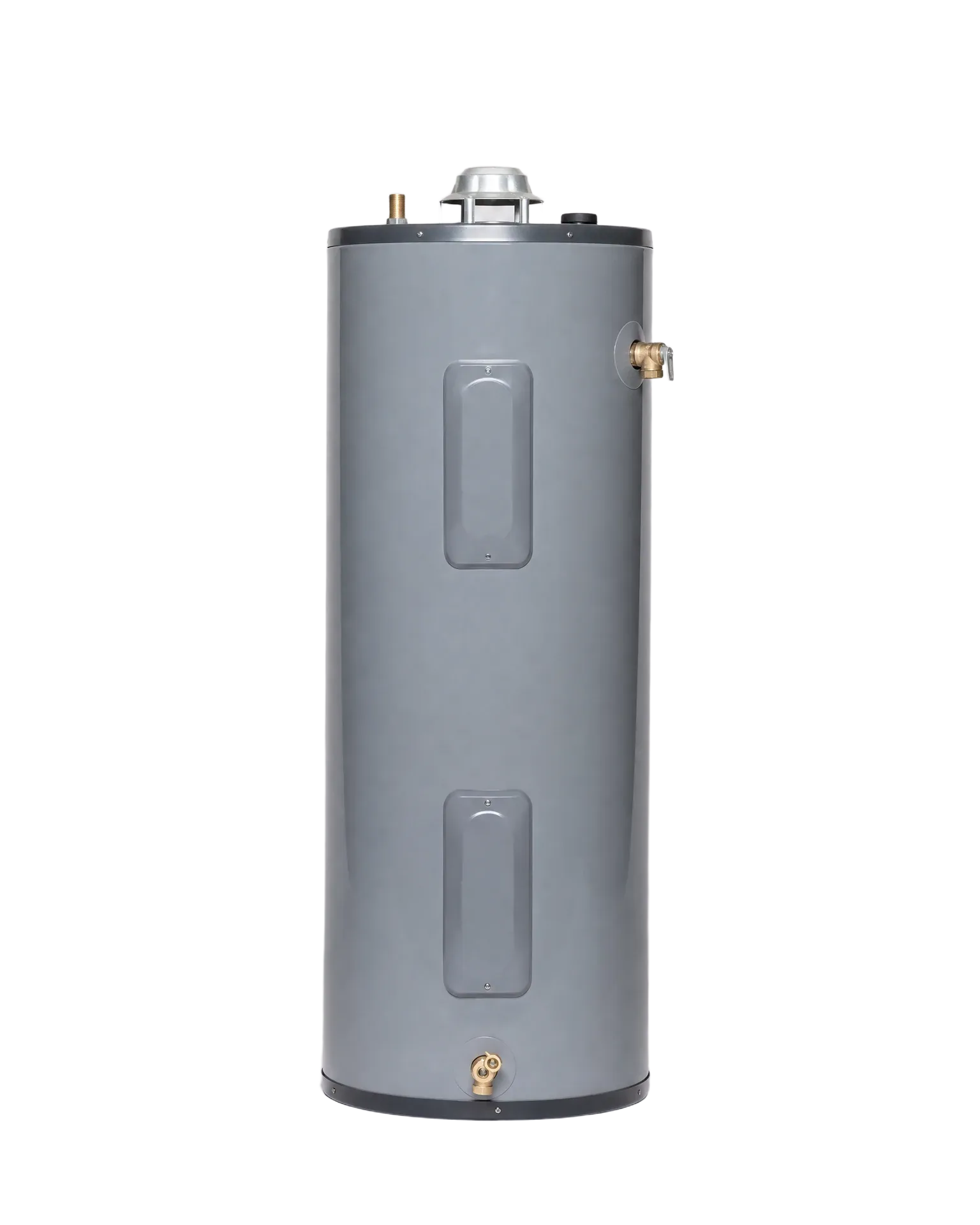
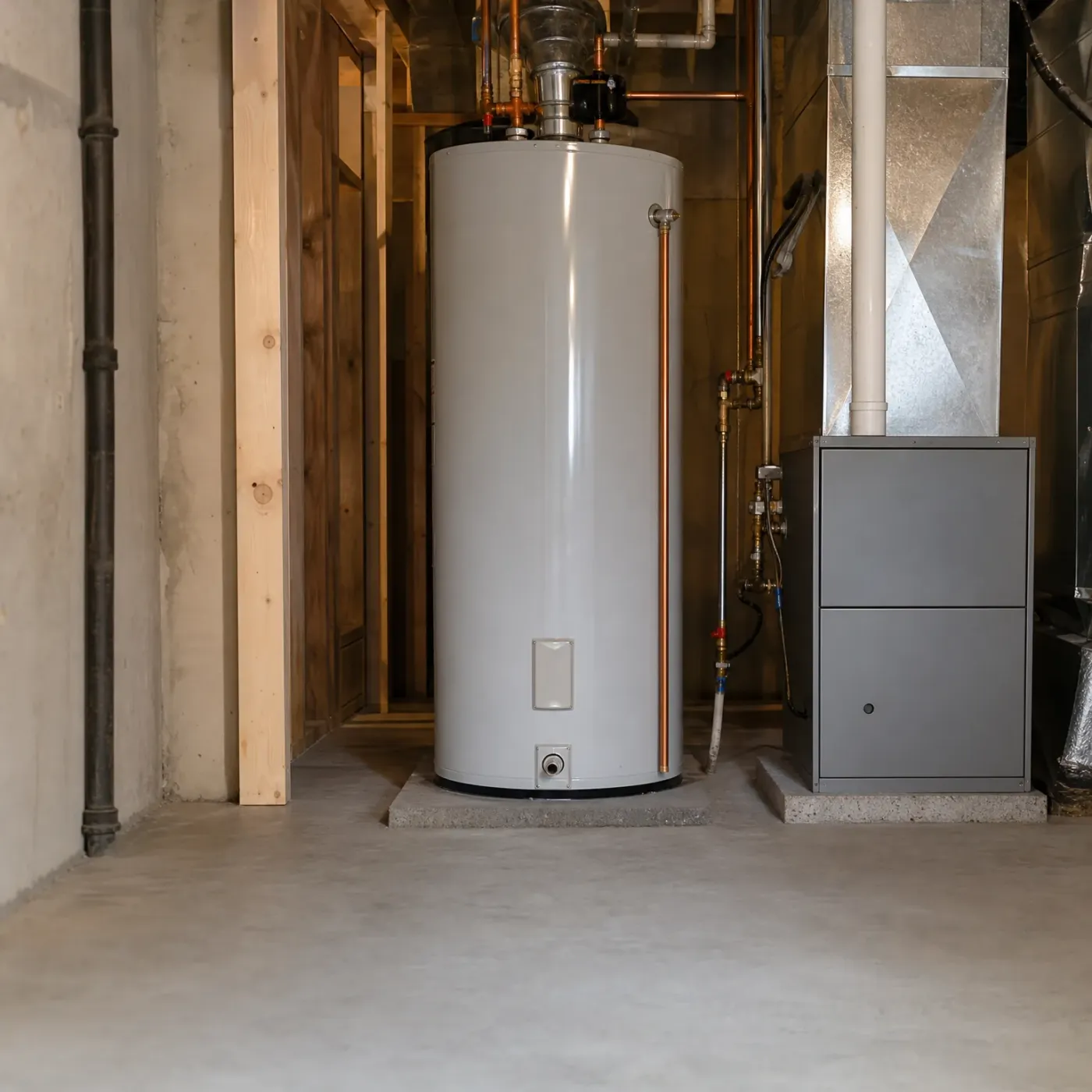
A gray cylindrical water heater with two access panels, a brass side valve, a bottom drain valve, and a metal vent cap on top, photographed against a plain light background.
Get a local pro

Most homes in South Dakota need a 40 to 50 gallon water heater if they run on gas, which covers two to four people through showers, laundry and dishes without running cold. A family of five or more, or a house with two bathrooms running at once, usually needs 50 to 75 gallons. Gas units recover faster than electric ones, so you can often get by with a smaller tank than an all-electric home would need for the same household. The right size also depends on your incoming water temperature, which runs cold here, so the heater has to work harder to raise it than it would in a warmer state. Undersized units run out of hot water during morning routines or back-to-back showers. Oversized ones cost more to buy and keep heating water nobody is using. Getting the gallon count right up front means fewer cold showers and fewer surprises on the gas bill.

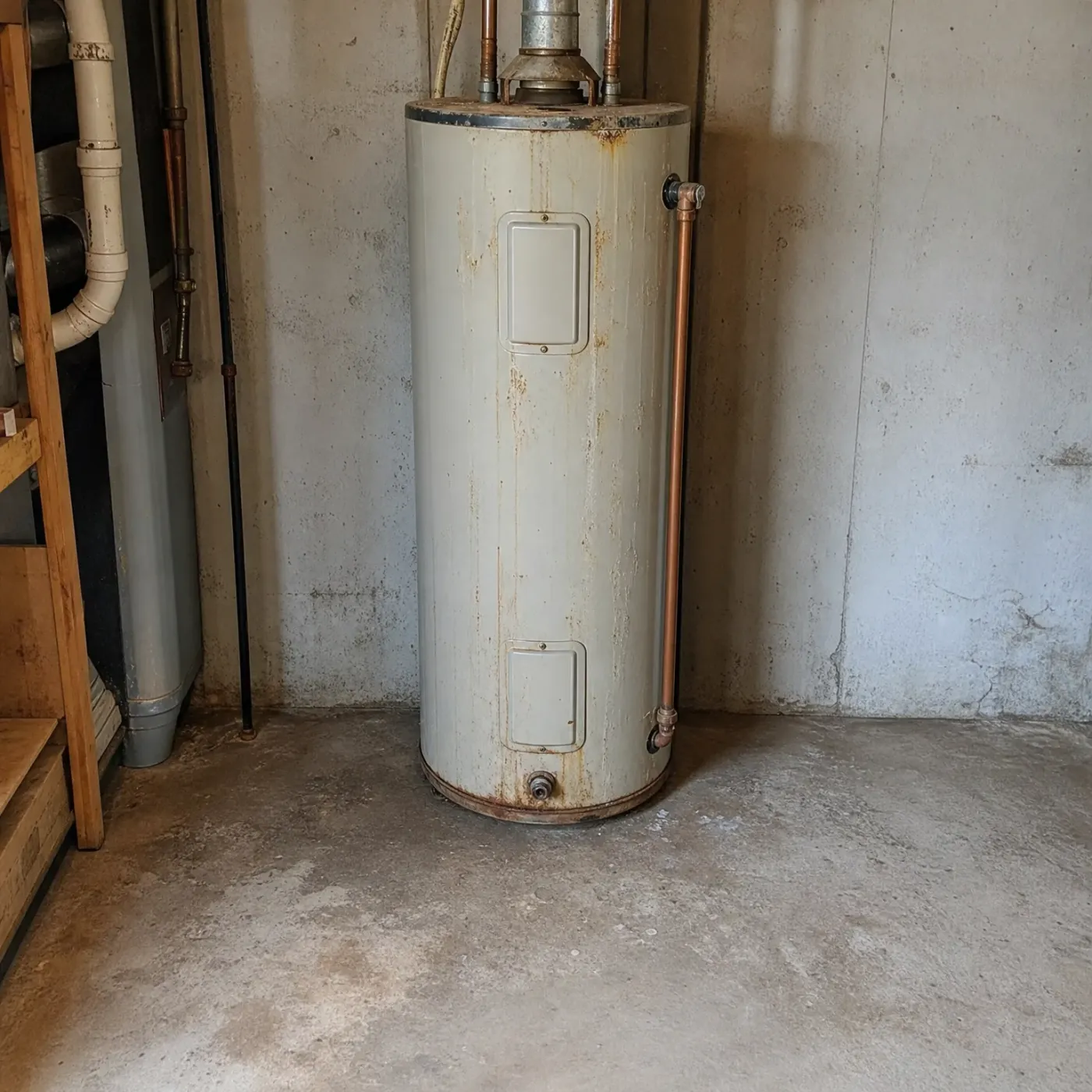
A rusted cream-colored water heater with copper piping and a flue stands in the corner of a concrete-walled basement next to wooden shelving and ductwork.
Before you get your water heater installation
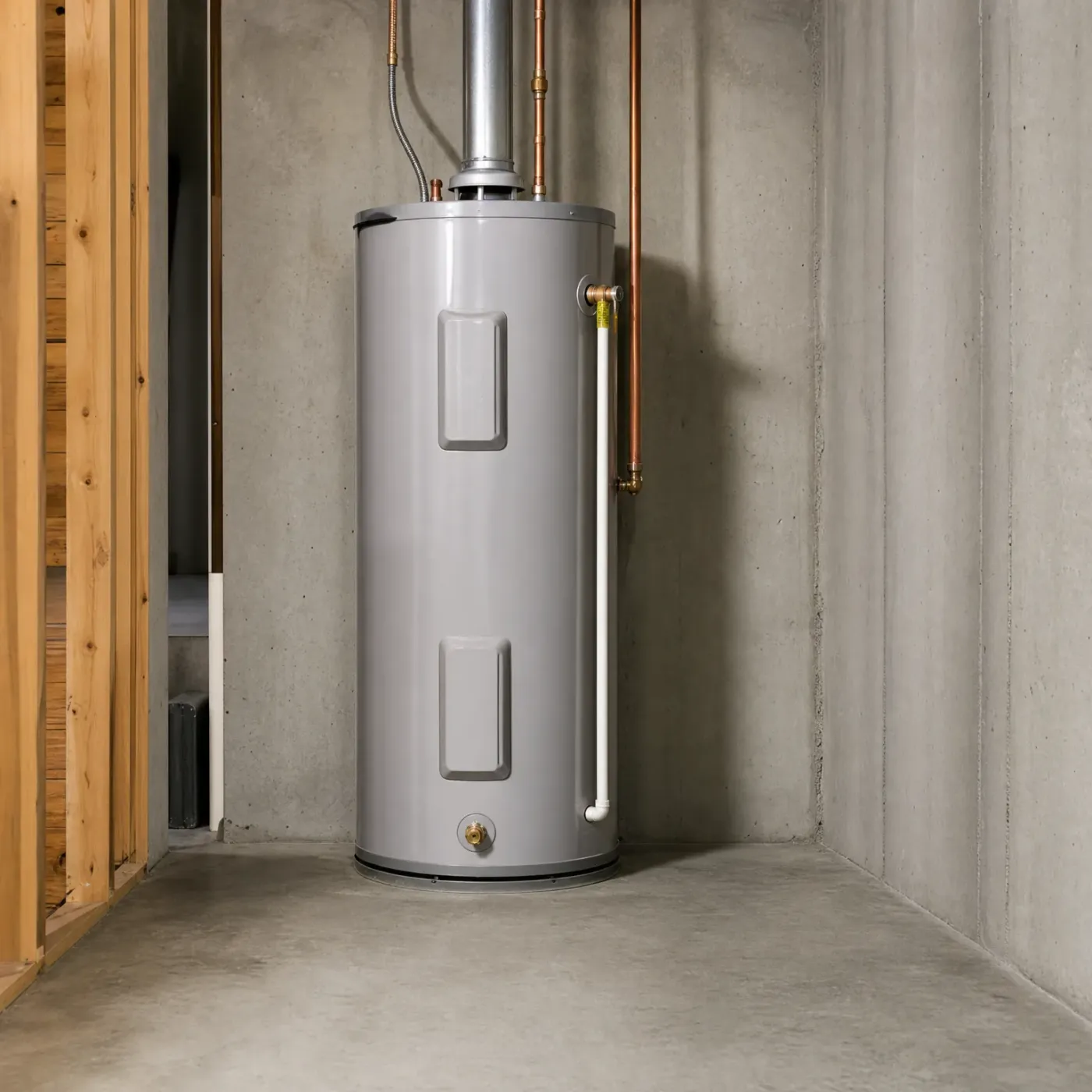
A gray cylindrical water heater standing in a concrete-walled basement corner, with copper and white pipes and a metal flue running up to the ceiling, next to exposed wood framing on the left.
After you get your water heater installation

The gallon number on the tank isn't the whole story. What matters is the first hour rating, the amount of hot water the unit can actually deliver in sixty minutes once it starts cold. A gas water heater does this well because the burner sits right under the tank and heats the water directly, so recovery is faster than an electric unit doing the same job. That matters most when two showers and a dishwasher run at once, since that kind of overlap pulls a tank down faster than any one fixture would alone. Inside the tank, the thermostat sets how hot the water gets and the dip tube sends cold water to the bottom so it doesn't mix with what's already heated. If the dip tube fails, a correctly sized tank starts running short for no clear reason. Because gas here is cheap to run, sizing one step up from your household's normal use doesn't add much cost, and it gives you room for a guest or a heavy laundry day. The flue venting also shapes where the unit can be installed, not just its size.

How sizing actually works

  • Tank size is rated by first hour rating, which is how much hot water it delivers in the first hour, not just what the tank holds.
  • A gas water heater recovers faster than an electric one because the burner sits under the tank and heats it directly.
  • Sizing up one step from your household's actual use costs little with gas since the fuel itself runs cheap here, and it covers a guest or a big laundry day.
  • The thermostat and the dip tube control how hot water leaves and how cold water enters, and a bad dip tube can make a correctly sized tank run short.
  • Running two showers and a dishwasher at the same time draws down a tank faster than any single fixture would on its own.
  • A gas unit vents through a flue, and that venting setup, not just the gallon size, determines where in the house it can go.
A woman with dark hair in a bun wearing a cream knit sweater sits on a gray sofa in a bright living room, looking off to the side.
A woman wrapped in a knit blanket sits on a gray sofa in a living room, looking toward a bright window with houseplants and an armchair in the background.
A woman in a gray cowl-neck sweater sits on a light sofa with cushions, smiling and looking to the side, with a kitchen and window visible behind her.
A woman with dark hair in a bun, wearing a light linen shirt, sits on a sofa and looks to the side, with a window, houseplants and a kitchen with pendant lights blurred behind her.
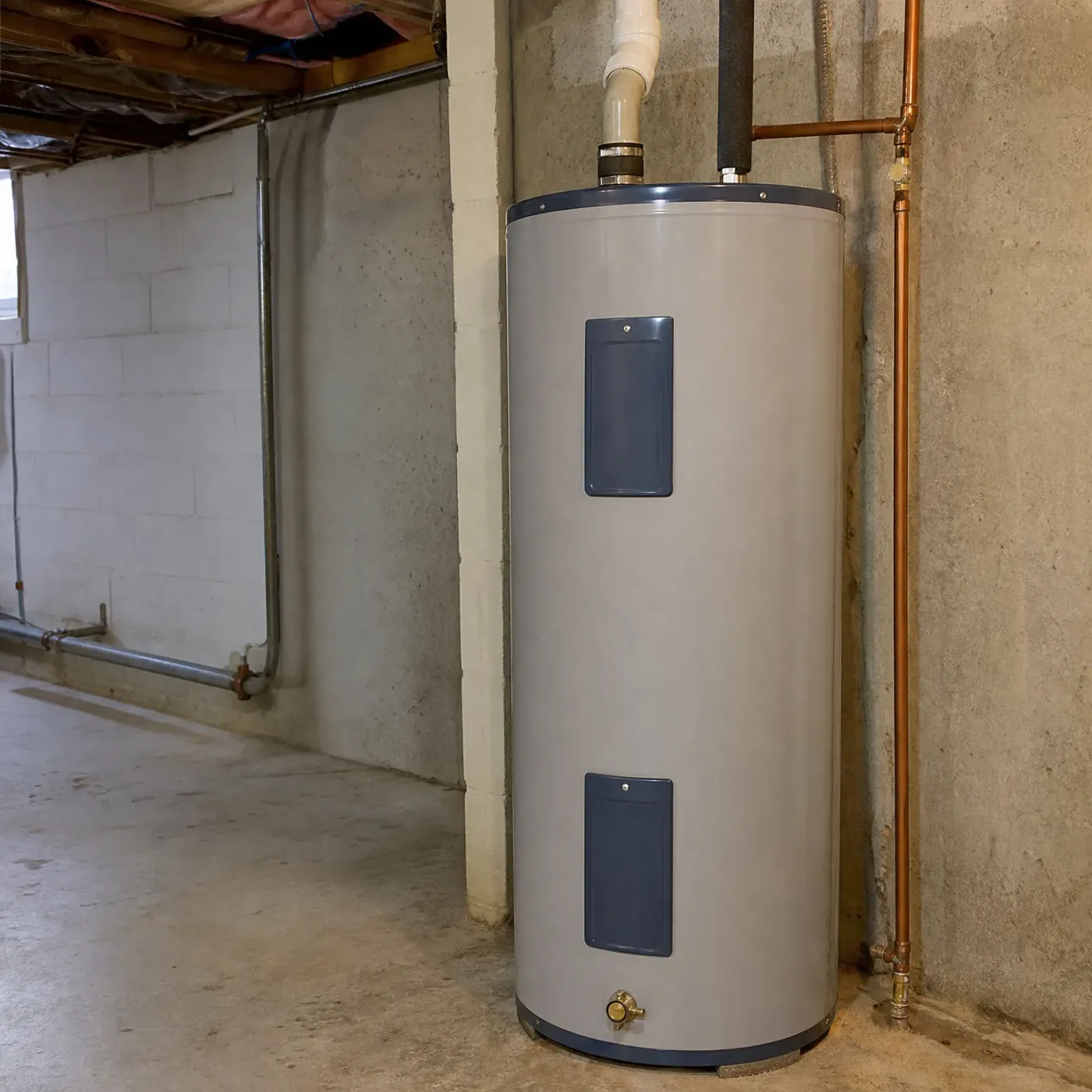
A tall gray cylindrical water heater stands in a basement corner against concrete block walls, with copper and metal pipes running along the wall and a vent pipe at its top.

Matched to your water heater job

Skip collecting and comparing quotes for the new water heater.

Get in touch with a local installer about a new water heater.

Match me with a pro

You're not committing to anything by asking.

47.6% of homes statewide heat with gas

If your house is one of the many here that heats with gas, your water heater almost certainly runs on gas too. That matters for sizing: a gas tank recovers faster, so you don't need as many gallons to keep up with back to back showers.

ACS 2020-2024 5-year B25040

A white cylindrical water heater on a concrete pad in a basement, with copper and metal piping above it and a gray furnace cabinet with ductwork to the right.

Right-sized and working

A 40 to 50 gallon gas water heater sits next to the furnace, keeping up with showers, laundry and dishes back to back. The burner heats the tank directly, so recovery keeps pace with the house instead of falling behind by the second shower.
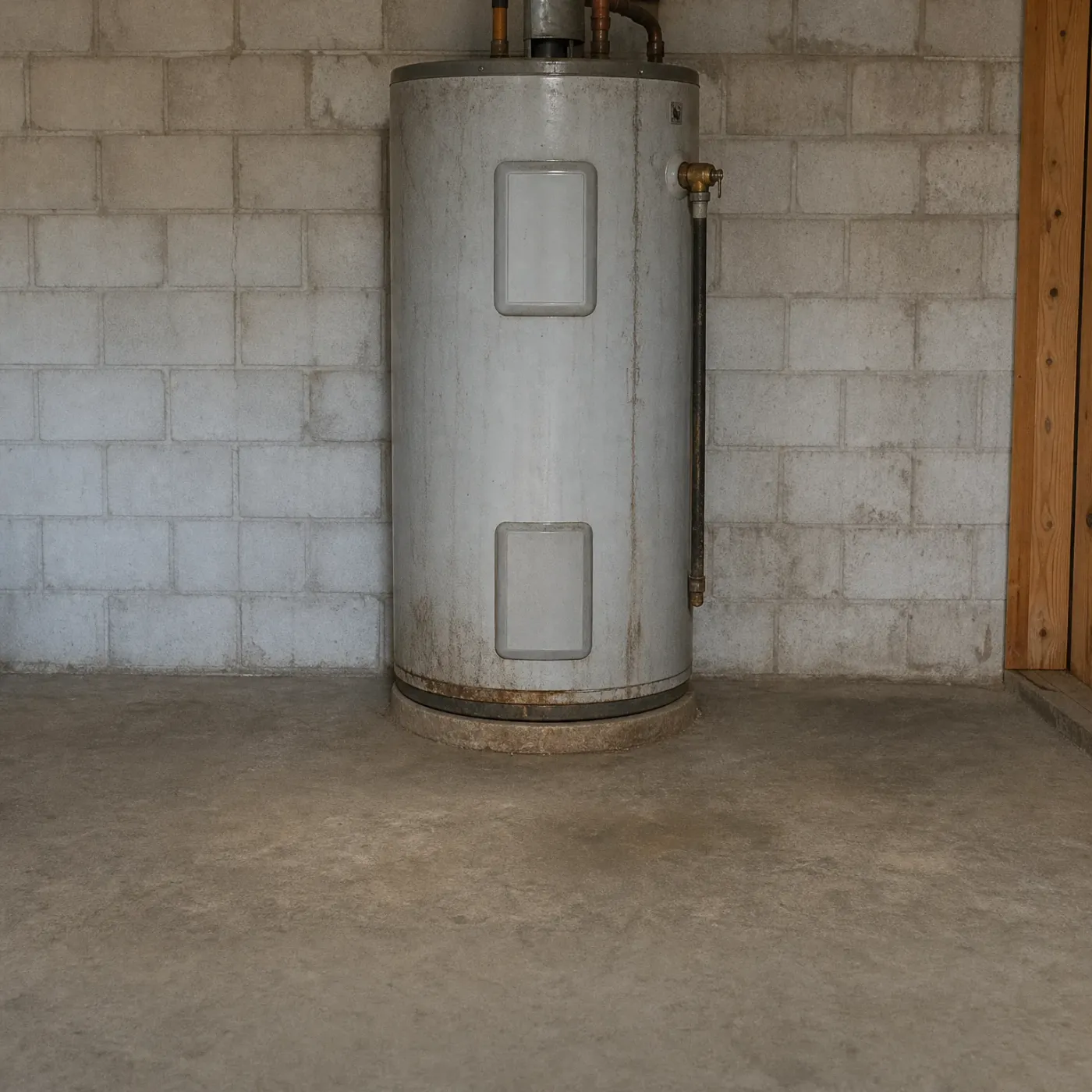

A cylindrical water heater with two access panels and copper pipes stands on a concrete floor against a painted concrete block wall.

Old and undersized

This electric tank shows rust around both access panels and age at the seams. An undersized or aging tank like this runs out partway through the morning rush, leaving someone standing in cold water while it slowly catches back up.

An older woman with gray hair in a bun and glasses, wearing a beige knit sweater, smiles while looking to the side in a warmly lit kitchen, with a loaf of bread on the counter in the foreground and a snowy scene outside the window.
A woman and a child wrapped together in a knitted gray blanket on a couch, with the child's head resting on her shoulder and a lit table lamp and houseplant in the background.

Getting the Size Right

  • A 40 to 50 gallon gas water heater fits most South Dakota households of two to four people.
  • Five or more people, or two bathrooms running hot water at once, usually calls for a larger tank or a higher first hour rating.
  • Gas recovers faster than electric because the burner heats the tank directly, so gas homes need fewer gallons to keep up.
  • The right size keeps showers, laundry and dishes running without the water turning cold partway through.
  • Matching the tank to the house avoids both running short on hot water and paying to heat more than you use.

For most South Dakota households, a 40 to 50 gallon gas water heater covers the day without anyone hitting cold water mid-shower. The number that matters most is first hour rating, not the gallons stamped on the tank, since that's what tells you how much hot water actually comes out when the house needs it. Gas recovers quickly because the burner sits under the tank and heats it directly, which is why gas homes can run smaller than electric ones and still keep up with back to back showers, a load of laundry and a sink full of dishes. Where it gets tighter is a house with five or more people, or two bathrooms drawing hot water at the same time. That calls for either a bigger tank or one rated for a higher first hour output, and guessing wrong in either direction costs you: too small and showers turn cold, too big and you're paying to keep water hot you never use. Finding out which one fits your house usually means calling around to a handful of plumbers, describing your household and your fixtures to each one, and sorting through quotes that size things differently. Getting matched with a contractor who installs water heaters sized to your actual household skips that part. You explain your situation once, and the sizing conversation happens with someone who's already equipped to act on it.

A modern two-story house with dark siding and stone base at dusk, with lit soffit lights, a path of large rectangular pavers set in dark gravel, planting beds, a lawn, and an orange and blue sunset sky above distant trees and water.

Water Heater Installation

A water heater pro near you

Step 1 of 3: Equipment
  • A cream chunky cable-knit throw draped over a beige upholstered armchair beside a bright window, with a wooden side table holding a book and a vase of leafy branches at left.
    • Describe your water heater job, and a local pro who handles it gets in touch.
    • Say what's going on with your water heater, and a pro who works on them reaches out.
  • Living room corner with a gray sofa holding beige pillows and a knit throw, a round wooden coffee table with a dark planter and shallow bowl, a jute rug, a floor lamp, a framed landscape print on the wall, and a window showing trees.
    • Send the form and the search for an installer is over.
    • Send it once and finding someone is no longer on you.
  • A living room corner with a cream sofa and cushion, knit throw, wooden coffee table holding a shallow bowl and dark ceramic vase with green foliage, a floor lamp, potted plant in a woven basket, and linen curtains at a window.
    • Describe the project once instead of to every installer.
    • Answer a few questions instead of calling shop after shop.
  • A round reclaimed-wood coffee table with a black metal base sits on a woven rug in front of a cream sofa with cushions, with a lit built-in fireplace and a tall indoor tree in the background.
    • One installer gets your project, so there's no bidding war over it.
    • Your request stays with one local pro.





