

Still doing its job
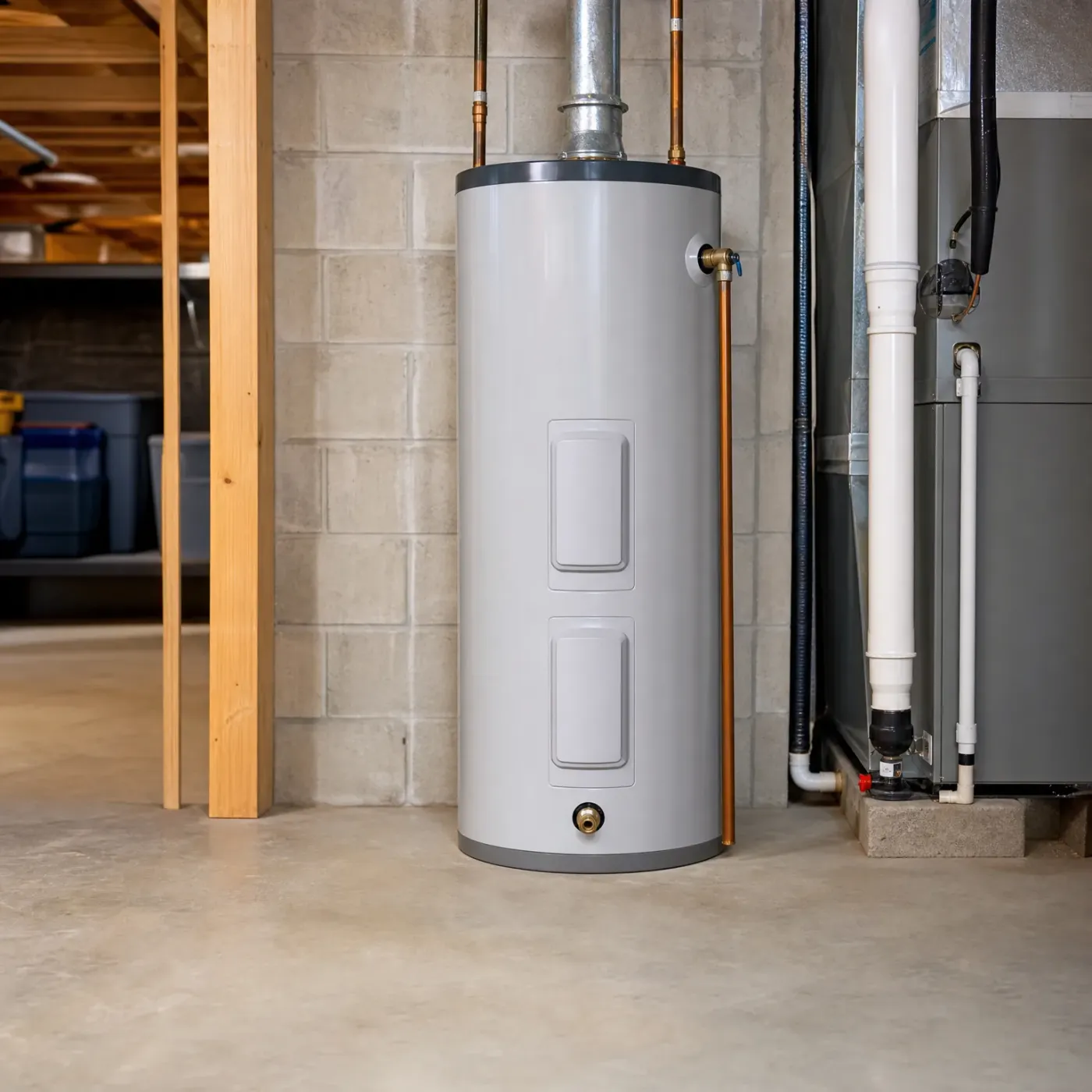
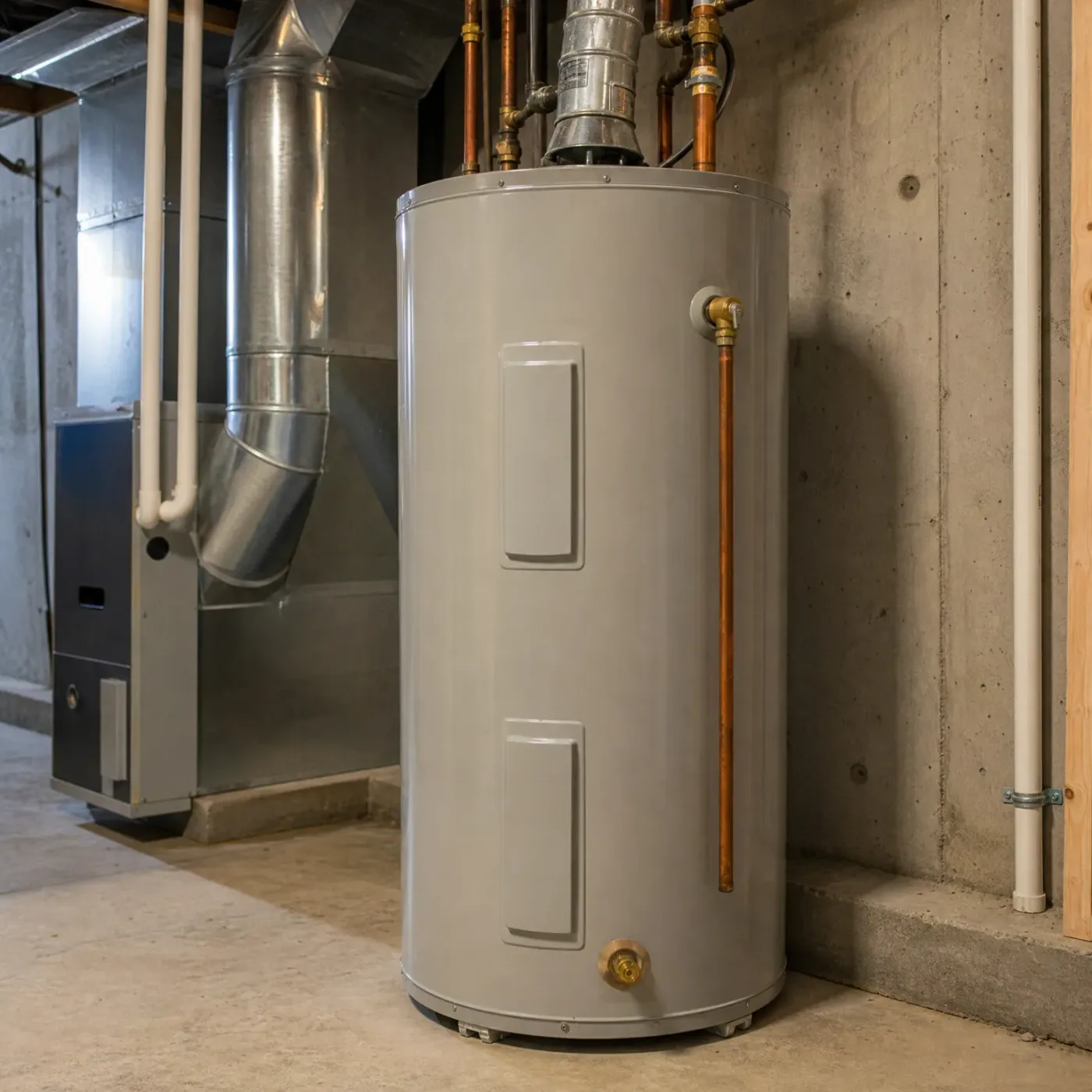
No rust on the panels, no water on the floor beneath it, and the pipes going in and out are dry where they meet the tank. A unit like this is heating water the way it should, and there's no reason to touch it yet.
Your new water heater project goes to an installer who works in Lincoln County.
Find a water heater proMost water heaters last between 8 and 12 years, and in Harrisburg that holds true whether yours runs on gas or electric. The tank itself is what fails first. Years of heating and reheating water wear at the glass lining inside, and once it cracks, the steel underneath starts to rust. You'll see it before the tank gives out completely: water pooling at the base, a tank that rumbles or pops as it heats, or hot water that runs out faster than it used to. Hard water in this area speeds that wear along, since mineral buildup settles at the bottom of the tank and makes the burner or element work harder to heat the same amount of water. If your water heater is past 10 years old and starting to show any of these signs, it's worth having it looked at rather than waiting for it to fail on a cold morning. Replacing it before that point means choosing the timing yourself, instead of dealing with a flooded utility closet in the middle of winter.
2.52 people per household on average
Most Lincoln County households run 2.52 people. A standard tank sized for that draw can fall short once a replacement waits too long to get ordered.
Half the homes here were built by 2005
Half the homes here went up in 2005 or earlier. If yours is one of them, check the water heater's age tag before assuming it was ever swapped out.
66% of homes heat with gas
Gas heats 66% of homes in the county. A gas water heater usually recovers faster than electric, which matters when the tank is already struggling to keep up.
ACS 2020-2024
A water heater that's six or seven years old and just needs a thermocouple, a heating element, or a new drain valve is worth fixing. Those are cheap parts next to a whole new unit, and the tank itself, the part that actually wears out, is still sound. If this is the first repair you've needed and the tank isn't leaking, there's no reason to replace it early. A contractor can swap the failed part and have hot water running again the same visit, and you get the rest of the tank's life out of it.
Once the tank itself is leaking, repair isn't an option. Water pooling at the base means the glass lining has cracked and steel is rusting through from the inside, and no part swap fixes that. The same goes for a unit already past 10 or 12 years that's starting to need repairs. At that point you're paying to patch a tank that's near the end either way. Harrisburg winters mean cold ground water coming into the house, and a failing heater struggles most right when you need it least able to fail.




A water heater doesn't fail all at once. Sediment settles at the bottom of the tank over years, and the glass lining that protects the steel starts to crack under the constant heating and reheating. Once that lining goes, the steel underneath is exposed, and rust takes over. No flushing or repair reverses that. Inside the tank, an anode rod is corroding on purpose the whole time, drawing the damage away from the steel. It's meant to wear out. Once it's gone, the tank starts absorbing what the rod used to take. Burners, thermocouples, heating elements, these can all be swapped out on a gas or electric unit. A leaking tank can't be. Groundwater coming into Harrisburg homes in the winter runs cold, so the burner or element has to run longer each cycle just to bring it up to temperature, which adds to the wear over time. Where the unit sits matters too. A tank leak in a closet or basement without a drain pan or floor drain nearby can turn into real damage before anyone notices.
Sediment settles at the bottom of the tank over years of use
The glass lining cracks from repeated heating and cooling cycles
Bare steel underneath the lining starts to rust
Rust works through the tank wall until it leaks
Send the form and the search for an installer is over.
Get matched with a pro who works on water heaters in Lincoln County.
There's no charge for the request.
How do I know if my water heater is about to fail?
A failing water heater gives off warning signs before it actually floods your floor. Hot water running with a rust tint, even if it clears after a minute, means the glass lining inside the tank has cracked and the steel underneath has started to corrode. Moisture collecting at the base, or on the floor around the tank, usually means a hairline crack has opened somewhere in that rusted steel. Popping or rumbling sounds when the burner or element kicks on point to sediment built up on the bottom, which makes the tank work harder and wear faster. Any one of these on its own is worth a look. Rust and water together mean the tank is near the end.
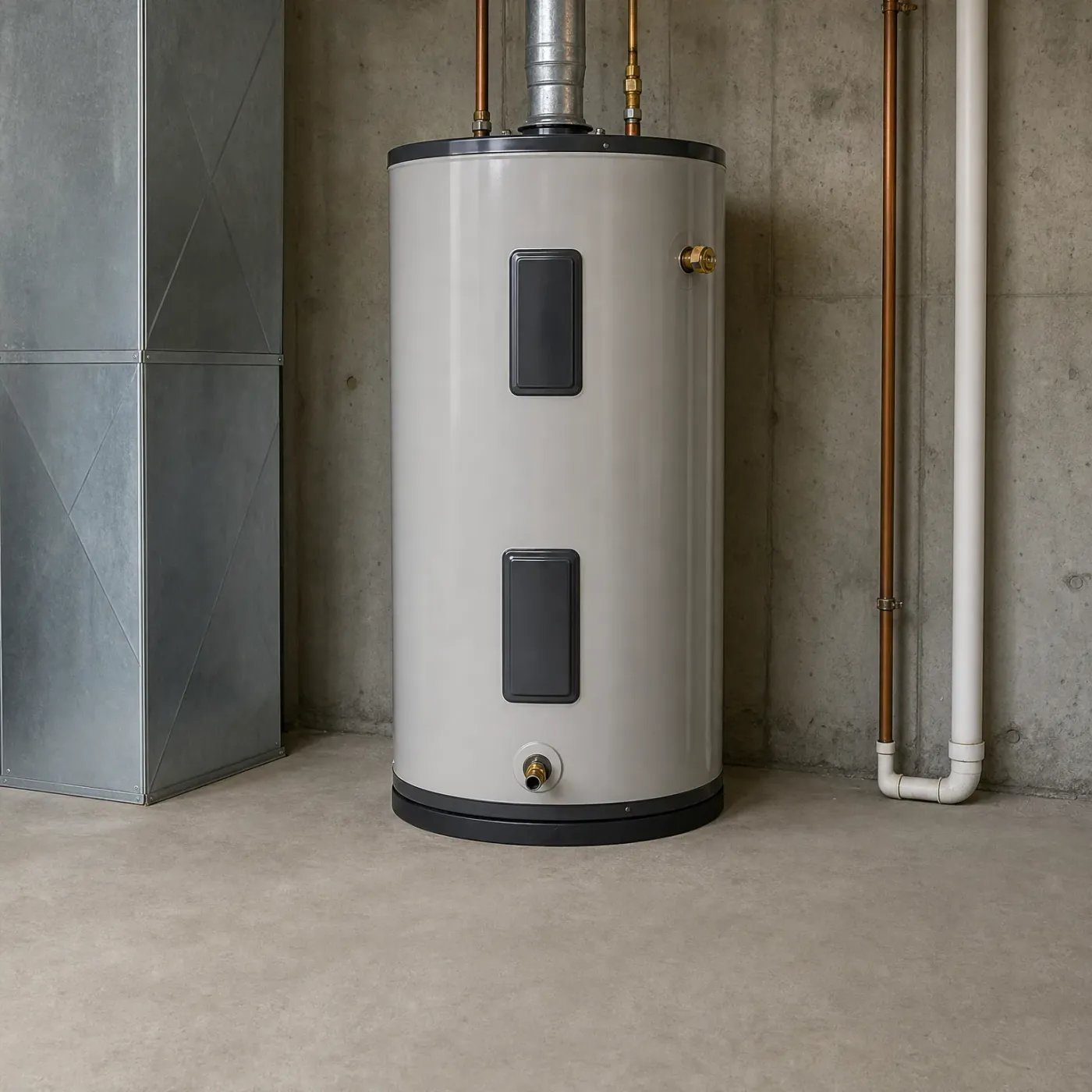
No rust on the panels, no water on the floor beneath it, and the pipes going in and out are dry where they meet the tank. A unit like this is heating water the way it should, and there's no reason to touch it yet.
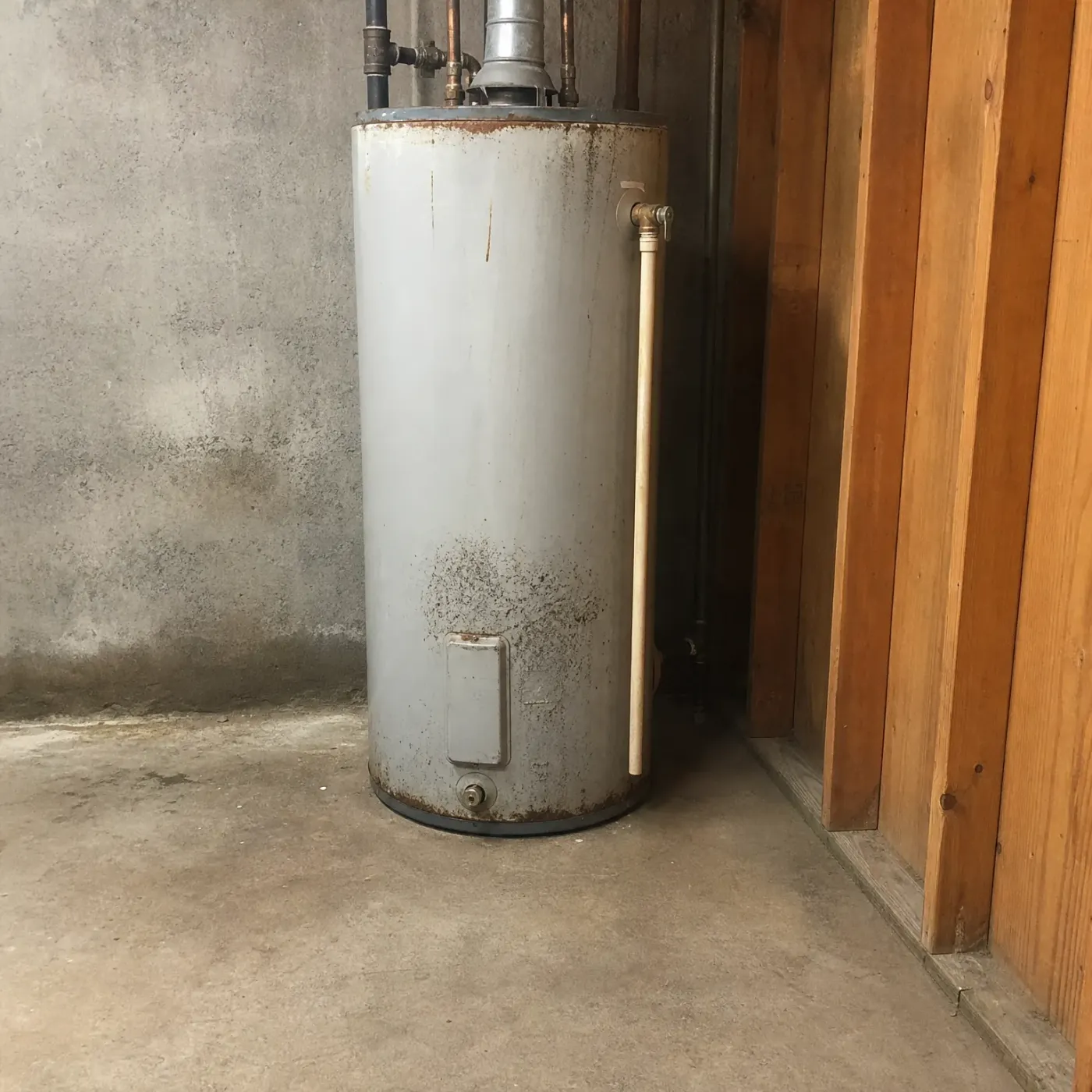
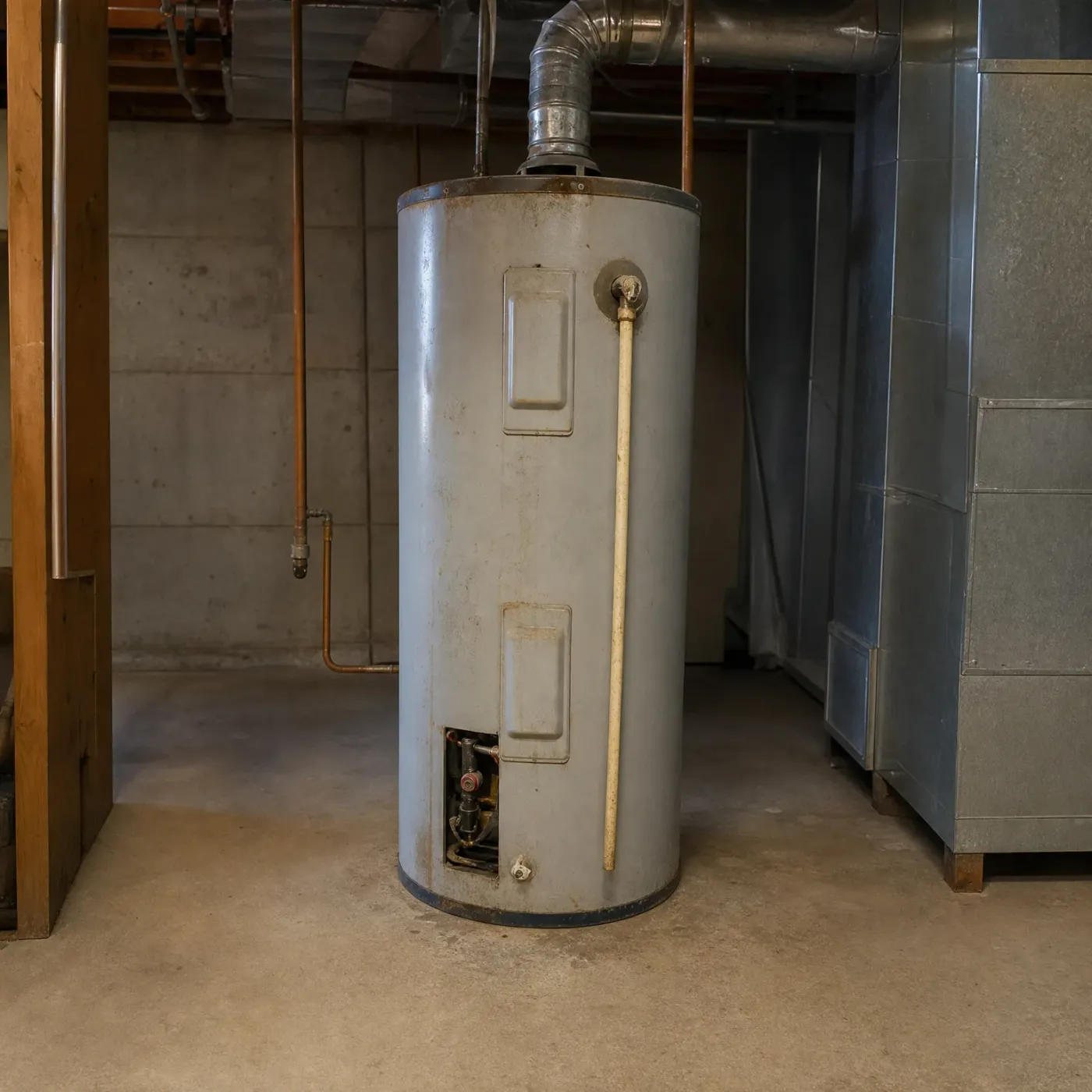
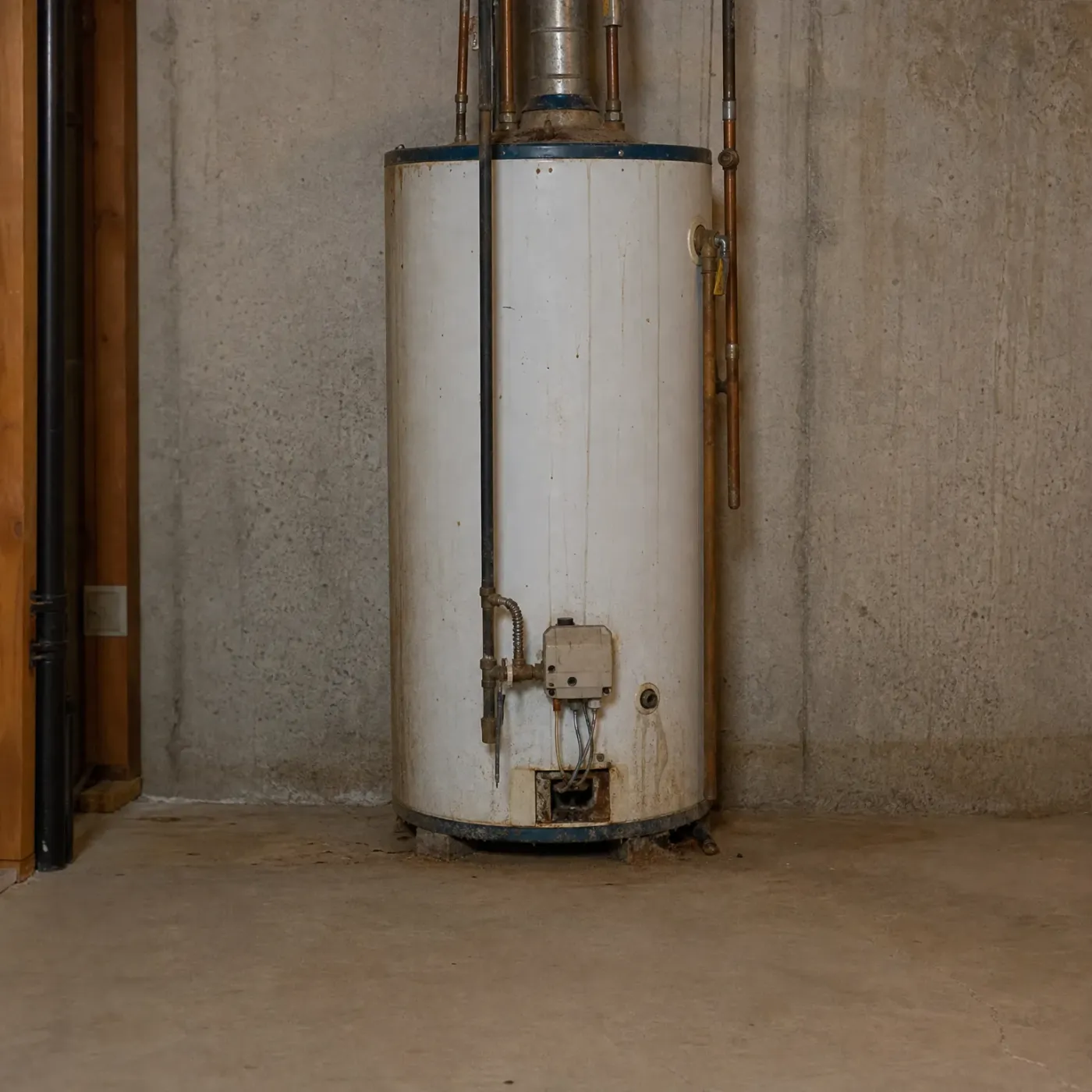
Rust has worked across the tank and down toward the base, with soot staining where the burner sits below. The discharge pipe shows it's been wet. Once corrosion gets this far, the tank is failing from the inside and won't be far behind on the outside.
Go look at it. Rust on the tank itself, not just a fitting, means the lining underneath is already gone. A damp spot on the floor or a wet discharge pipe means it's leaking somewhere, even if you can't find the spot yet. Hot water that runs a little rusty, especially right when you turn the tap on, is coming from inside the tank, not your pipes. A popping or rumbling sound when it heats is sediment built up at the bottom, and that's wear you can't flush away at this point. Any one of these on its own is worth a look. A tank that waits past these signs risks a slow leak that soaks the floor or the wall behind it before anyone notices.
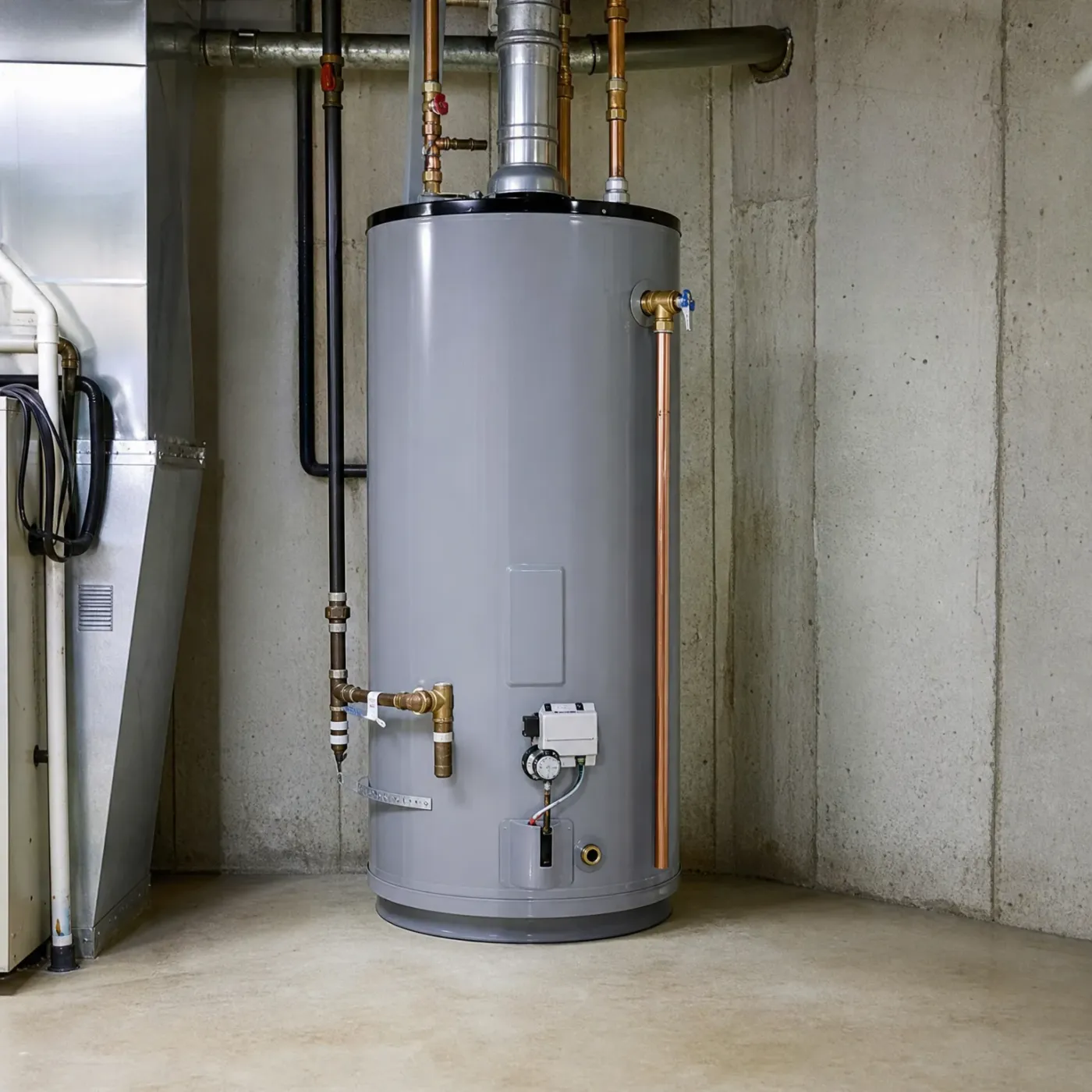
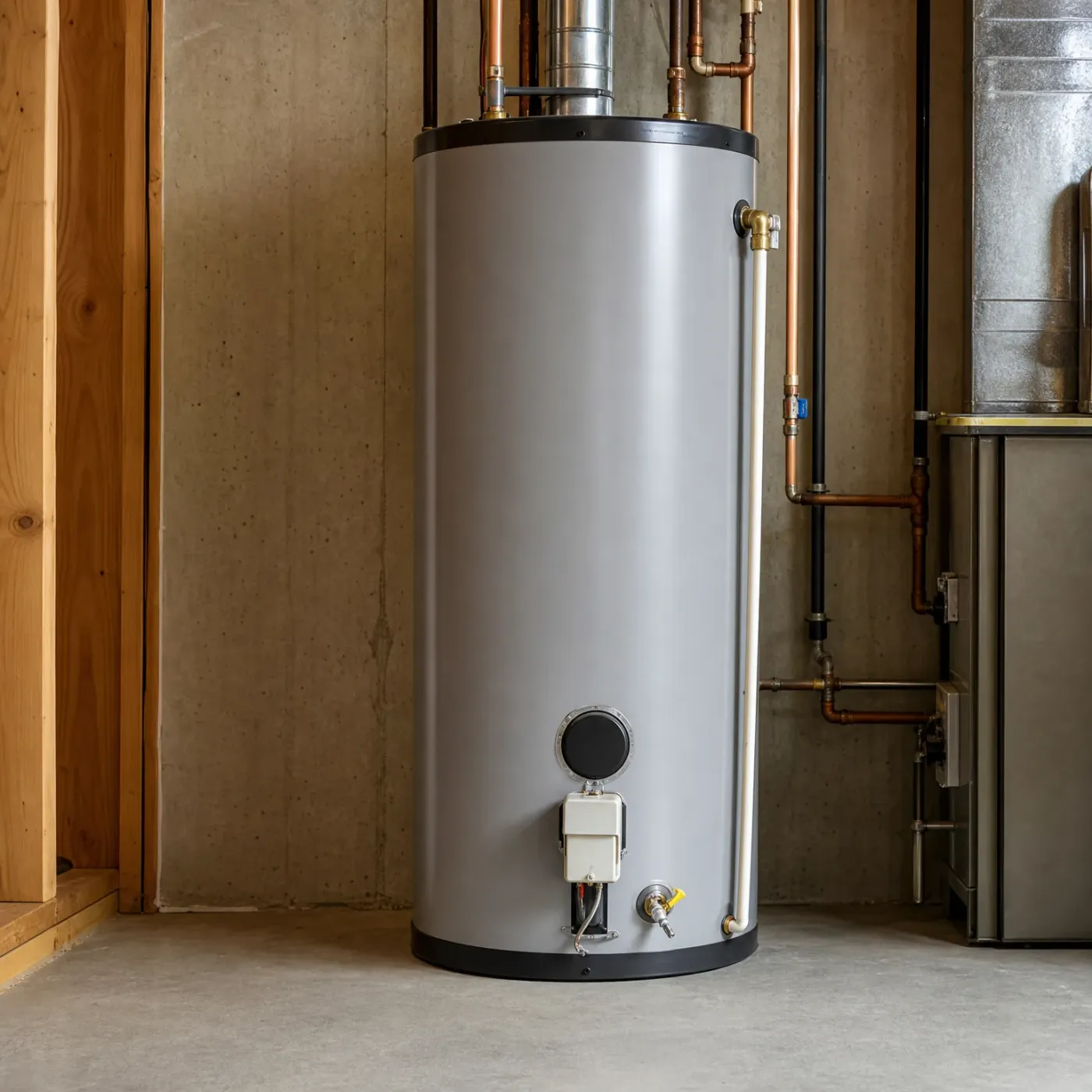
A tank like this is quiet, dry, and holding steady. No rust on the panels, no water at the base, and the gas line and flue vent are doing their job without any sign of strain. Leave it alone and keep an eye on it once a year.
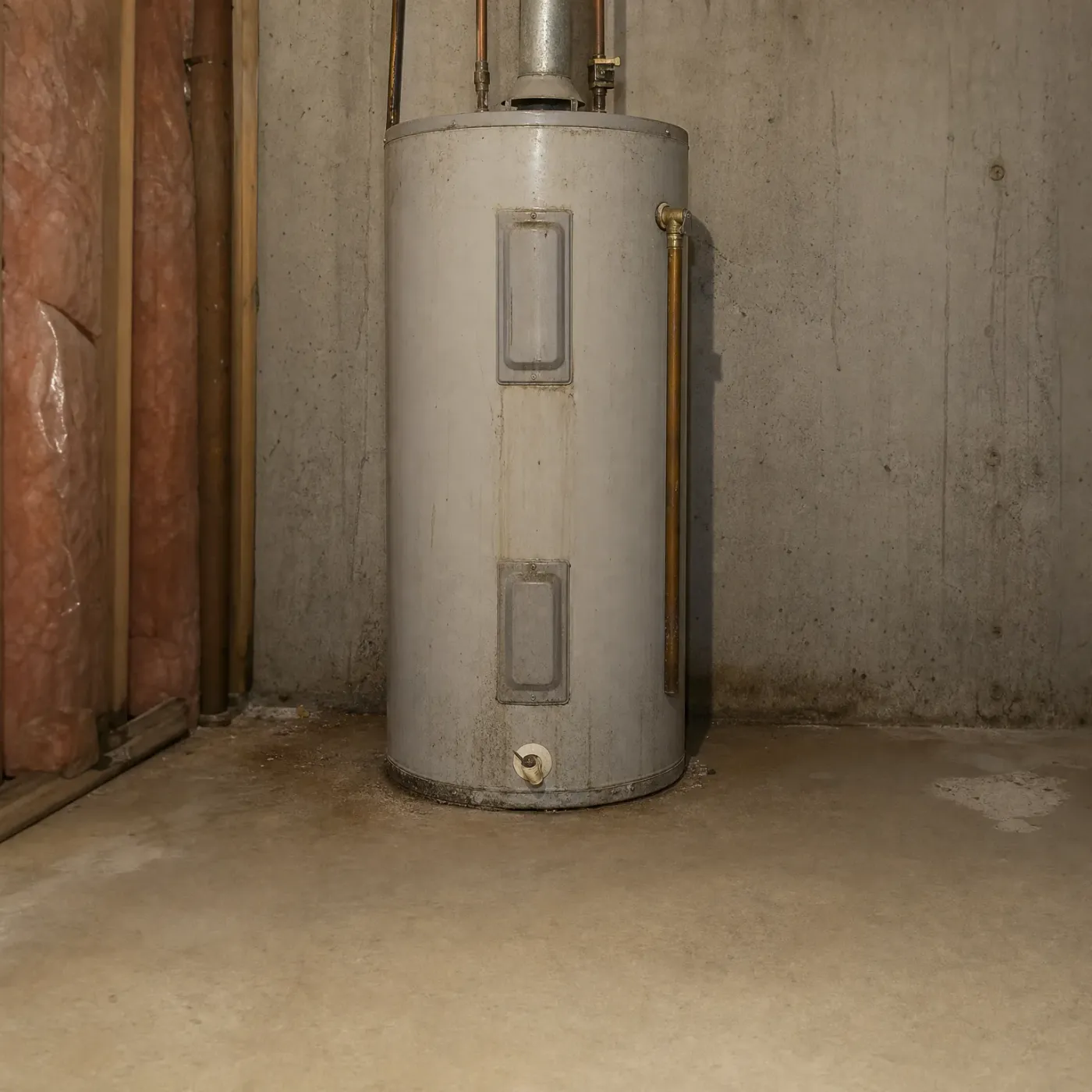
Rust staining down the tank and around those access panels means the lining inside has already failed. The copper piping might still look fine, but the steel underneath the rust is thinning out. Once a tank gets to this point in Harrisburg, replacement is the only real fix.
If your water heater runs on electricity, 13.03 cents a kilowatt-hour is a fair rate, so replacing an old tank with a more efficient one won't cost you much to run. It's the gas water heaters common around Harrisburg where the bigger savings usually sit.
EIA-861 2025



A water heater past eight years old with rust on the tank or water pooling underneath it is done. Fixing it only delays the leak by a few weeks, and when it finally lets go, you're dealing with water on the floor instead of a planned install. A unit under eight years old with a single bad part, a heating element or a thermocouple, is worth repairing and leaving alone.
If yours is showing the signs, the next step isn't figuring out which contractor to call or waiting on hold for an estimate. It's getting matched with one who already knows Harrisburg homes and reaching out to you directly, so you can describe what you're seeing and go from there.

Get your water heater to the right pro