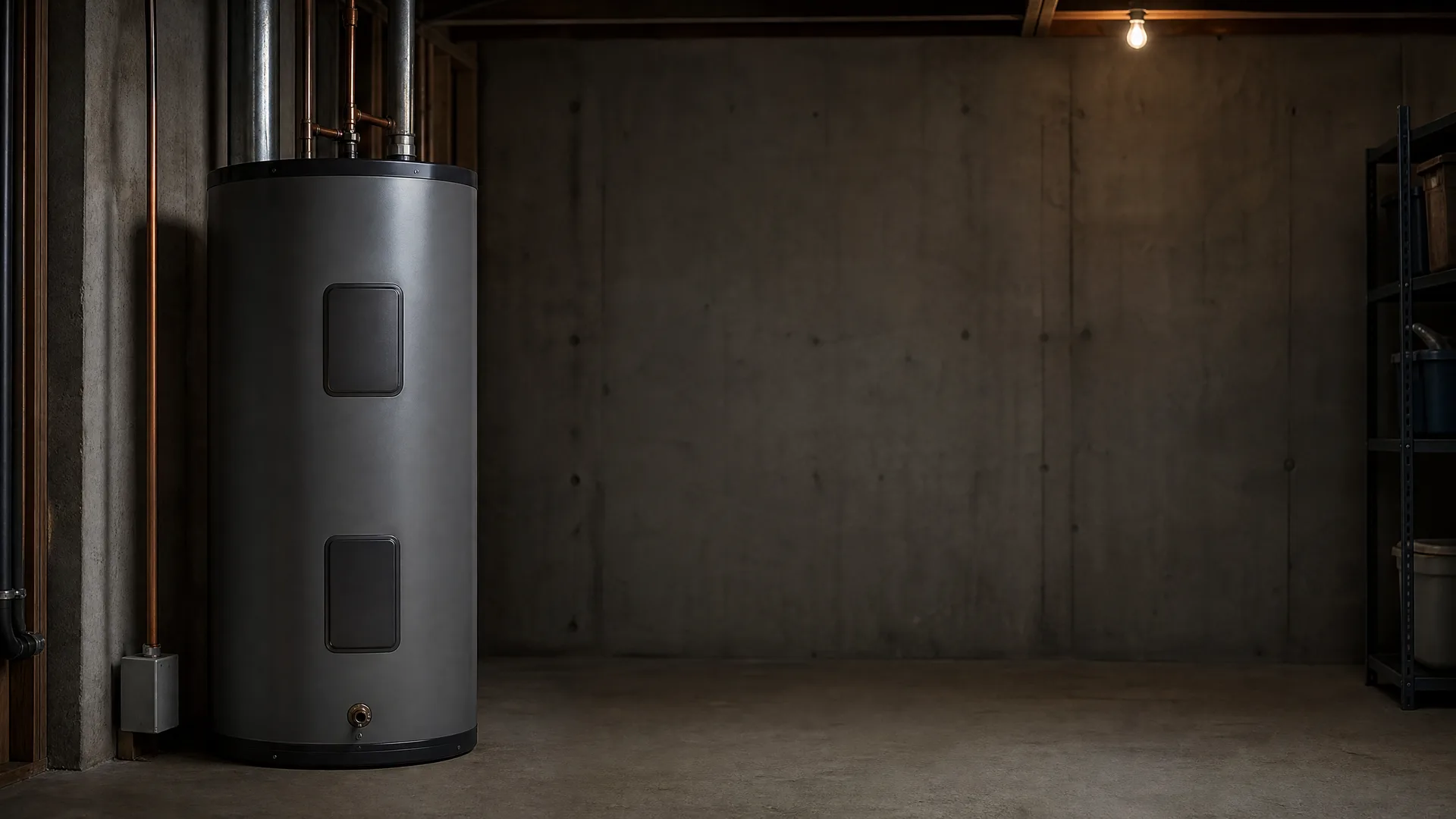
Send the request today and let a water heater pro reach out to you.
You turn on the tap expecting hot water and get something closer to warm. Most homes in South Dakota run on gas water heaters, and when one starts to slip, it rarely fails all at once. It fades. A shower that used to run hot for ten minutes now goes lukewarm in three.
A few things cause this. A gas water heater that won't heat past a certain point may have a failing thermocouple, a bad gas valve, or sediment built up so thick on the bottom of the tank that it's blocking the burner from doing its job. Electric units have their own version of this problem, usually a heating element on its way out. None of these fix themselves, and none of them get better with time.
Power is cheap here, so a lot of homeowners assume the fix will be too. That's not something this page can tell you, since it depends on what's actually wrong with your unit. What it can tell you is that finding out shouldn't be the hard part.
Normally that means calling around to a few plumbers, explaining the same problem three or four times, waiting on quotes, trying to figure out who actually works on water heaters versus who just lists it on their site. That's its own chore on top of the cold showers.
Send the form on this page and that work is off your plate. You're not the one tracking down who's available or sorting through quotes anymore. That part of it is done. What's left is a contractor who knows water heaters looking at yours and telling you straight what's wrong with it.
Why is my hot water only lukewarm?
Your water heater still runs but it can't keep up anymore. You turn the tap and get warm water instead of hot, or it starts hot and cools off halfway through a shower. In a gas water heater, that usually points to one part that's lost ground, not a full breakdown, and it's worth knowing which one before it quits for good.
A failing burner or a worn-out dip tube is the usual cause
A gas water heater warms the tank with a burner at the bottom. If that burner is dirty or losing gas pressure, it can't bring the full tank up to temperature, so you get warm water instead of hot. The other common cause is the dip tube, the pipe that sends cold water to the bottom of the tank. When it cracks, cold water mixes in near the top, and what comes out of the tap is already diluted. Sediment buildup on the bottom of the tank does the same thing, insulating the water from the burner's heat. None of these fix themselves, and most get worse the longer the heater keeps running this way.
What a weak burner looks like
A gas water heater that's losing ground often still lights fine. The burner comes on, but it can't push out enough heat to bring a full tank up to temperature before the next draw starts. You end up with water that's warm at the top of the tank and cooler below it, which is why a shower can start decent and fade fast.
Sediment changes how it heats
Over years of use, sediment settles at the bottom of the tank, between the burner and the water itself. That layer acts like insulation in the wrong place. The burner has to work harder to get heat through it, and some of that heat never reaches the water at all. A tank doing this can run longer per cycle and still come up short.
47.6% of homes statewide heat with gas
Gas heats more homes in South Dakota than anything else, and yours is probably one of them. That matters here because a gas water heater's burner and gas valve are usually what's behind lukewarm water, not a breaker or a heating element.
A water heater that's only putting out warm water doesn't fix itself by waiting. The burner or the valve behind it keeps wearing the way it has been, and a shower that cuts to cold at minute five now might cut at minute three next month. Tracking down a plumber who works on gas water heaters means calls, voicemail, maybe a visit that turns into a quote you still have to compare against another one. Send the request here and that work is off your plate. You're not calling around South Dakota looking for someone who answers, not explaining the same lukewarm shower story three times to three different people. One contractor gets your information and takes it from there. You still have a water heater that needs a look, but finding someone to look at it stops being something you have to manage.
Let it keep going and the lukewarm shower is the good outcome. The burner can wear to where it won't hold a flame at all, and then there's no hot water, not just less of it.
Call it in now and a plumber is usually looking at a burner or valve, a smaller job while the tank still runs. Wait, and the same visit can turn into a full replacement.
Before you get your water heater repairAfter you get your water heater repair
What you're probably doing now
Running the shower a few minutes before you get in, hoping the tank catches up. Washing dishes in two loads because the second one turns tepid halfway through. Maybe you've nudged the thermostat on the tank up already, and it bought you a few days before the water went soft again. None of that touches the burner or the valve. You're working around a problem that's still sitting there, and the workaround gets shorter every week as the shower window keeps shrinking.
What's actually at stake here
A burner that's struggling now can stop holding a flame altogether, and gas doesn't give much warning before that happens. Past a point, you're not dealing with lukewarm water anymore, you're dealing with none. Winters here are hard, and a water heater that quits in January is a different problem than one that's just slow in July. The part causing this is usually small and specific, which is also why it's worth having someone look at it before it takes the rest of the tank with it.
A gas water heater that's gone lukewarm is almost always telling you the same thing: the burner isn't putting out enough heat to keep up with the tank, or the valve behind it isn't doing its job. That's the piece worth fixing before a weak flame turns into no flame. You could spend an afternoon searching for a plumber who works on water heaters, calling a few, explaining the lukewarm showers and the tepid second load of dishes to each one, then sitting with quotes trying to guess who's worth the call back. Send the form instead and that part is done. You're not left to sort through names and hope one answers. A plumber gets the details of your water heater and the job of fixing it moves to them, while the running-shower-first routine becomes something you used to do.
Finding a pro stops being your job
Fill out one short form instead of calling around.