Tell us about the job
Takes about a minute. No obligation.
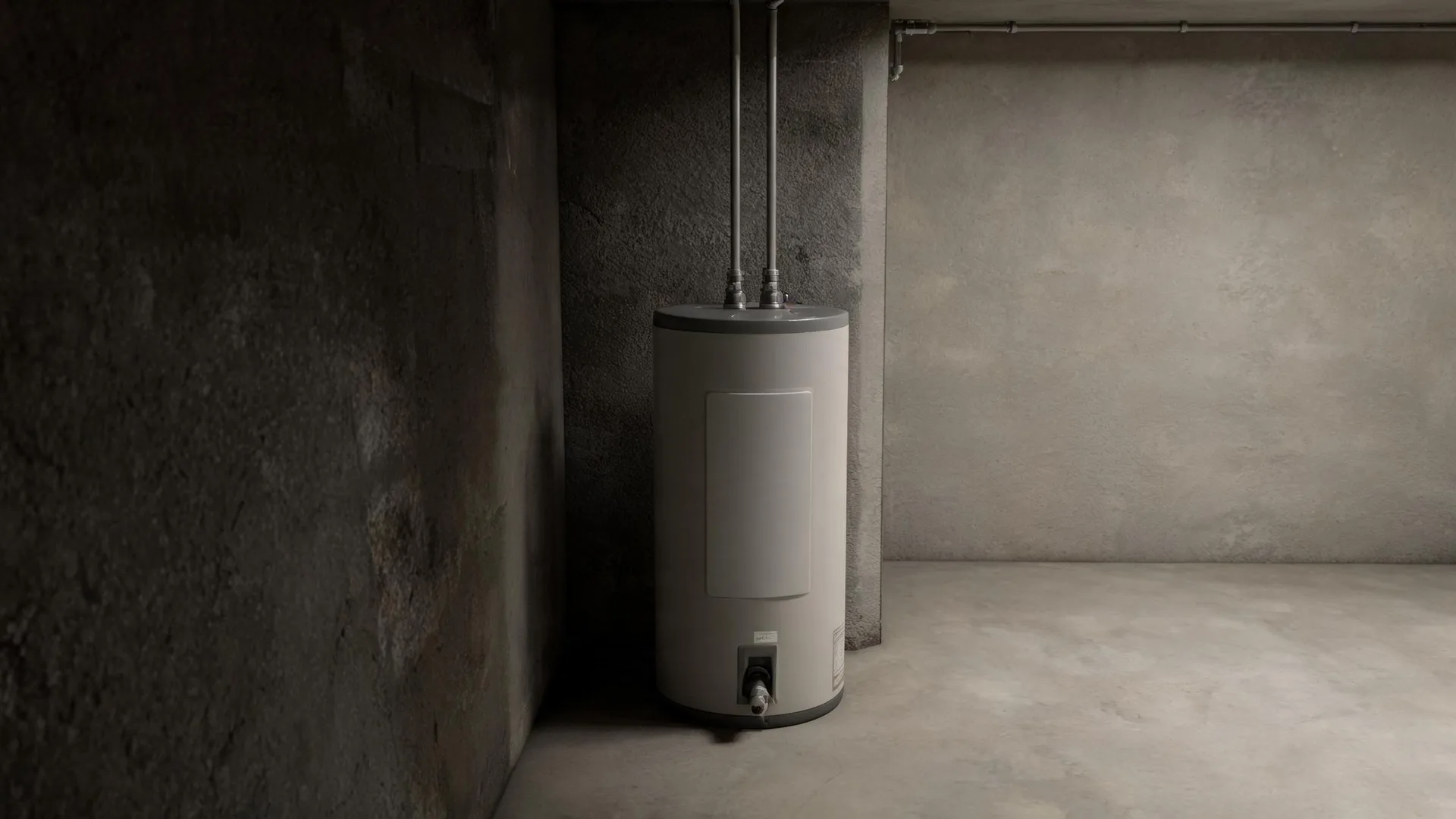
Gas water heater installation in Clay County starts with what is already in the walls and the utility room, not just the unit going in. Utility gas heats more occupied homes in Clay County, South Dakota than any other fuel, at 48.0% (2020-2024 ACS 5-year). A contractor sizing a replacement on a gas-dominant street has to confirm the flue is the right diameter for the new appliance, that combustion air reaches the burner chamber, and that the gas supply line can carry the load the new heater draws. A unit dropped in without those checks burns inefficiently and the venting can back-draft. Getting those conditions right before the hardware is ordered is what decides whether the install holds.
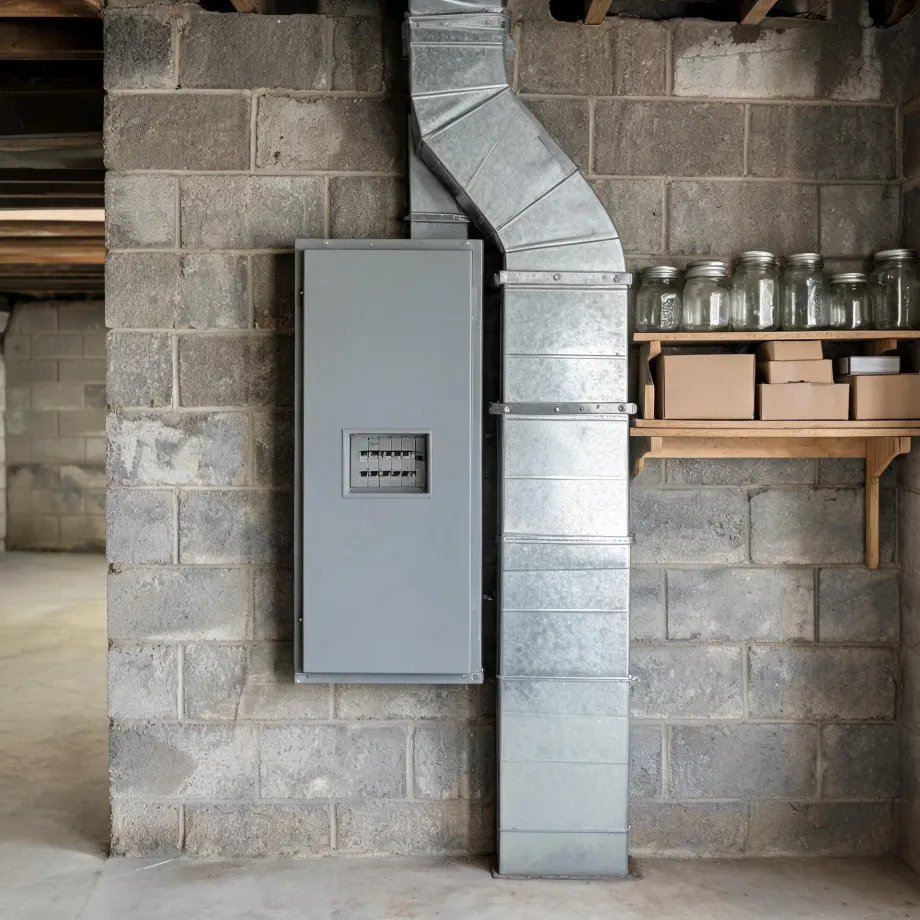
Electrical service is where a water heater installation in Clay County gets decided. Half the homes in Clay County, South Dakota were built in 1976 or earlier (2020-2024 ACS 5-year). Houses built around that period were wired for equipment with a smaller draw than what a contractor is dropping in today, and that gap shows up at the panel before it shows up anywhere else. A contractor sizing the job checks what the existing service can carry and whether the circuit serving the water heater meets what the new unit actually requires. If it does not, the electrical work comes first.
What a Water Heater Installation Covers
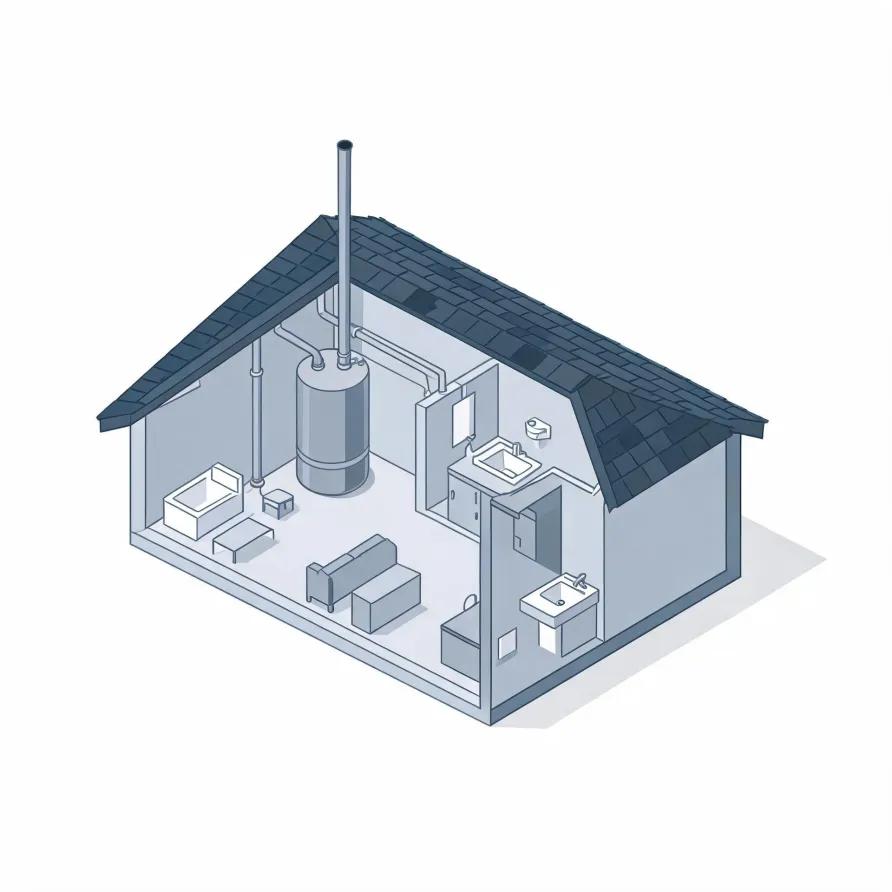
The tank or tankless unit is the center of the system. A storage tank sits in a utility closet, garage, or basement and holds a ready supply of heated water. A tankless unit mounts on a wall and heats water only as it passes through.
The cold-water supply line feeds into the unit, and the hot-water line carries heated water out to every fixture in the house. A pressure-relief valve mounts directly on the unit and releases if internal pressure rises beyond a safe point. A drain line or pan sits beneath the unit to handle any discharge.
The drawing shows a typical layout, and a licensed contractor determines what the installation requires in your specific home.
Find a contractor in Clay CountyClay County, South Dakota, by the numbers
99 severe weather events were recorded in Clay County, South Dakota between 2015 and 2024.
NOAA National Centers for Environmental Information, Storm Events Database, bulk CSV export, events 2015-01-01 through 2024-12-31.Half the homes in Clay County, South Dakota were built in 1976 or earlier (2020-2024 ACS 5-year).
U.S. Census Bureau, 2020-2024 American Community Survey 5-Year EstimatesClay County, South Dakota holds 6,262 housing units (2020-2024 ACS 5-year).
U.S. Census Bureau, 2020-2024 American Community Survey 5-Year EstimatesOwners occupy 50.8% of the occupied homes in Clay County, South Dakota (2020-2024 ACS 5-year).
U.S. Census Bureau, 2020-2024 American Community Survey 5-Year EstimatesSevere Weather Events in Clay County
Water heaters take on more strain when the climate around them is harsh, and what counts as normal operating stress in Clay County is a local fact, not a general one. Installation decisions around equipment capacity and placement reflect the actual conditions a unit will face here.
99 severe weather events, 2015–2024. Source: NOAA National Centers for Environmental Information, Storm Events Database.