Tell us about the job
Takes about a minute. No obligation.
Gas-fired water heater installations in Yankton County start with what is already in the wall: the flue, the draft hood, and the combustion air path. Utility gas heats more occupied homes in Yankton County, South Dakota than any other fuel, at 53.4% (2020-2024 ACS 5-year). That majority means most replacement jobs here involve gas appliances, and a contractor has to verify the existing venting arrangement before settling on a unit. Atmospheric venting, power venting, and direct venting each require a different setup, and the wrong match sends combustion byproducts somewhere they should not go. The vent condition and the combustion air supply are what get priced and planned first.
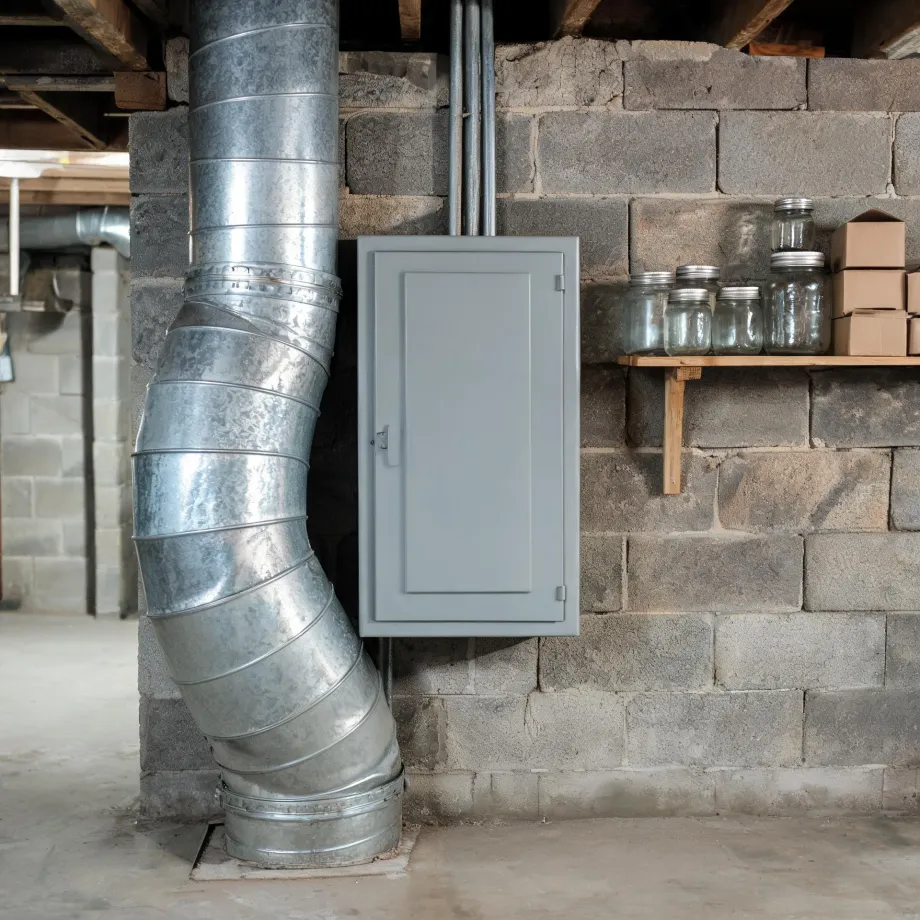
Electrical service sized for the original equipment in these houses is often the first thing a contractor has to open and assess. Half the homes in Yankton County, South Dakota were built in 1977 or earlier (2020-2024 ACS 5-year). That means the gap between what the panel was built for and what a new water heater draws is a real question, not a formality, and a contractor pricing the job has to answer it before the unit is chosen. Finding the panel short changes the scope of the work.
What a Water Heater Installation Covers
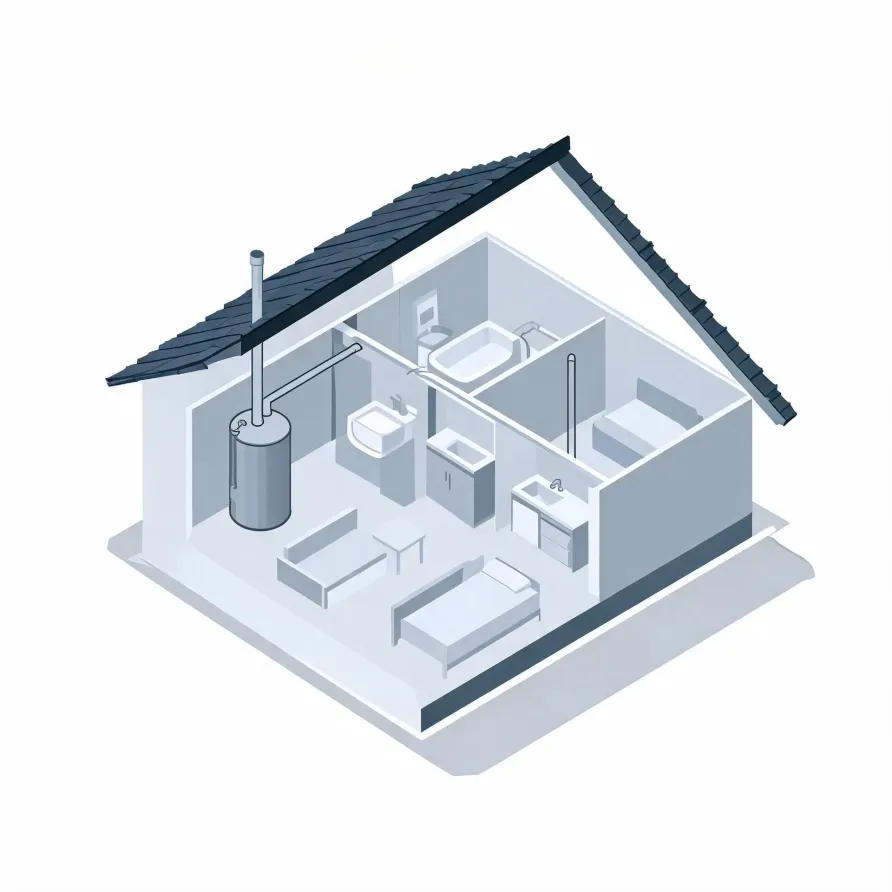
The tank or tankless unit is the center of the system. A storage tank sits in a utility closet, garage, or basement and holds a reserve of heated water ready to draw. A tankless unit mounts on a wall and heats water on demand as it passes through.
The inlet and outlet pipes connect the unit to the home's cold supply and to every fixture that pulls hot water. A pressure relief valve mounts directly on the unit as a safety device, and the flue or venting line runs from the unit to an exterior wall or roof to carry combustion gases out.
The drawing shows a typical layout, and a licensed contractor determines what applies to this particular house.
Find a contractor in Yankton CountyYankton County, South Dakota, by the numbers
140 severe weather events were recorded in Yankton County, South Dakota between 2015 and 2024.
NOAA National Centers for Environmental Information, Storm Events Database, bulk CSV export, events 2015-01-01 through 2024-12-31.Half the homes in Yankton County, South Dakota were built in 1977 or earlier (2020-2024 ACS 5-year).
U.S. Census Bureau, 2020-2024 American Community Survey 5-Year EstimatesYankton County, South Dakota holds 10,616 housing units (2020-2024 ACS 5-year).
U.S. Census Bureau, 2020-2024 American Community Survey 5-Year EstimatesOwners occupy 72.7% of the occupied homes in Yankton County, South Dakota (2020-2024 ACS 5-year).
U.S. Census Bureau, 2020-2024 American Community Survey 5-Year EstimatesSevere Weather Events in Yankton County
South Dakota weather puts real demands on water heating equipment, and those demands vary by where you live. What happens in Yankton County shapes how hard a water heater has to work and how long it can be expected to hold up.
140 severe weather events, 2015–2024. Source: NOAA National Centers for Environmental Information, Storm Events Database.